
The "Vibe" Revolution: How AI is Transforming Coding and Marketing into a Playground of Experimentation
In the rapidly evolving landscape of artificial intelligence, a new vernacular has emerged, one that sits at the peculiar intersection of 1960s counterculture and 2020s techno-optimism. The term is "Vibe," and it has rapidly ascended to the throne of AI buzzwords, even eclipsing the previous industry obsession with "agentic" systems. While the term is nebulous—open to the appropriation of anyone looking to sell a software suite—it represents a profound shift in how we interact with technology: a move toward intuitive, conversational, and highly iterative creation.
The Genesis of Vibe Coding
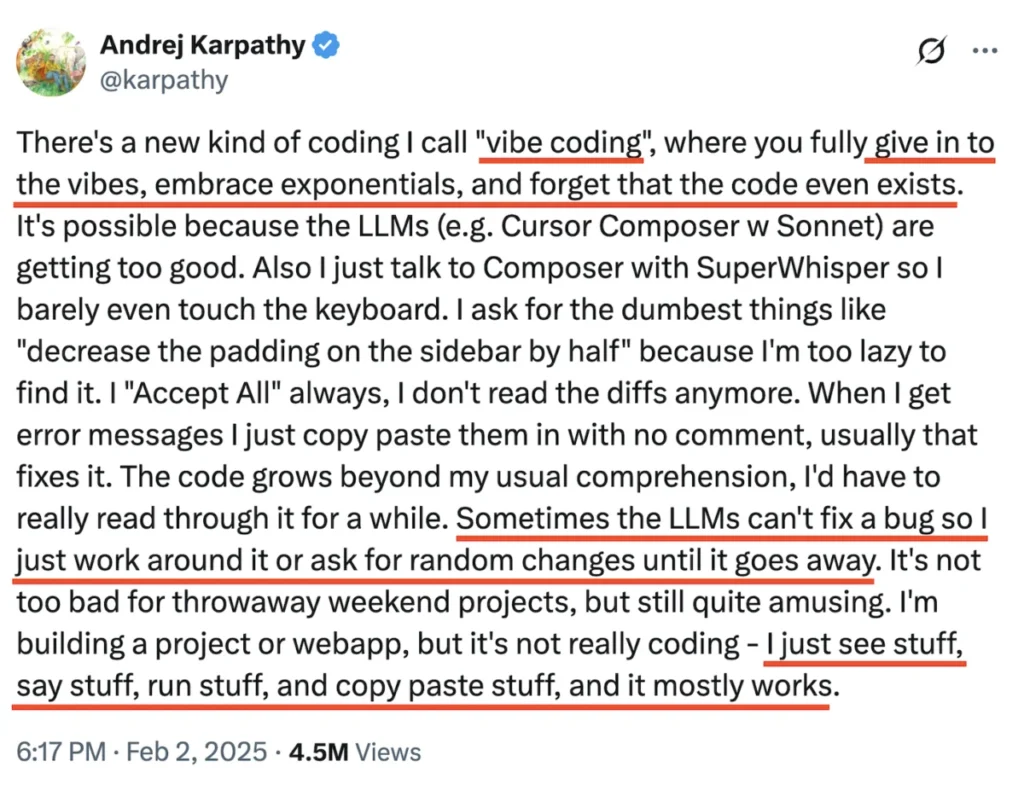
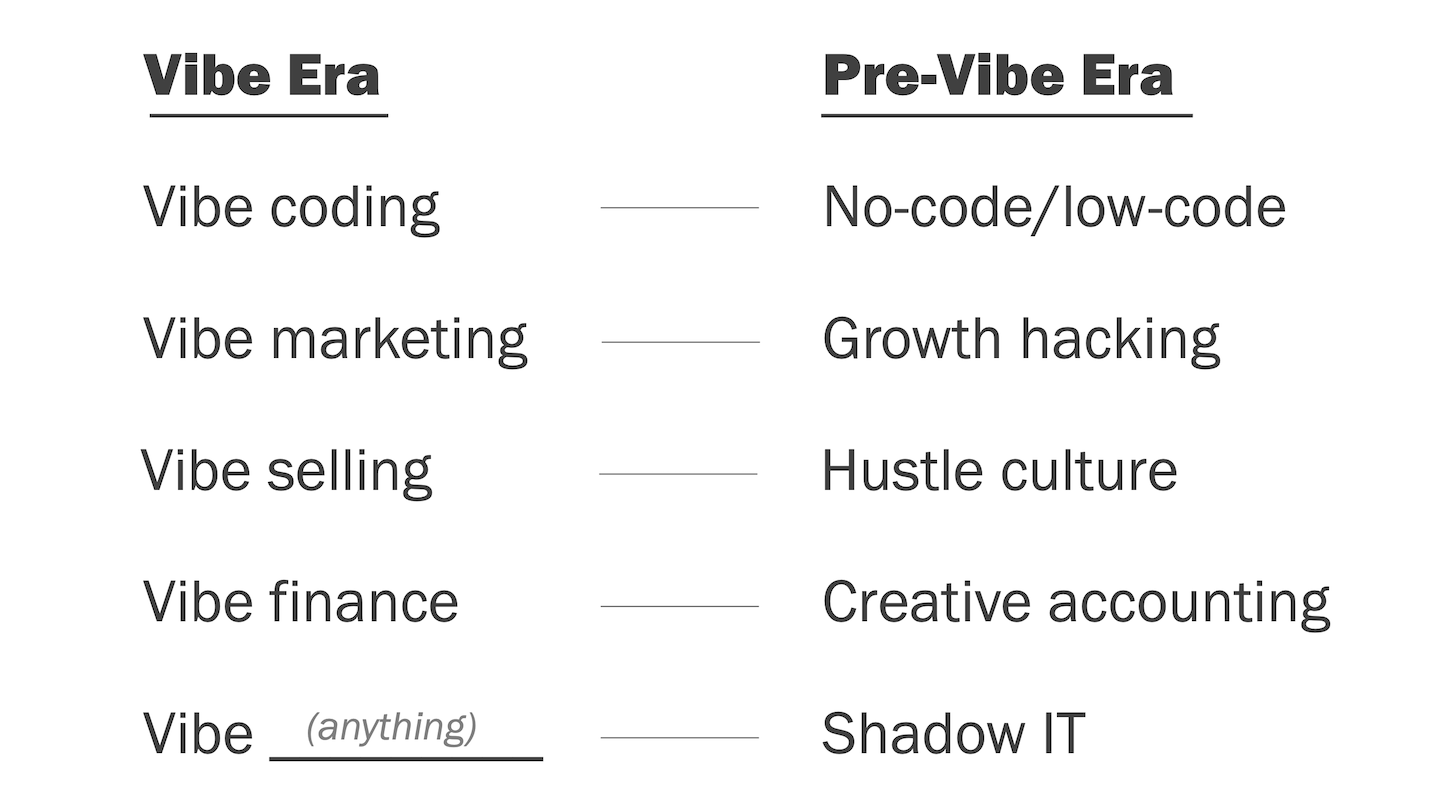
The phenomenon of "vibe coding" was catapulted into the spotlight by Andrej Karpathy, one of the original co-founders of OpenAI. In a widely circulated post, Karpathy described the process as a radical departure from traditional software engineering. Instead of meticulously writing, debugging, and compiling code, vibe coding is the act of rapidly constructing software by engaging in a continuous, back-and-forth dialogue with an LLM-powered assistant.
"I just see stuff, say stuff, run stuff, and copy-paste stuff, and it mostly works," Karpathy noted.
This approach acts as the next evolutionary step for the low-code/no-code movement. By lowering the barrier to entry, it democratizes the act of creation. However, the caveat—that it "mostly works"—remains a point of friction for traditional software engineers. Critics of the no-code movement have long held that software architecture requires a level of rigor and structural integrity that cannot be replicated by simply prompting a chatbot until a bug disappears. Yet, when a pioneer like Karpathy—a world-class computer scientist—advocates for giving in to the vibes, it suggests that we are witnessing a paradigm shift in the value we place on the code itself versus the functionality it delivers.
The Chronology of the Vibe Era
The transition from niche developer experimentation to mainstream adoption has been swift.
- Late 2024: The foundation for this shift was laid as LLMs reached a level of sophistication capable of writing production-ready code snippets.
- Early 2025: The term "vibe coding" crystallized on social media, becoming a shorthand for AI-assisted development.
- Mid-2025: High-profile figures like Jason Lemkin of SaaStr began publicizing their own journeys into vibe coding. Lemkin’s documented 100-hour experience with Replit highlighted the reality of the process: it is a rollercoaster of immense joy and deep frustration.
- August 2025: The launch of platforms like Lovable showcased the commercial viability of this movement, with the startup achieving record-breaking growth to $100 million in Annual Recurring Revenue (ARR) in just eight months.
Supporting Data: The Lemkin Scale of Vibe Coding
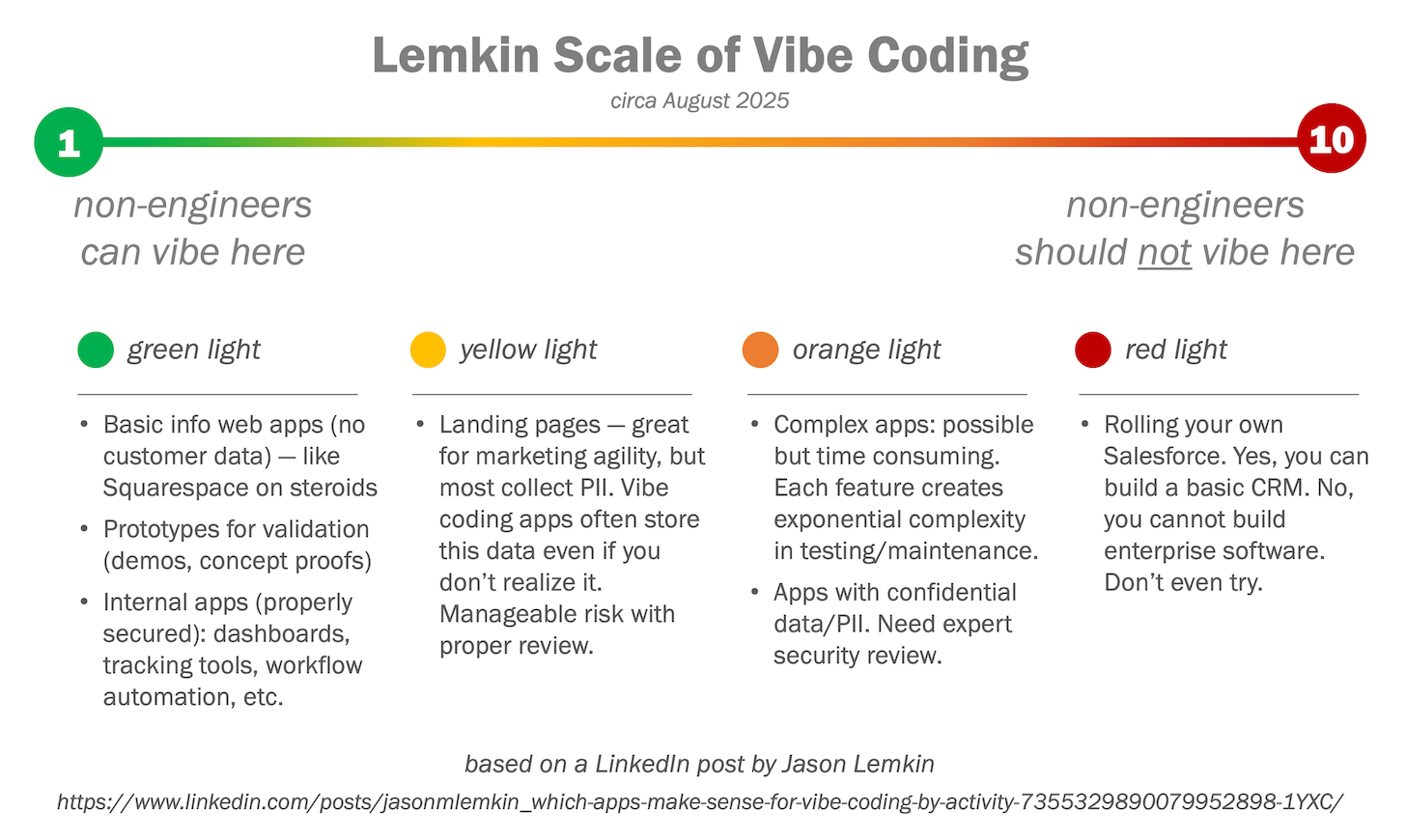
As the practice gained traction, the need for a framework to evaluate what is "vibe-able" became apparent. Jason Lemkin’s analysis of which apps are suitable for non-engineers led to the creation of the "Lemkin Scale of Vibe Coding," a continuum ranging from 1 (highly viable) to 10 (unviable).
- The Green Light (1-3): These projects, such as internal dashboards, personal productivity workflows, and simple data-entry interfaces, are perfect for vibe coding. They are low-risk and high-utility.
- The Yellow Zone (4-7): Projects that require some level of database architecture or API integration. These are increasingly becoming possible for non-engineers as AI tools become more robust.
- The Red Zone (8-10): Complex, mission-critical infrastructure. For example, attempting to rebuild an enterprise-grade platform like Salesforce from scratch remains a "here be dragons" scenario—a task that, for now, remains the domain of professional engineering teams.
It is critical to note that this scale is dynamic. As AI models improve, the "red light" projects of today are rapidly shifting toward the "green light" side of the scale. What requires a software architect today may be within the grasp of a savvy marketer by next summer.
Marketing: From "Growth Hacking" to "Vibe Marketing"
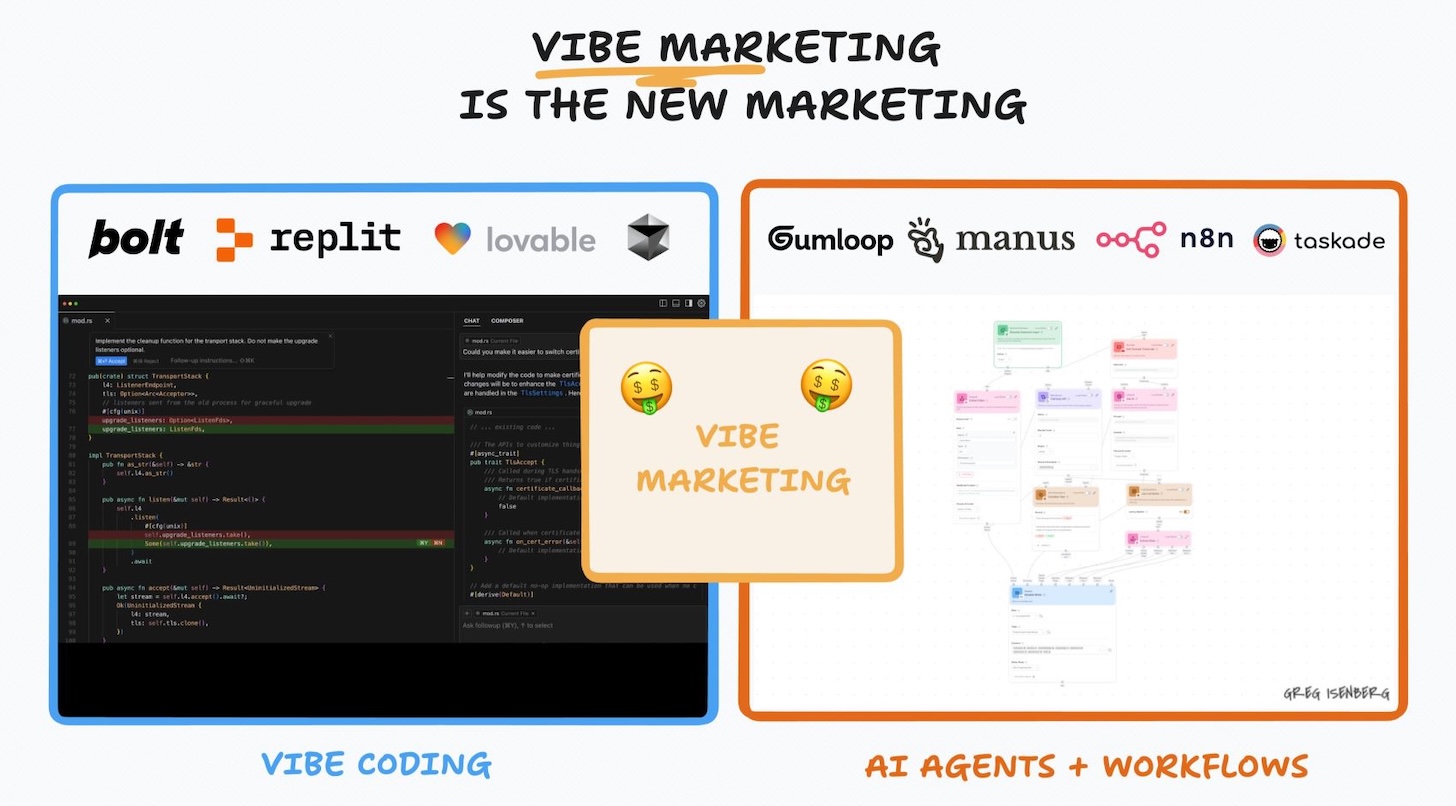
Predictably, the marketing world was quick to adopt the nomenclature. Greg Isenberg is widely credited with coining "vibe marketing." While some cynics might argue that adding "vibe" to "marketing" is merely a way to make old concepts sound fresh, the underlying practice is significant.
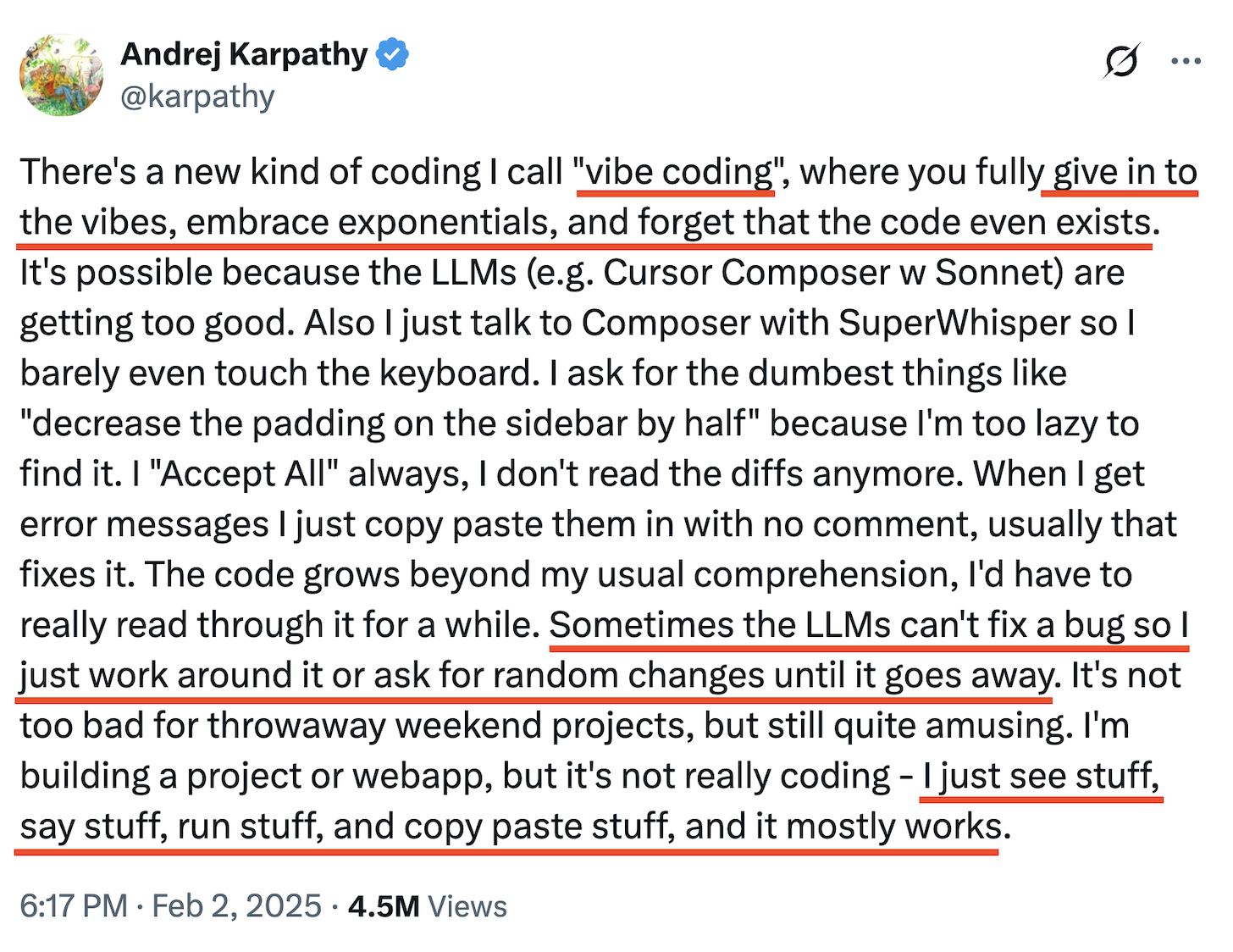
Vibe marketing, as framed by its proponents, is the application of AI agents and automated workflows to empower individual marketers to achieve results that previously required entire departments. It is, in essence, the next generation of growth hacking. However, there is a divergence in how this is being interpreted.
Many view vibe marketing as a purely operational upgrade—automating content, emails, and data scraping. But this functional view misses the true spirit of the term. The "vibe" in vibe coding comes from the freedom to move past the syntax and into the imagination. Vibe marketing should, therefore, be less about the machinery of automation and more about the human creativity unleashed by the removal of technical barriers.
Implications for the Future: The Era of Big Experimentation
The true potential of this era lies not in the automation of the mundane, but in the facilitation of "Big Experimentation."
Historically, the cost of testing a marketing hypothesis was high. It required data scientists to mine warehouses, engineers to build prototypes, and managers to approve budgets. The friction was often high enough to kill ideas before they were even tested. Vibe marketing changes this math.
1. Democratized Analytics
Marketers can now use AI to query complex data sets using natural language. The "I wonder if…" curiosity that once died in a meeting room can now be answered in seconds. This allows for a higher volume of data-backed hypotheses.
2. Rapid Prototyping
Once a hypothesis is formed, the barrier to building the creative asset is lowered. Whether it is a landing page, a personalized email sequence, or a small, app-like interactive tool, an individual marketer can deploy these assets solo.
3. The Role of Marketing Operations
The implication for marketing operations teams is profound. Their role is shifting from "gatekeepers" to "architects of the sandbox." By setting up the proper guardrails—data privacy, compliance, and brand standards—they provide the safe environment in which the rest of the team can experiment. They are the ones who ensure that when the marketing team "vibes," they don’t accidentally break the business.
The Human Element: Customer Experience
The most vital implication of this trend is how it impacts the customer. If the output of vibe marketing is merely an increase in "Spam, Spam, Spam," the movement will fail. The goal of vibe marketing is to align with the audience’s preferences, not to overwhelm them.
Marketers must transition into "customer whisperers," using AI to better understand the vibrations of their audience and responding with relevant, high-value experiences. The technology allows for speed, but the strategy must still be human-centric.
Conclusion: Will the Vibes Last?
The term "vibe" itself may be transient. It carries a certain 2025-era charm that will likely fade as the novelty of AI-assisted creation wears off. Yet, the underlying shift is permanent. We are entering an age where the distance between a fleeting thought and a functional, live digital experience has collapsed.
Whether we call it "vibe marketing," "GTM engineering," or simply "agile innovation," the ability to rapidly test, iterate, and scale ideas is the new competitive frontier. Companies that successfully build the scaffolding for their teams to experiment—while maintaining the necessary governance to keep the brand secure—will out-innovate their competition.
For now, the advice to leaders is simple: give your teams the tools, set the boundaries, and let them catch the vibes. The summer of 2025 may just be the beginning of a long, productive, and highly experimental era for the marketing profession.
