
The Digital Podium: How 2025 Social Video Data Predicts the Breakout Stars of the Milano-Cortina 2026 Winter Olympics
MILAN, ITALY — Olympic years have an innate, magnetic ability to alter the global media landscape, creating an overnight surge in public fascination for sports that typically linger on the fringes of television schedules. As the countdown to the Milano-Cortina 2026 Olympic Winter Games hits its final stretch, sports marketers, digital publishers, and content creators are scrambling to identify which disciplines will capture the world’s attention.
While traditional television broadcasters hold exclusive rights to the live events, the real-time battleground for fan engagement has shifted decisively to social video platforms. According to comprehensive viewership and engagement analytics compiled by Tubular Labs throughout 2025, the digital footprints left by winter athletes last year offer a crystal-clear preview of the hottest competitions, unexpected viral narratives, and high-value content trends destined to dominate feeds during the upcoming ice-cold Games in Italy.
Main Facts: The Digital Dominance of Winter Sports Ahead of 2026
The appetite for winter sports content online defies the traditional seasonal calendar. Even during a non-Olympic year, digital video platforms saw staggering engagement metrics as fans sought out the grace, speed, and raw danger of winter disciplines.
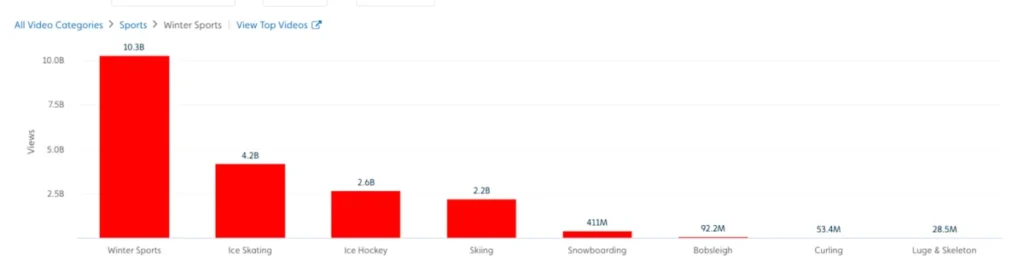
At the forefront of this digital charge is ice skating. In 2025 alone, ice skating videos generated a monumental 4.2 billion views across various social platforms, completely outpacing nearly all other winter sport categories tracked by Tubular Labs. Figure skating anchored the lion’s share of this momentum, driving 2.2 billion views and an astonishing 36.8 million total engagements.
Parallel to ice skating’s dominance, skiing cemented its status as a multi-discipline powerhouse. With the Milano-Cortina schedule featuring more than 20 distinct skiing events, YouTube audiences proved their appetite early, generating 2.2 billion views for skiing-related content in 2025. Meanwhile, niche, high-adrenaline disciplines like bobsledding and ski jumping proved that low broadcast visibility does not equate to low demand. Ski jumping averaged a massive 426,000 views per video, while bobsledding reeled in 317,000 views per upload, fueled largely by organic athlete storytelling and nostalgic cultural touchstones.
Chronology: The Evolution of Olympic Digital Engagement (2023–2026)
Understanding how winter sports reached this digital pinnacle requires a look at the modern timeline of sports media consumption:
- Post-Beijing 2022: In the wake of the pandemic-era Beijing Winter Games, sports organizations realized that traditional television broadcasts were no longer sufficient to capture younger demographics. Governing bodies began pivoting toward short-form video platforms (TikTok, YouTube Shorts, Instagram Reels) to retain audience attention between quadrennial events.
- The 2023–2024 Interim: Creators and national sports federations began treating social media not merely as a promotional tool, but as a primary storytelling medium. Athletes transformed into independent media brands, offering behind-the-scenes glimpses into gruelling training regimens.
- The 2025 Surge (The Data Window): Throughout 2025, viewership data revealed an unprecedented non-Olympic spike. Ice skating and skiing content shattered previous benchmarks, hitting 4.2 billion and 2.2 billion views respectively. Creators found that niche topics—such as French creator Anthony Robert’s year-round skiing vlogs—could defy seasonal norms and peak in popularity even during the summer months.
- January 2026 (The Pre-Games Horizon): With the Milano-Cortina opening ceremony fast approaching, digital analytics confirm that platform interest has transitioned from casual curiosity to high-intent viewership. Publishers are racing to align their editorial calendars with the data-backed breakout stars of the upcoming Games.
Supporting Data: Breaking Down the 2025 Tubular Labs Metrics
The numbers behind the digital pre-game show paint a vivid picture of where consumer attention lies. Analysts looking to leverage the 2026 Winter Games must examine the granular data provided by Tubular Labs regarding views, engagement, and upload efficiency:
| Sport Category | 2025 Total Views | Total Engagements | Average Views Per Upload | Notable Sub-Discipline Breakdown |
|---|---|---|---|---|
| Ice Skating | 4.2 Billion | 36.8 Million+ (Figure Skating) | Varies by platform | Figure skating drove 2.2B of the total views. |
| Skiing | 2.2 Billion | Not specified | 128K (Freestyle & Alpine) / 426K (Ski Jumping) | Freestyle and alpine combined for ~33% of skiing views; ski jumping led in per-video efficiency. |
| Bobsleigh | N/A (Niche) | Not specified | 317K | Propelled by team-run behind-the-scenes content and creator commentary. |
The Ice Skating Phenomenon
Figure skating’s 2.2 billion views and 36.8 million engagements prove that the sport remains the crown jewel of winter aesthetics. However, the data highlights a broader opportunity: ice skating’s intersection with lifestyle content. Because the sport relies heavily on costume design, makeup, and physical artistry, it opens lucrative doors for hair, beauty, and fashion creators to capitalize on Olympic fervor. Furthermore, "how-to" and beginner ice skating tutorials are capturing high search volumes from communities that lack physical access to rinks, democratizing the sport’s reach.
The Skiing and Bobsledding Efficiencies
While alpine and freestyle skiing racked up thousands of uploads averaging 128,000 views each, ski jumping proved that scarcity breeds demand. Despite far fewer uploads, ski jumping content averaged an incredible 426,000 views per video. Bobsledding mirrored this high-yield efficiency, netting 317,000 views per video. Driven by organizations like the Great Britain bobsled team—who utilized platforms to demystify their training—these niche sports proved that authentic, behind-the-scenes access resonates deeply with modern digital audiences.
Official Responses and Industry Perspectives
Sports executives, digital analysts, and content strategists have weighed in heavily on what these metrics mean for the broader media ecosystem surrounding Milano-Cortina 2026.
Industry analysts note that while traditional broadcast networks retain the exclusive rights to air live medal events, they no longer hold a monopoly on audience attention. Digital creators and independent publishers are effectively capturing the cultural conversation around the events.
"Even outside of sports, ice skating’s unique fashion and aesthetic elements provide relevant openings for hair, beauty, and fashion creators to weigh in," notes market research from Tubular Labs. This cross-pollination of genres represents a seismic shift in how major sporting events are consumed.
Athletes themselves are embracing this shift. Representatives from national teams have publicly emphasized that social video is no longer an afterthought. By pulling back the curtain on the psychological and physical tolls of Olympic preparation—such as the classic "sprinters-turned-bobsledders" narrative reminiscent of the cultural legacy left by Cool Runnings—teams are building dedicated fan bases years before they ever step onto Olympic ice.
Furthermore, sporting goods brands and commercial sponsors are altering their marketing playbooks. Rather than allocating 100% of their budgets to traditional broadcast spot ads, brands are actively scouting digital creator analytics to partner with athletes and influencers who command high-engagement niches like freeride skiing, curling, and snowboarding.
Implications: What Creators, Publishers, and Brands Must Do Next
The transition from data collection to tactical execution is critical as the Milano-Cortina Winter Games commence. The findings from 2025 offer several key implications for the media and sports marketing industries:
- Diversify Content Verticals: Publishers should not limit themselves to sports-only coverage. By tapping into the aesthetic and lifestyle elements of sports like figure skating (fashion, beauty, choreography) and the travel/adventure elements of skiing, publishers can capture audiences who do not traditionally follow competitive sports.
- Embrace Niche Storytelling: The high per-video view counts of ski jumping (426K) and bobsledding (317K) prove that audiences are hungry for deep-dive, specialized content. Creators do not need mass-market appeal; owning a dedicated niche yields highly efficient, loyal viewership.
- Prioritize Behind-the-Scenes Authenticity: Polished broadcast packages are expected, but social video audiences crave raw authenticity. Teams and athletes who share unvarnished training footage, logistical struggles, and human-interest stories will consistently outperform those relying solely on standard promotional clips.
- Strategic Brand Partnerships: For brands, the traditional broadcast ad is no longer enough to secure ROI during an Olympic year. Aligning with digital-first athletes and niche content creators provides a direct line to highly engaged, targeted consumer segments that skip traditional commercials.
As the world tunes in to Milano-Cortina 2026, the real winners will not just be those who stand on the physical podium in Italy, but those who mastered the digital podium long before the opening ceremony began.
