
The Art of the Exit: Mastering Customer Churn Through Strategic Surveys
In the hyper-competitive landscape of SaaS and e-commerce, customer retention is the lifeblood of sustainable growth. Yet, for many businesses, the "cancellation flow" remains a black hole—a point where customers vanish without a trace, taking their revenue and their insights with them. The customer exit survey has emerged as the essential bridge across this gap. By gathering data at the precise moment a user decides to leave, companies can transform potential losses into a roadmap for future product development and retention strategy.
The Anatomy of a Customer Exit Survey
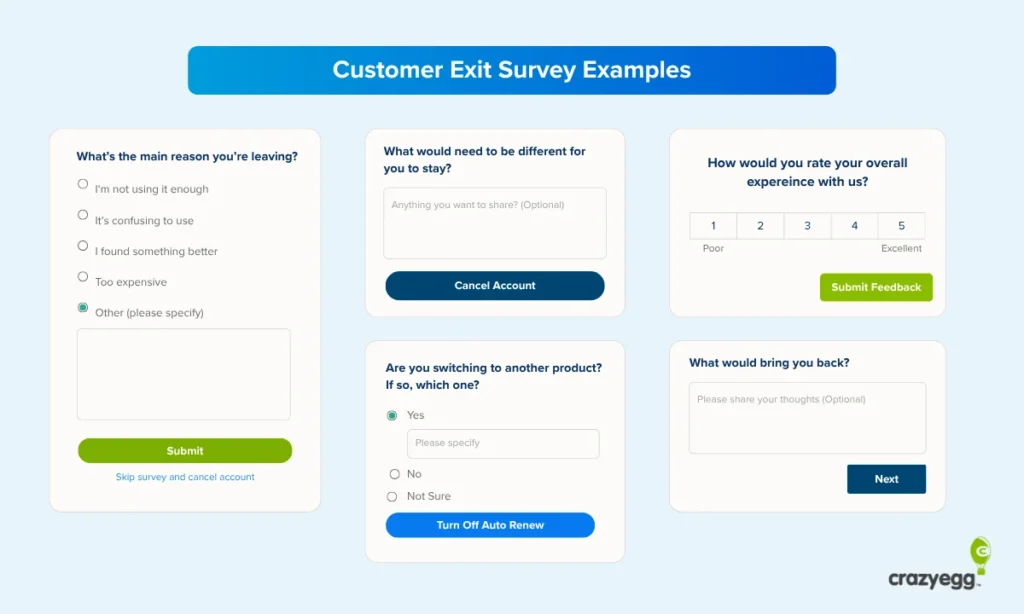
A customer exit survey, often referred to as a churn or cancellation survey, is a targeted, short-form questionnaire presented to users during the offboarding process. Whether integrated directly into a software cancellation flow, delivered via an automated post-cancellation email, or triggered on a website as a visitor prepares to abandon a shopping cart, these surveys serve a singular purpose: to extract actionable intelligence from a departing user.
Unlike traditional exit interviews, which are labor-intensive and reserved for high-value B2B accounts, exit surveys are designed for scale. They provide a quantitative overview of why users are defecting, allowing product managers and business owners to spot trends in real-time. By moving beyond anecdotal evidence, organizations can categorize feedback into specific buckets—such as pricing sensitivity, feature gaps, or usability friction—and address these issues systematically.
Chronology of Feedback: When to Engage
Timing is the most critical variable in the success of an exit survey. To maximize response rates and data integrity, the survey must be presented at the point of decision.
The "Cancel Click" Moment
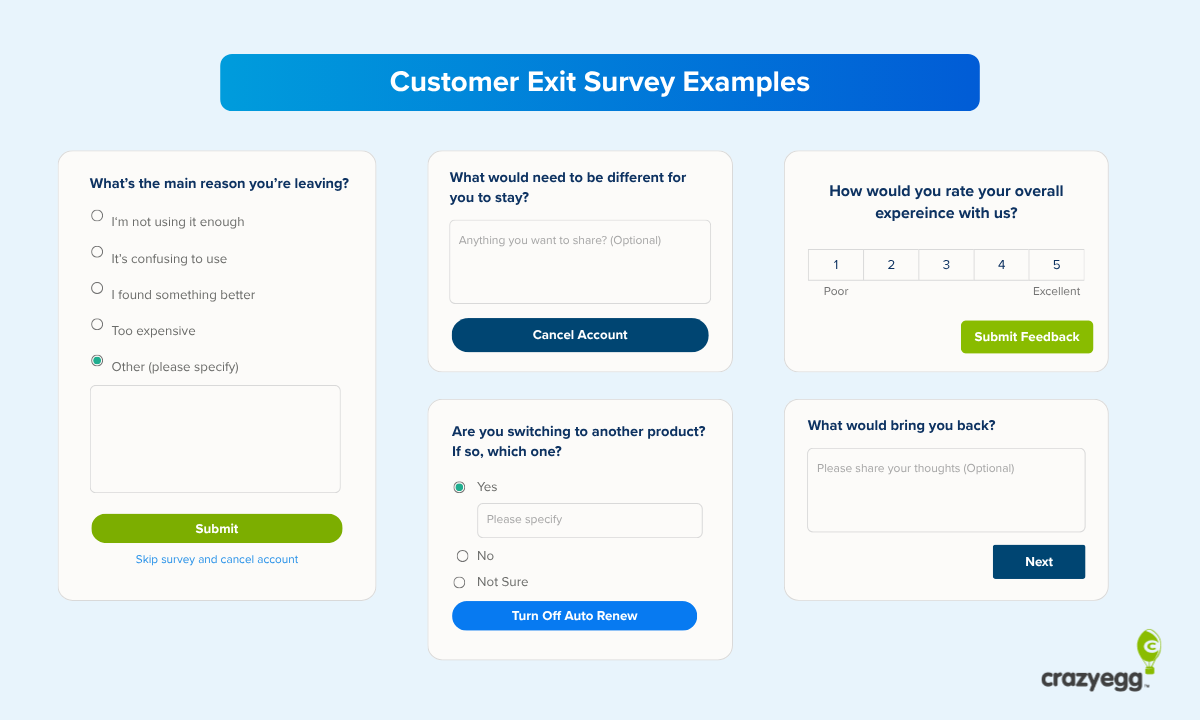
For subscription-based products, the optimal time to solicit feedback is immediately after the user clicks the "Cancel" or "Downgrade" button, but before they reach the final confirmation screen. At this stage, the user is already engaged in an active decision-making process. Because they are still within the product environment, they are more likely to provide an honest, reflective answer. However, it is vital to keep this interaction optional; adding mandatory friction to the cancellation process is not only poor user experience but can also trigger legal scrutiny in jurisdictions with strict consumer protection laws.
Post-Cancellation Email Outreach
When cancellations occur outside of the digital product—such as via a support ticket or a third-party billing provider—email remains the most effective medium. Best practices dictate that this outreach should occur within a few hours of the event. While response rates are inherently lower than in-product surveys, this method allows for a more detailed follow-up, providing a bridge to retain the customer through personalized win-back offers or deeper discovery calls.
Website Abandonment
For e-commerce and lead generation, the "exit-intent" survey is a standard tool. By utilizing behavioral triggers—such as mouse movement toward the browser’s close button or specific scroll-depth thresholds—marketers can display a survey as a user prepares to leave a pricing page or checkout flow. The goal here is to identify why the "conversion journey" failed, whether due to unexpected costs, technical errors, or a lack of trust.
Supporting Data: Decoding the "Why"
Data is only as valuable as its application. To turn survey responses into institutional knowledge, companies should follow the "20/3% Rule" pioneered by experts like Leah Tharin: if an option receives more than 20% of responses, it warrants a deeper, more granular breakdown in future iterations; if it receives less than 3%, it is noise and should be removed to reduce cognitive load.
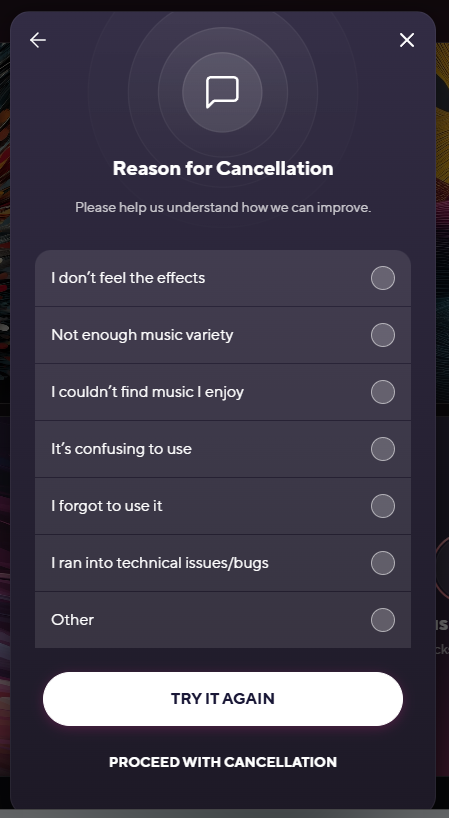
According to a 2025 study by Survicate, the length of the survey directly correlates to completion rates. Analysis of over 8,000 surveys demonstrated that questionnaires limited to two or three questions enjoyed a median completion rate of 86.8%, whereas those stretching to six questions saw that figure plummet to 77.4%.
Furthermore, simply asking "Why?" is insufficient. The most effective surveys follow a specific structure:
- The Primary Reason: A single-choice question using radio buttons (4–6 options).
- The Open-Ended Follow-up: A qualitative field asking, "What would need to be different for you to stay?"
- The Contextual Variable: A rating or a specific query regarding whether the user is switching to a competitor.
Integrating Behavioral Analytics
A common pitfall in customer research is relying solely on self-reported data. Customers often cite "price" as their reason for leaving because it is a socially acceptable, simple answer, even if the underlying issue was a confusing onboarding experience or a lack of feature parity.
To solve this, leading organizations cross-reference survey responses with session recordings and heatmaps. If a user selects "Too expensive," but the behavioral data shows they never successfully performed a core action or reached a "value moment" in the product, the real issue is likely a failure in user education or onboarding, not the price point.
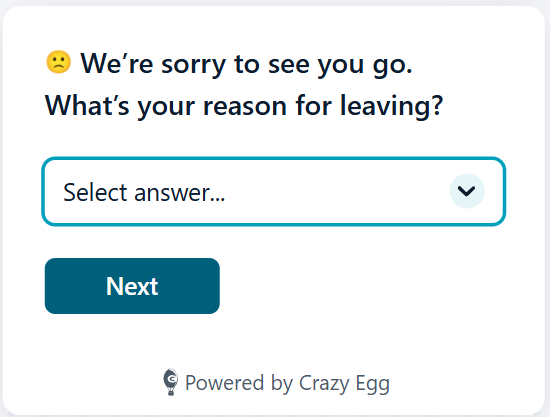
For instance, the SEO tool SEOJuice found that 41% of users who cited "too expensive" as their reason for canceling had, in fact, never successfully run a single audit. By analyzing usage patterns leading up to the cancellation, they realized that the churn wasn’t a pricing problem—it was a value-delivery problem.
Implications for Product and Strategy
The ultimate value of the exit survey lies in its ability to drive organizational change. Once data is gathered, it should be tagged and routed to the appropriate department:
- Product/Engineering: Receives data on bugs and feature requests.
- Customer Success/Onboarding: Receives data on confusion and lack of engagement.
- Pricing/Marketing: Receives data on budget alignment and market positioning.
The "Loop-Closing" Advantage
The most sophisticated companies use exit survey data to "close the loop." If a significant cohort of users leaves because of a missing feature, and that feature is subsequently built, the company has a prime opportunity to reach out to those former customers. This demonstrates that the company listens to its users, turning a negative churn event into a potential win-back, while simultaneously boosting morale for the development team.
Legal and Ethical Considerations
As regulations like the California Consumer Privacy Act (CCPA) and similar global statutes evolve, the design of cancellation flows has become a matter of legal compliance. Many jurisdictions now mandate that the process to cancel a service must be as easy as the process to sign up.
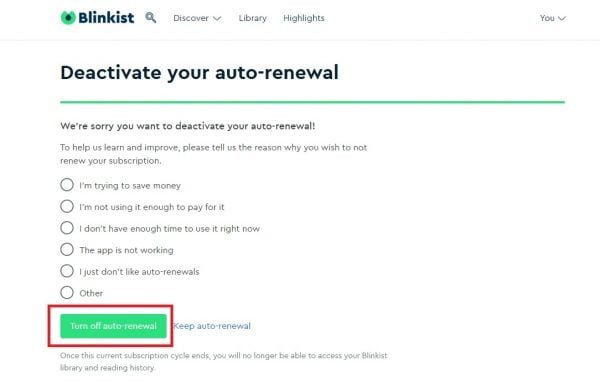
Creating a "dark pattern"—where a user is forced to navigate a five-question survey just to find the "Cancel" button—is increasingly viewed as a violation of consumer protection standards. The exit survey must be an honest request for feedback, not a hurdle meant to frustrate the user into giving up. By keeping the survey optional and respecting the user’s intent to leave, companies protect their brand reputation and ensure that the data they collect is genuine.
Conclusion: Turning Departures into Development
Customer exit surveys are more than just a mechanism for gathering statistics; they are a vital feedback loop that informs the entire product lifecycle. By combining the "what" (the survey response) with the "how" (the behavioral analytics), businesses can move beyond the surface-level reasons for churn to address the root causes of customer dissatisfaction.
When implemented with empathy and analytical rigor, the exit survey provides the clarity necessary to pivot, adapt, and ultimately, build a product that customers never feel the need to leave. As the digital economy continues to favor those who can best understand their users’ needs, the ability to turn a "goodbye" into a "see you later" will remain the ultimate competitive advantage.
