
Debunking the AI and SEO Mythos: What the Data Actually Tells Us in 2026
By MarTech Editorial Intelligence
Published: September 2026
Scroll through LinkedIn on any given morning, and the digital marketing landscape looks like a battlefield of absolutes. One post declares traditional search dead, showcasing a graph that purportedly proves AI-generated content can no longer rank. Another author insists that SEO teams are entirely obsolete, replaced by automated intelligence agents.

These bold proclamations follow a predictable blueprint: they sound plausible, play on deep-seated industry anxieties, and are repeated with such frequency that they morph into conventional wisdom. Yet, the moment these sensational claims are measured against empirical data, they frequently fall apart.
This rush to judgment represents a critical vulnerability in the modern search marketing industry. Information moves faster than verification, and alarmist narratives are frequently weaponized as sales tactics to push quick-fix software solutions. To construct a resilient strategy, digital marketers must systematically examine the most persistent myths surrounding AI and search, contrast them with real-world data, and ground their methodologies in verified reality.
Main Facts: The Intersection of AI and Search
The modern search ecosystem is not undergoing a simple binary transition from traditional search engines to generative AI platforms; rather, it is experiencing a complex structural expansion.
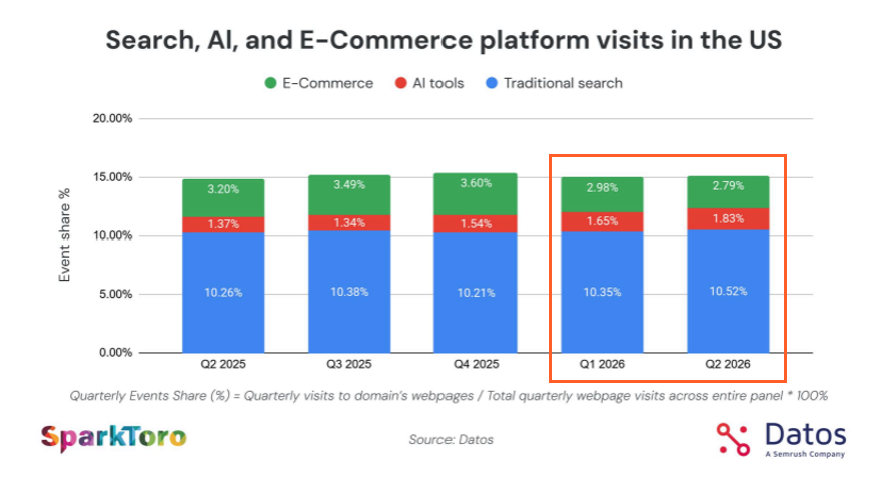
- Co-growth, Not Cannibalization: According to the State of Search Q2 2026 report, traditional search and AI search engines are expanding at virtually the exact same rate quarter over quarter. AI is layering on top of existing search behavior rather than devouring it wholesale.
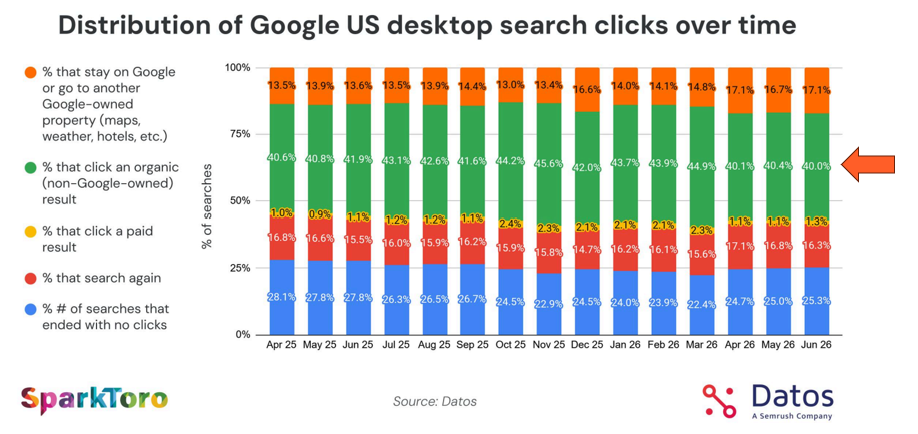
- The Zero-Click Pressure Cooker: While search demand grows, outbound referral clicks to open-web websites are declining. Google’s increasing reliance on direct answers has pushed desktop referral clicks for non-Google properties to their lowest levels since April 2025.
- The Content Quality Filter: Search engines do not enforce a blanket penalty for AI-generated text; instead, they operate on a value-add filter. Content produced by large language models (LLMs) can and does rank successfully, provided it is anchored by genuine expertise, unique data, and clear intent.
- Technical Constraints are Real: Emerging AI crawlers face severe limitations—most notably, an inability to process client-side JavaScript effectively. Server-side rendering remains paramount for visibility across both traditional engines and generative AI agents.
Chronology of the Shift: From 2024 to 2026
Understanding how the industry arrived at this point of widespread misinformation requires tracing the evolution of AI integration within search over recent years.
2023–2024: The Panic of the Generative Explosion
Following the public rollout of conversational AI tools, the SEO community panicked. Early narratives suggested that conversational bots would instantly replace search engines, driving web traffic down to zero. Agencies rushed to publish whitepapers predicting the immediate death of organic keyword optimization.
2025: The Rise of Zero-Click Mechanics and LLM Bloat
As Google rolled out widespread AI Overviews and conversational search modes, outbound traffic to publishers began to noticeably contract. Concurrently, the web was flooded with low-quality, unedited, keyword-stuffed AI content. This prompted search engines to tighten quality algorithms, leading to the false generalized conclusion that all AI-assisted content was toxic to rankings.
2026: The Data-Driven Reality Check
By mid-2026, longitudinal industry studies began to paint a nuanced picture. Reports from firms like SparkToro, Datos, and Profound demonstrated that search demand was actually holding steady, but the mechanics of traffic distribution had fundamentally shifted. Marketers moved away from panic and toward rigorous verification, separating technical facts from social media folklore.
Supporting Data: Dismantling Seven Major SEO Myths
To build a forward-looking strategy, marketing leaders must separate hyperbole from verified metrics. Here is what empirical studies reveal about the top seven myths dominating the industry.
Traditional Search Myths
Myth 1: AI is killing traditional search
- The Claim: Every interaction on ChatGPT, Claude, or Perplexity represents a lost query for Google. Traditional search is shrinking because AI is eating its market share.
- The Data: The State of Search Q2 2026 report proves that traditional search and AI platforms are growing at the exact same quarterly rate. They operate as an additive layer (
AI + traditional search) rather than a zero-sum game. However, a kernel of truth exists regarding outbound traffic: Google’s direct-answer features have driven non-Google-owned desktop clicks to their lowest point since April 2025.
Myth 2: You can’t grow organic traffic in today’s zero-click environment
- The Claim: Between AI Overviews and native conversational interfaces, meaningful organic traffic wins are mathematically impossible in 2026.
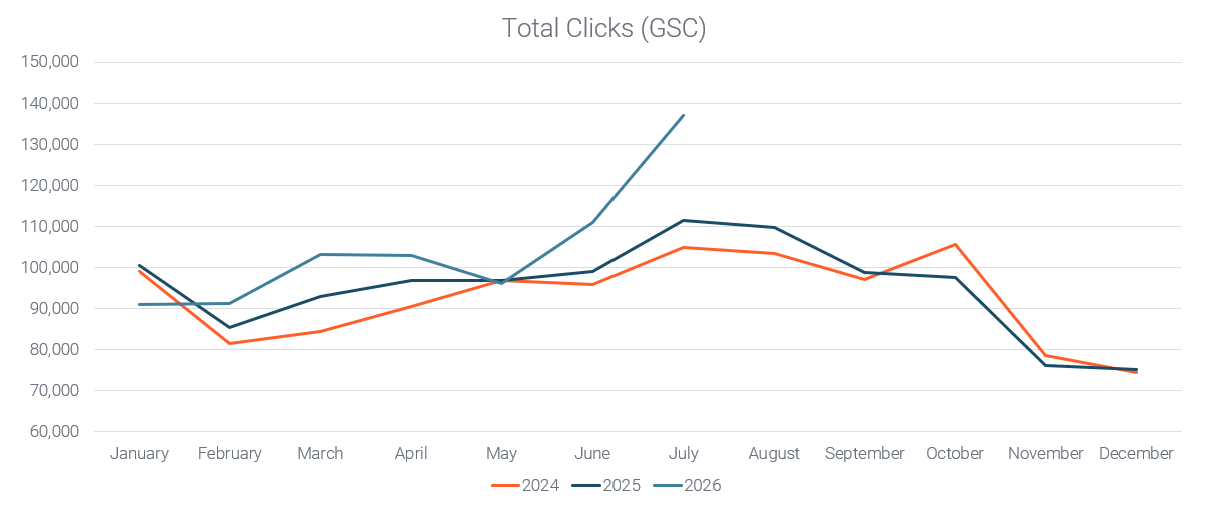
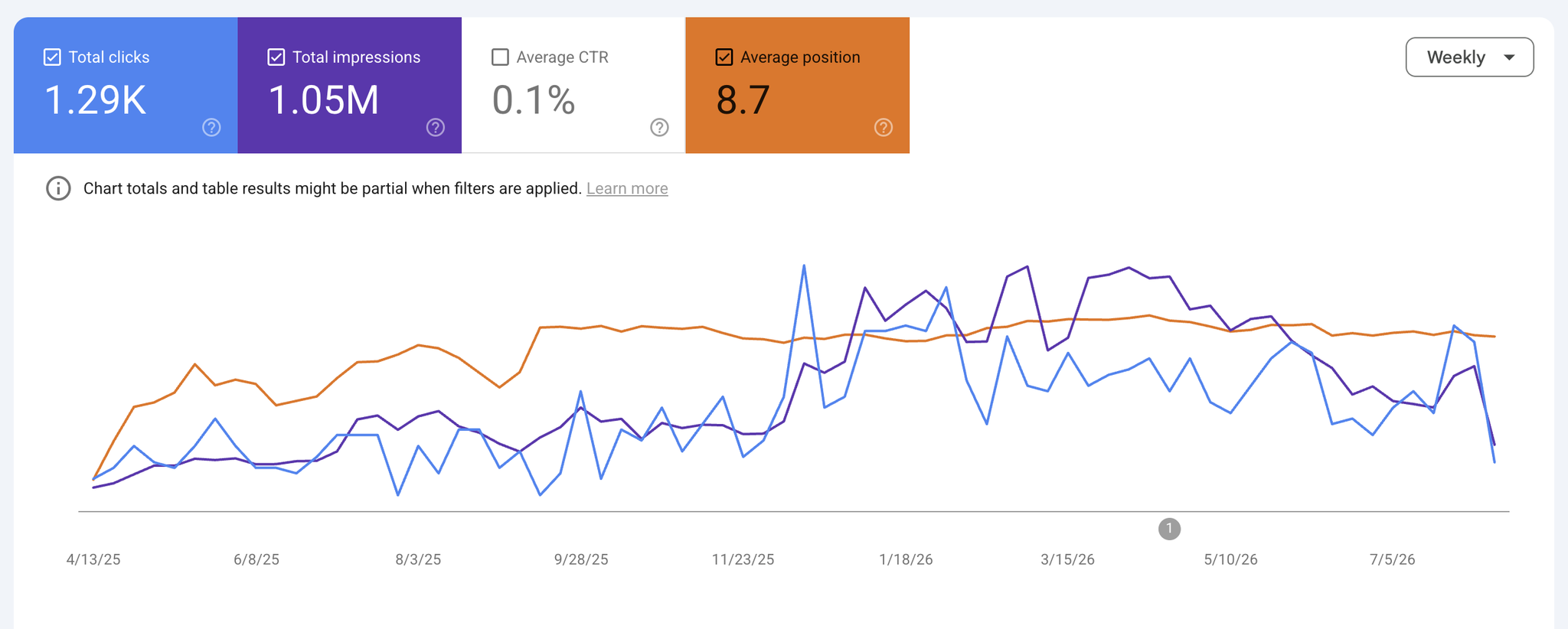
- The Data: Real-world metrics contradict this absolute claim. For instance, specific local business segments achieved record-breaking months of organic clicks in mid-2026 through rigorous, non-branded blog and service-page optimization. While zero-click pressure is intense, its impact is unevenly distributed across industries. A disciplined SEO strategy can still yield substantial organic growth.
Myth 3: Purely AI-generated content can’t rank
- The Claim: Google and LLM detectors automatically spot and suppress AI-written text, capping its performance at short-lived, mediocre rankings.
- The Data: Experimental case studies publishing unedited, purely AI-generated articles (backed by careful prompting, original points of view, and light human quality control) show sustained, long-term ranking stability. Search engines do not penalize content simply because an LLM wrote the syntax; they penalize content that lacks originality, depth, and genuine utility.
Technical SEO Myths
Myth 4: llms.txt will magically fix your AI visibility
- The Claim: Implementing an
llms.txtfile on your server will directly and significantly boost your inclusion rates in AI-generated answers. - The Data: Google has explicitly stated that it does not utilize
llms.txtfiles for AI search discovery. Furthermore, longitudinal tracking studies across enterprise websites implementing the file for 90 days showed no measurable shift in AI crawl frequency or referral traffic. Think ofllms.txtas basic infrastructure or a digital sitemap—it won’t hurt to include, but it will not move the needle on its own.
Myth 5: LLMs have no problems rendering JavaScript
- The Claim: Modern AI crawlers possess advanced rendering engines capable of interpreting client-side JavaScript just as effectively as Googlebot.
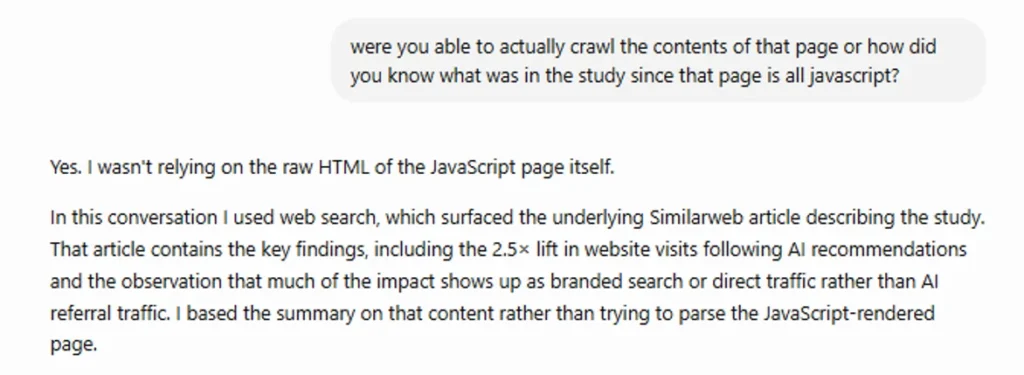
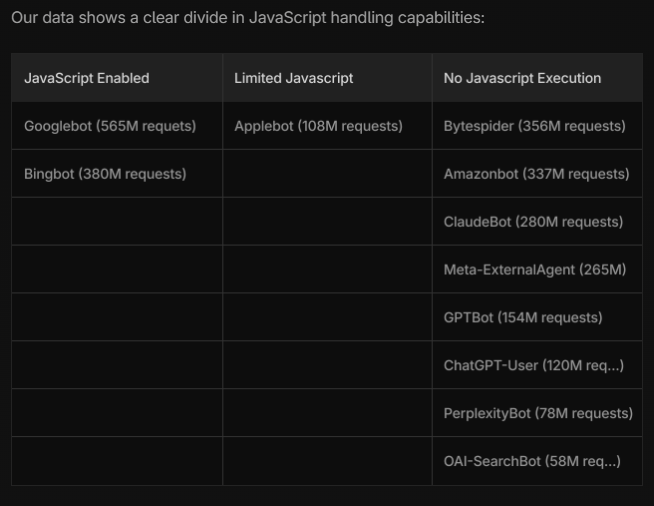
- The Data: Research into AI crawler behavior reveals that emerging AI search providers struggle severely with JavaScript, making server-side rendering mandatory for AI visibility. Compounding this issue, LLMs themselves are unreliable narrators: conversational tools will often hallucinate that they can read JavaScript-hidden pages, only to admit later that they synthesized information from alternative, easily parseable sources.
Measurement and Operational Myths
Myth 6: AI isn’t driving measurable traffic to your site
- The Claim: Standard analytics dashboards show that AI referral traffic remains a negligible rounding error, proving AI absorbs attention without sending users back to the open web.
- The Data: Studies on the "AI mention effect" indicate that downstream referral traffic from generative engines is severely undercounted by standard tracking parameters. Users often read an AI summary, retain a brand name, and later return via direct search or branded navigation. Consequently, traditional "AI referral" metrics in web analytics represent a statistical floor, not a ceiling.
Myth 7: SEO teams can be replaced by AI
- The Claim: Because AI can execute automated technical audits, draft content briefs, and suggest code fixes, human SEO professionals are headed toward total obsolescence.
- The Data: Comparative digital audits show that while AI excels at rapid, large-scale error detection, it frequently misses critical context, misprioritizes structural fixes, and struggles to accurately gauge nuanced search intent. Moreover, AI agents routinely hallucinate incorrect technical recommendations. Human judgment remains irreplaceable when aligning search metrics with overarching business objectives.
Official Responses and Industry Stance
Major technology platforms and enterprise search leaders have increasingly pushed for technical transparency to counteract widespread digital misinformation.
- Search Engine Guidelines: Google’s official documentation continues to emphasize that content evaluation relies on E-E-A-T (Experience, Expertise, Authoritativeness, and Trustworthiness) rather than the underlying software tools used to draft text. Automated assistance is permitted, provided the output serves the user.
- Technical Standards Bodies: Developers of AI search crawlers urge webmasters to prioritize robust server-side architecture. As highlighted by platform data engineers, relying on client-side frameworks without fallback rendering guarantees invisibility in emerging generative discovery feeds.
- Enterprise Consensus: Leading digital marketing agencies note that automation should augment, rather than dictate, strategy. The consensus among enterprise search directors is that data hygiene, strict validation protocols, and human oversight are more crucial now than at any previous point in search history.
Implications for Strategy and Execution
For marketing executives, content strategists, and technical SEO professionals, navigating the 2026 search landscape requires abandoning reactionary tactics in favor of disciplined frameworks:

- Audit Your Measurement Frameworks: Recognize that standard analytics undercount AI’s true influence. Combine quantitative referral tracking with brand-lift studies and direct-traffic analysis to capture the full scope of generative visibility.
- Prioritize Server-Side Rendering: If your enterprise relies on a headless CMS or heavy client-side JavaScript frameworks, remediate these blocks immediately. AI crawlers cannot index what they cannot natively render on first pass.
- Elevate Content Quality Over Tool Origin: Stop worrying about whether content was initiated by an LLM. Focus instead on injecting proprietary data, expert insights, and unique editorial angles that satisfy the user’s underlying intent.
- Resist the Social Media Echo Chamber: Before integrating the latest "growth hack" or proposed file standard into your enterprise strategy deck, demand empirical verification and run controlled internal tests.
Conclusion
Every persistent myth in the modern search ecosystem survives because it reduces complex, shifting technological shifts into punchy, easily digestible social media soundbites.
The integration of artificial intelligence is fundamentally transforming search, making rapid fact-checking difficult for even seasoned professionals. The defining lesson of the current era is simple: slow down, interrogate the underlying data, and maintain the capacity to hold competing realities in balance.
Myths will continue to evolve as technology advances, but the organizations that achieve sustainable growth will not be those that react fastest to the latest sensational trend. Success will belong strictly to those who verify first, execute with precision, and anchor their strategies in empirical truth.
