
The Martech Explosion: Analyzing the 2025 Landscape and the Rise of the "Hypertail"
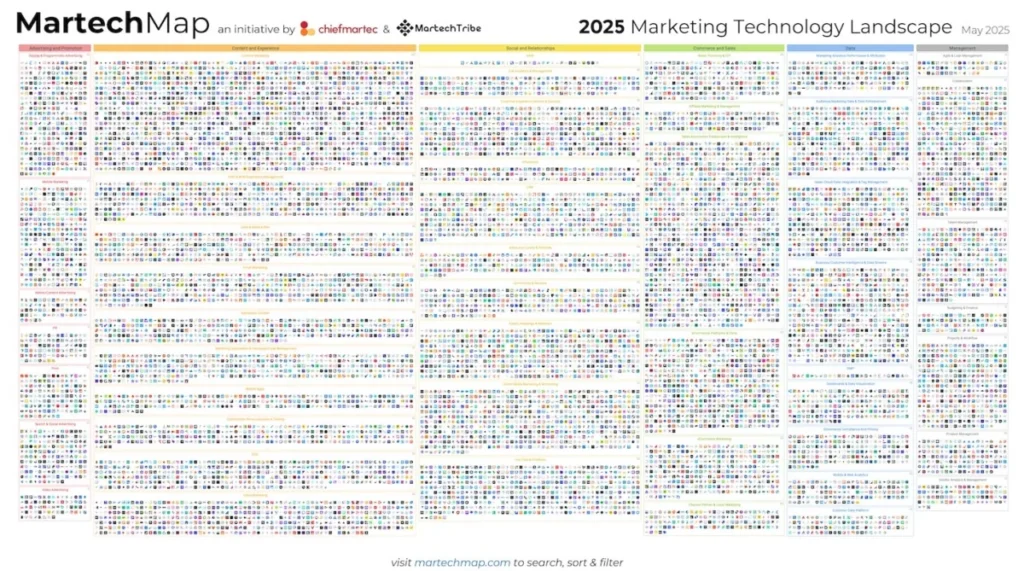
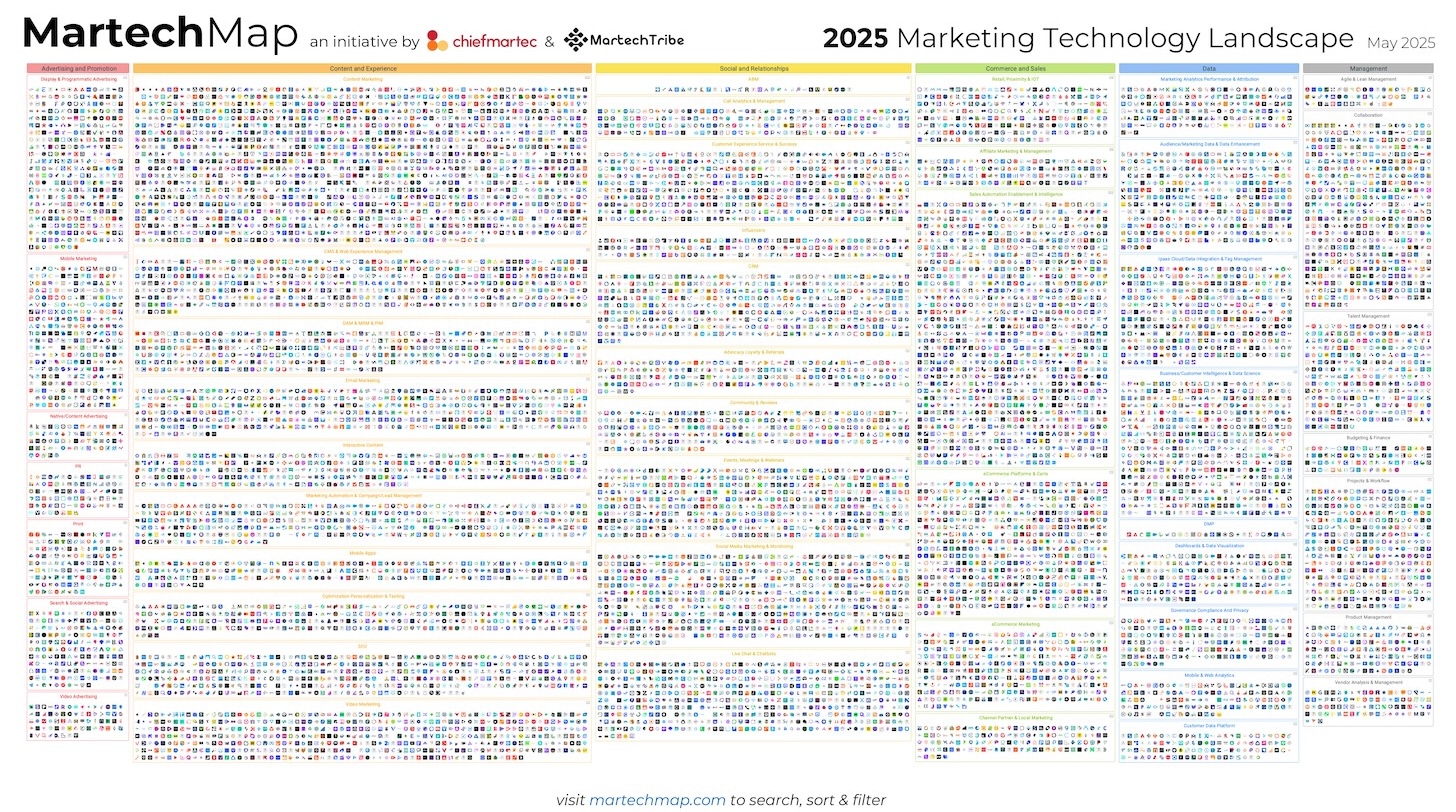
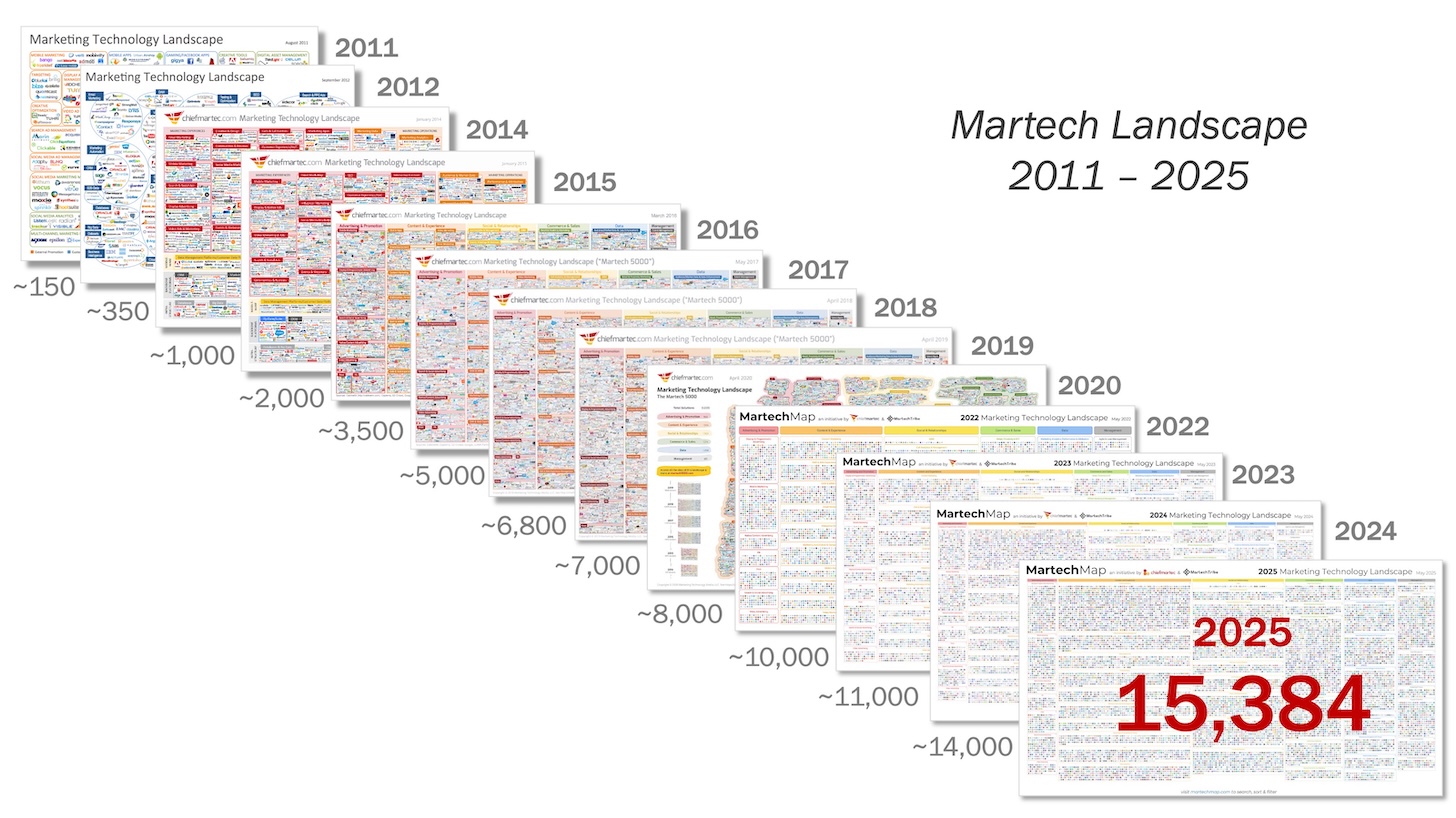
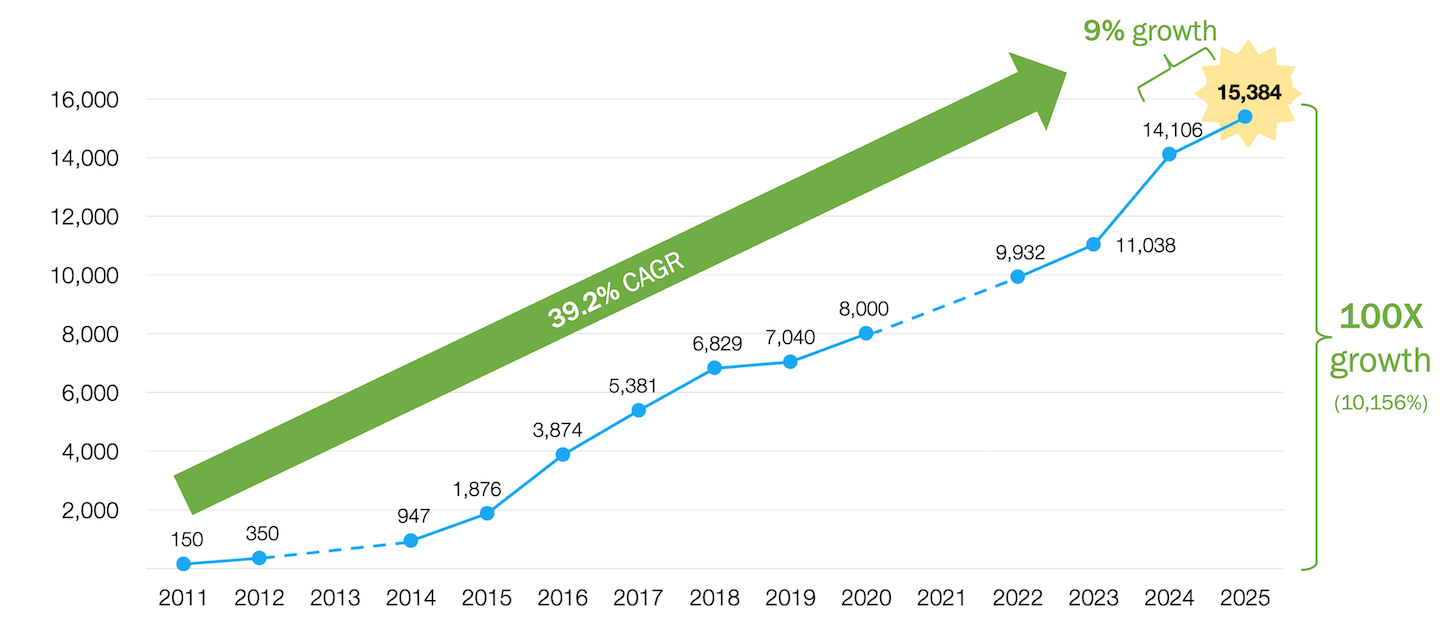
The marketing technology (martech) industry has reached a staggering new milestone. According to the newly released State of Martech 2025 report, the global ecosystem of marketing solutions has expanded to 15,384 distinct products. This represents a 9% year-over-year growth from 2024’s count of 14,106. Despite persistent industry predictions that the bubble would burst, the landscape has defied gravity, marking a 100x increase since the inaugural report in 2011.
However, the headline figure of 15,384 only tells half the story. The 2025 data reveals a profound structural shift: while the "first generation" of martech tools is experiencing a notable consolidation and churn, a new, massive layer of custom, AI-driven software—the "hypertail"—is fundamentally altering how marketing teams operate.
A Chronology of Exponential Growth
To understand the current state of martech, one must look back at its humble, yet disruptive, beginnings. Fifteen years ago, the concept of a "marketing technologist"—a professional bridging the gap between creative strategy and software engineering—was a radical notion.
- 2011: The first official martech landscape was published, featuring a modest 150 solutions. At the time, this was considered a surprisingly high number, sparking debates about the viability of such a crowded market.
- 2011–2020: The industry entered a phase of hyper-growth. Driven by the cloud computing revolution and the proliferation of SaaS, thousands of point solutions emerged to solve niche marketing problems.
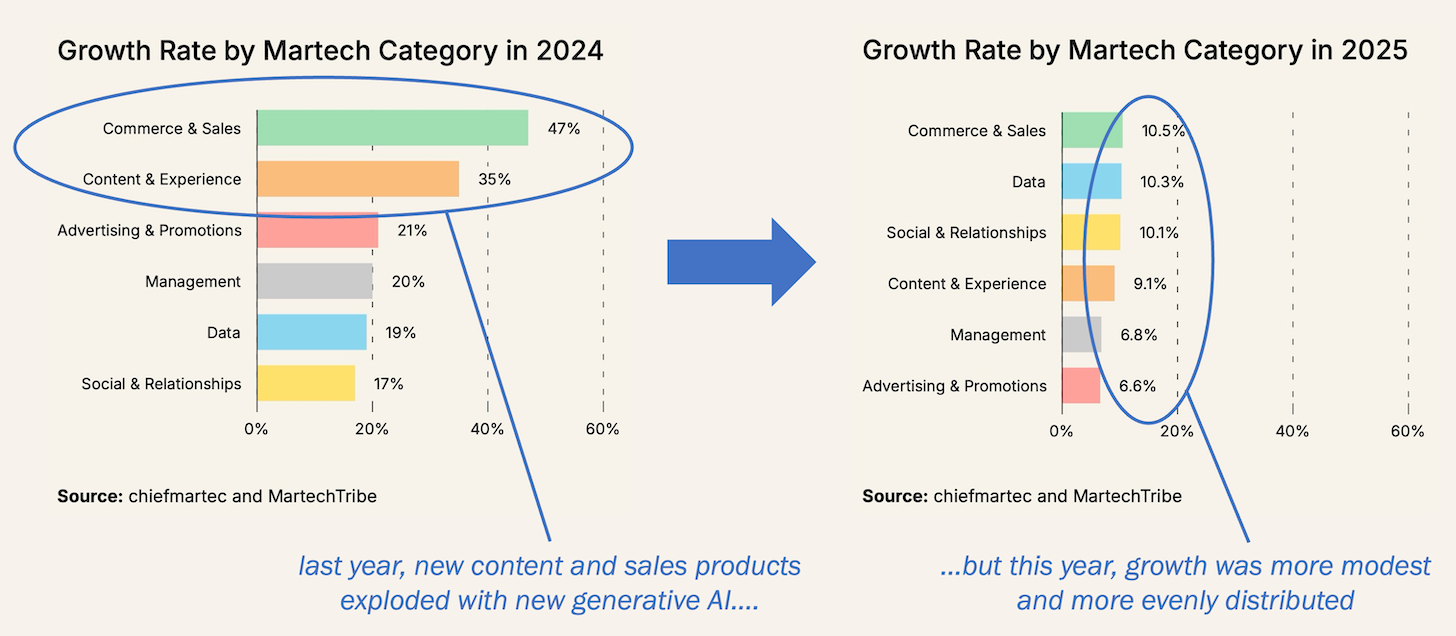
- 2021–2024: Following the public release of generative AI, the market experienced a secondary, AI-native explosion. Startups focused on conversational marketing, content automation, and predictive analytics flooded the space, with growth rates in content and sales categories peaking at 35% and 47% respectively.
- 2025: The industry has entered a phase of "maturation through churn." While the total number of tools continues to rise, the ecosystem is simultaneously purging outdated legacy systems at a rate of 8.6% annually.
Supporting Data: The Anatomy of the 2025 Landscape
The 2025 report, co-produced by Scott Brinker and Frans Riemersma, is built on a rigorous methodology. Researchers evaluated over 11,000 new candidates to arrive at the current landscape, ensuring the data reflects genuine market activity rather than mere "noise."
The Churn Factor
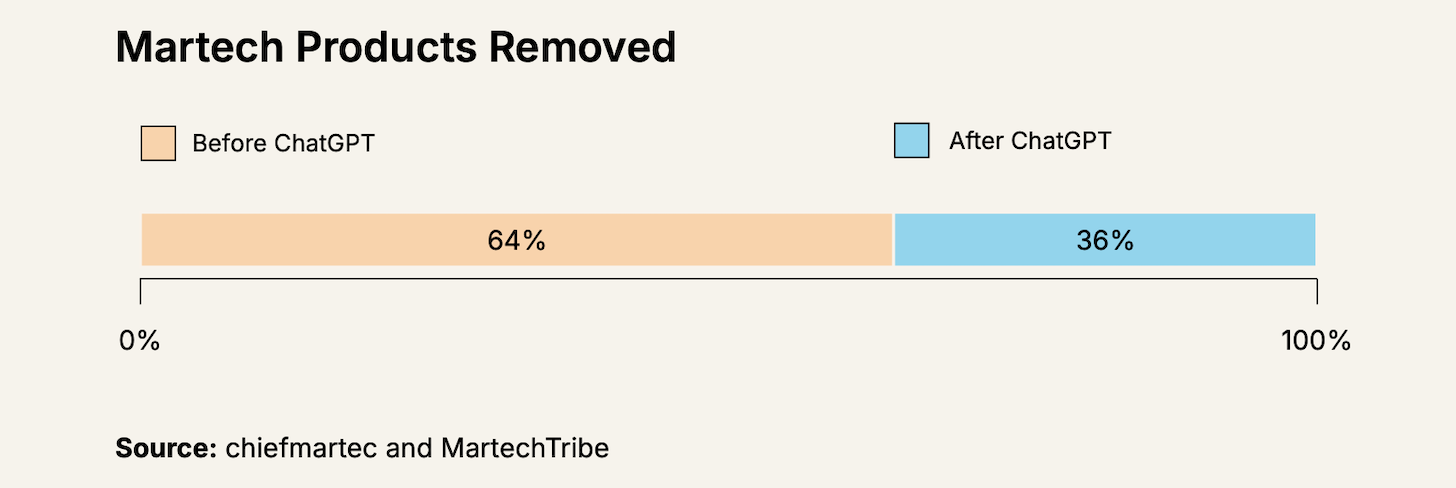
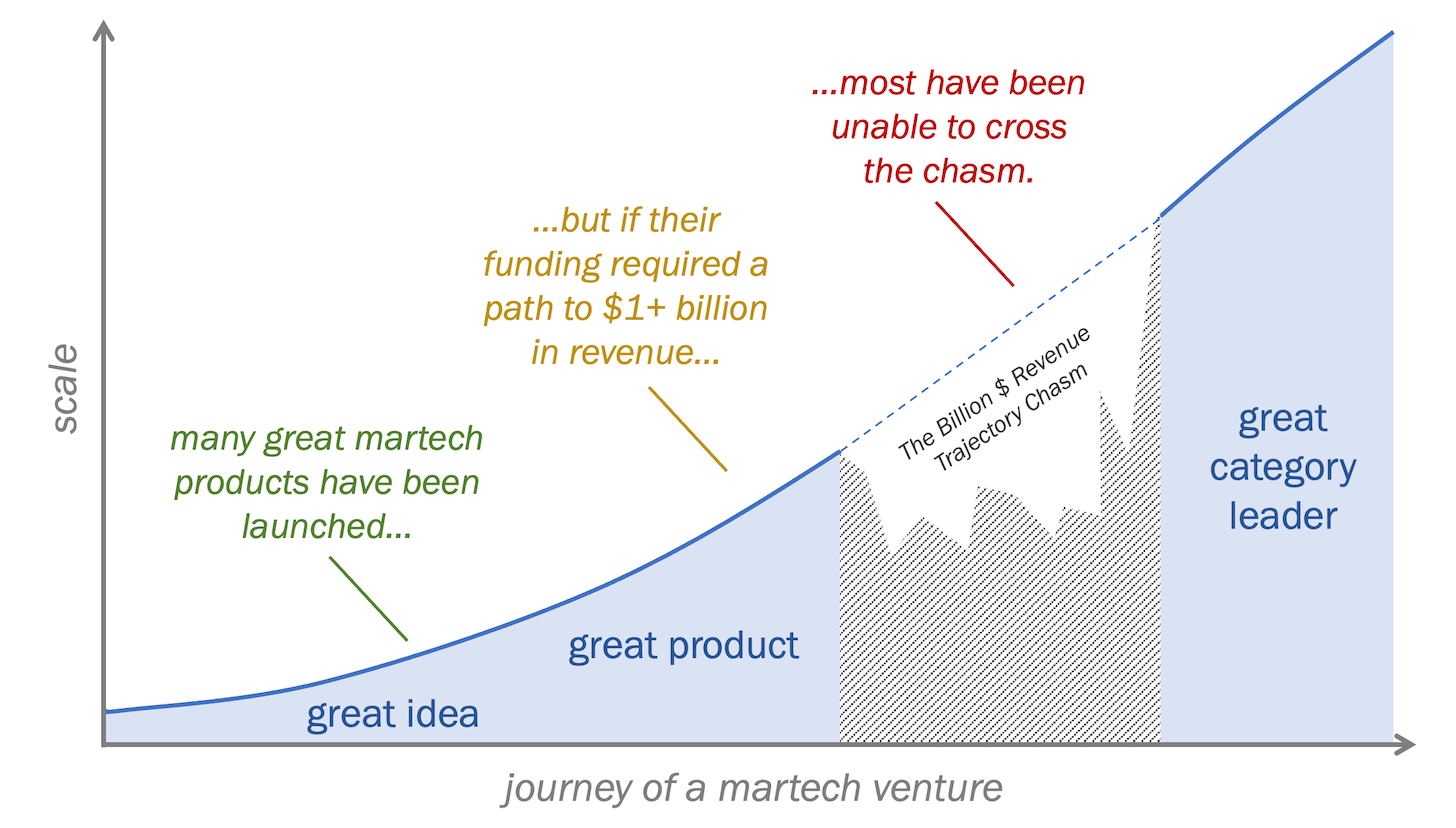
This year, 1,211 solutions were removed from the landscape due to acquisition or business failure. Notably, two-thirds of these removed products originated from the 2010–2020 era. This confirms that the market is finally undergoing a long-awaited consolidation. The "darling" startups of the last decade are finding it increasingly difficult to compete against the new generation of AI-native tools and the efficiency of modern platform consolidation.
Category Growth
While growth has leveled out to a steady 7–10% across the six major domains, subcategories are revealing surprising trends. SEO, often cited as a dying industry by critics, saw an impressive 24% growth, expanding to 262 products. This is largely attributed to the emergence of "AI Optimization" (AIO)—a new discipline dedicated to optimizing content for AI-driven discovery rather than traditional search engines.
Tech Stack Centralization
Marketing operations leaders are increasingly consolidating their stacks around central hubs.
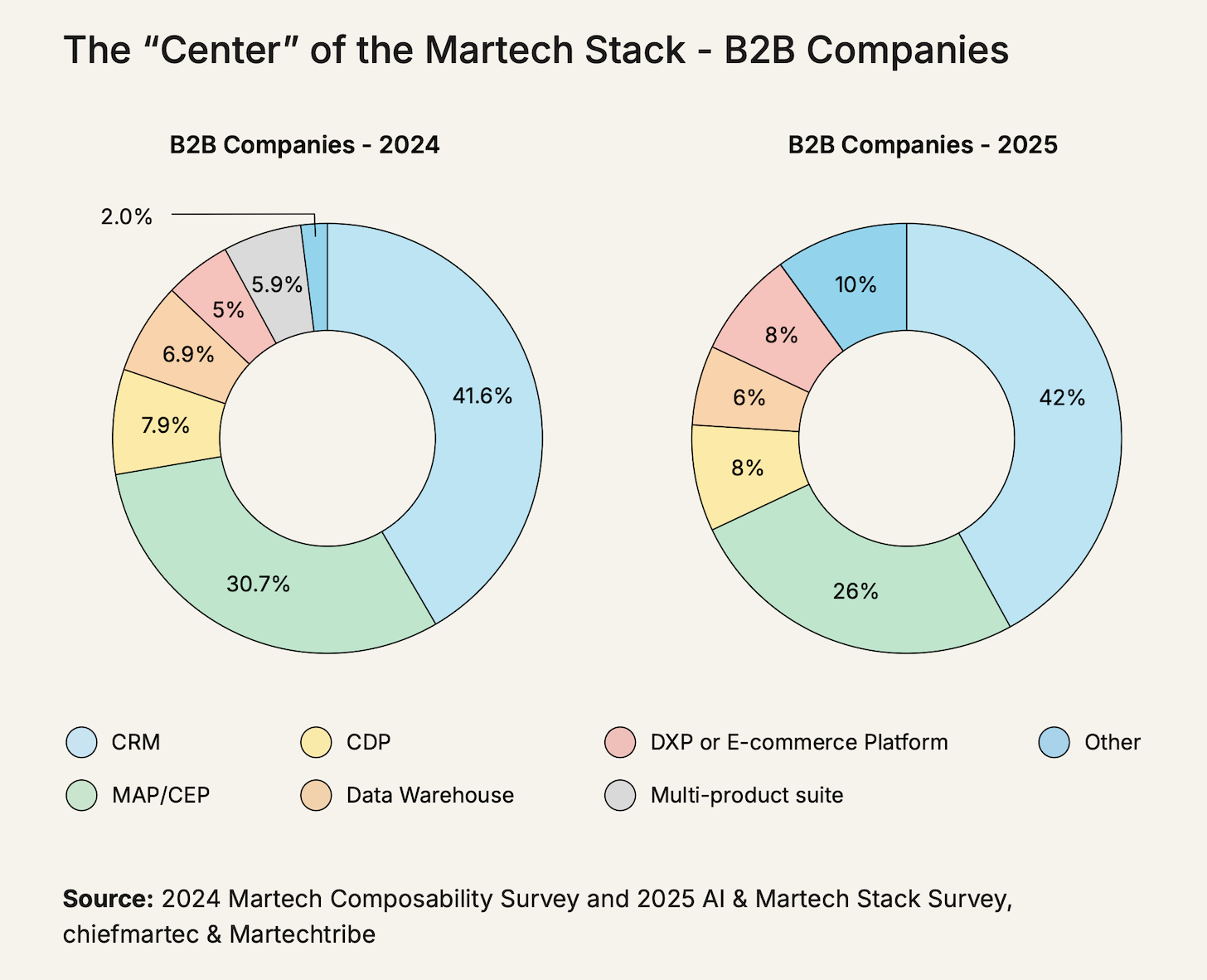
- B2B: The CRM and Marketing Automation Platform (MAP) remain the undisputed centers of gravity. However, there is a 5x increase in companies opting for "custom-built" platforms, signaling a retreat from reliance on off-the-shelf monolithic suites.
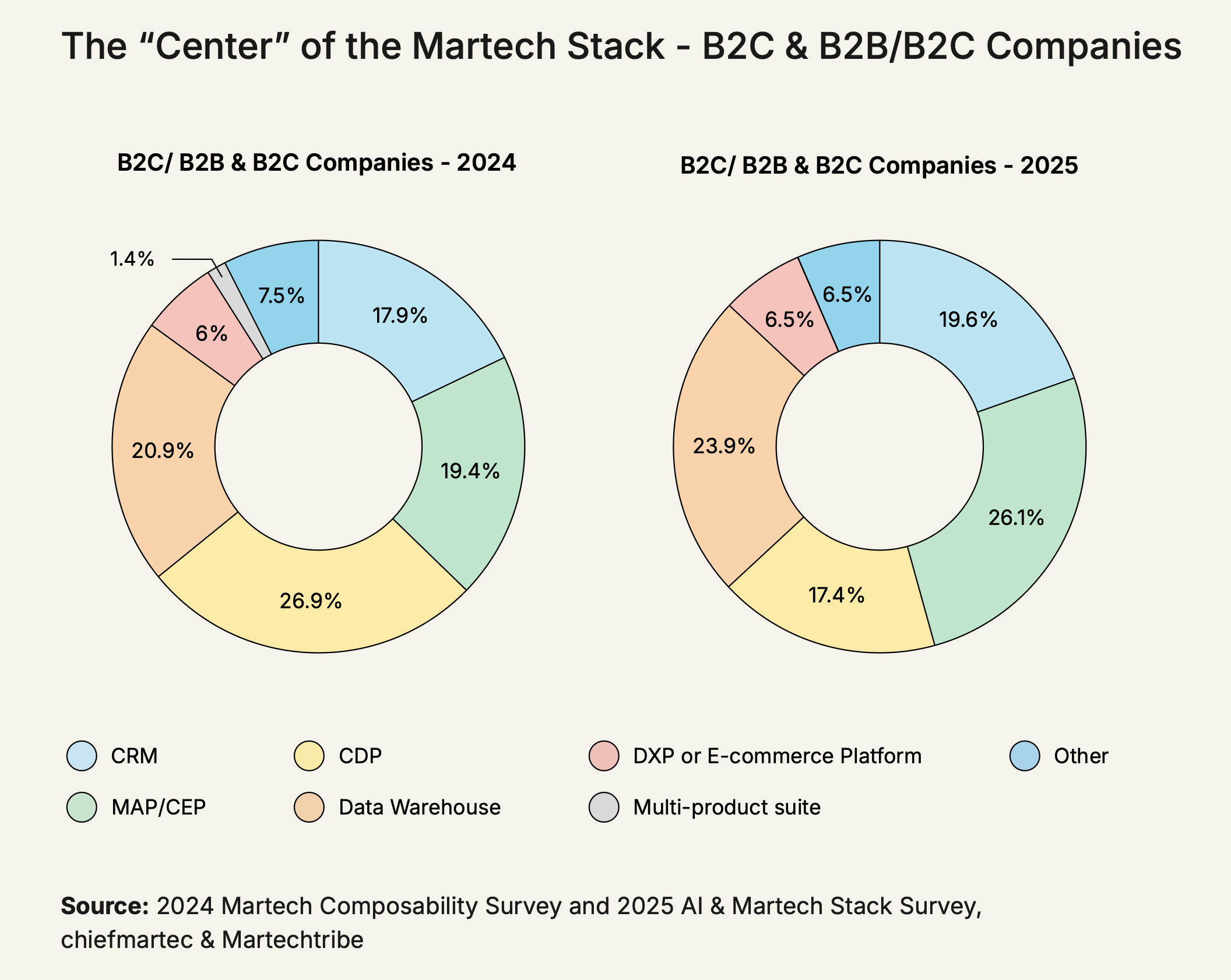
- B2C: A significant shift is occurring regarding Customer Data Platforms (CDPs). Their role as the "center" of the stack has dropped from 26.9% to 17.4%. Data is instead migrating to the cloud data warehouse layer (the "composable CDP" trend), while engagement capabilities are being subsumed by broader marketing automation and CRM tools.
Implications: The Rise of the "Hypertail"
The most significant finding in the 2025 report is the evolution of what researchers call the "hypertail." While the 15,384 products represent commercial, third-party software, there is an invisible, exponentially larger layer of custom-built software growing within organizations.
The Democratization of Development
The barrier to entry for building software has been effectively shattered by low-code and no-code platforms. Marketing teams, once dependent on IT departments to develop even the simplest custom tools, are now empowered to build their own solutions.
The AI Multiplier
Artificial Intelligence has accelerated this trend to a point of near-automation. Developers are using "vibe coding"—the practice of using AI to generate functional software from natural language prompts—to build tools in hours that previously took weeks. For non-technical marketers, AI assistants like ChatGPT and Claude are acting as silent developers, writing scripts and building automation flows behind the scenes.
The implication is clear: we are moving from a world of thousands of commercial applications to a world of billions of custom-built applications. Many of these exist only to perform a single, fleeting task before being discarded. This "trillion-app economy" represents a fundamental shift in how digital marketing operations are executed.
Official Perspectives and Industry Response
The State of Martech 2025 report serves as both a roadmap and a warning for CMOs. The data suggests that while the sheer volume of available technology is overwhelming, the most successful organizations are those that focus on platform integration.
"The laws of gravity can be defied only so long," noted Scott Brinker, reflecting on the consolidation of legacy tools. "But that hasn’t dissuaded others from diving in."
Industry partners supporting this research, including GrowthLoop, Hightouch, and SAS, highlight the necessity of data fluidity. As companies shift toward cloud data warehouses as their primary stack hub, the focus is moving away from owning "all-in-one" platforms and toward creating a flexible architecture where data can be activated across an ever-changing array of "hypertail" applications.
Conclusion: Navigating the Complexity
The 2025 Martech Landscape is a testament to the relentless pace of innovation. For the modern marketer, the challenge is no longer about finding the right tool—it is about managing a portfolio that includes stable, enterprise-grade platforms at the core and a fluid, rapidly evolving periphery of custom AI solutions.
As the industry continues to expand, the distinction between "marketer" and "technologist" continues to blur. With the rise of the hypertail, every marketing team is now, by definition, a software development team. Those who embrace this reality, using AI to manage and create their own custom digital ecosystem, will be the ones who define the next decade of market leadership.
To explore the full data, category breakdowns, and methodology, the complete "State of Martech 2025" report is available for free, ungated download at the official Martech Day website.
