
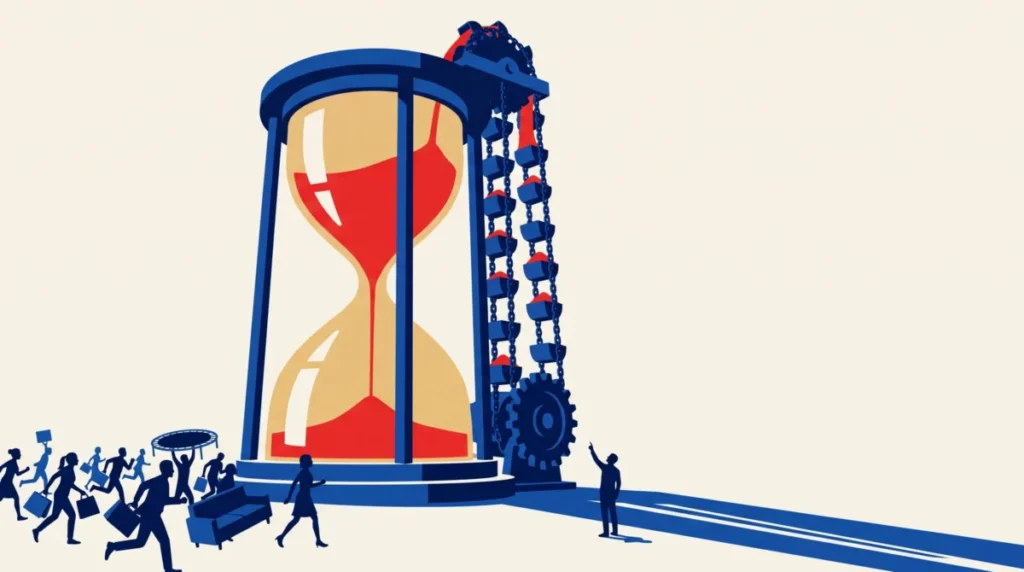
The Countdown to Compliance: ACCC Cracks Down on Retailers Using "False Urgency" Tactics
In an era where e-commerce is dominated by the psychological triggers of the digital marketplace, two prominent Australian retailers have found themselves on the wrong side of the law. The Australian Competition and Consumer Commission (ACCC) has officially penalized furniture retailer James Lane and outdoor play equipment giant Vuly Play Group for employing deceptive marketing tactics during the 2025 Black Friday sales season.
The regulator’s investigation—part of a wider sweep of retail advertising—concluded that both companies fabricated a sense of urgency to drive consumer spending. By using misleading countdown timers and false end-of-sale dates, these retailers allegedly pressured shoppers into making "rushed" purchasing decisions, effectively stifling the natural competitive process that allows consumers to compare prices and seek the best value.
James Lane has paid $19,800 in penalties, while Vuly has been fined $39,600. While these figures represent the immediate cost of the infringement notices, the broader implications for the Australian retail sector are significant. With Black Friday 2026 approaching, the ACCC has signaled that these enforcement actions serve as a stern warning to all digital merchants: the clock is ticking on deceptive design patterns.
The Anatomy of the Allegations: False Urgency
At the heart of the ACCC’s case is the concept of "dark patterns"—manipulative interface designs that influence user behavior in ways that may not be in the consumer’s best interest. In the case of James Lane and Vuly, the regulator targeted two distinct methods of creating artificial scarcity.
James Lane: The Pre-Planned Extension
James Lane, a subsidiary of the Bart Group, faced scrutiny over its Black Friday 2025 campaign. The retailer advertised that its sale would conclude on December 3, 2025. However, the ACCC investigation revealed a more calculated strategy: James Lane had decided, prior to the launch of the sale, that it would extend the promotion regardless of the advertised end date.
Screenshots captured by the ACCC on December 3, 2025, showed the company’s homepage featuring prominent banners declaring, "Sale ends today!" Despite these explicit messages, the discounted pricing remained active for an additional week. The ACCC contends that this was not a spontaneous decision to reward loyal customers, but a deliberate attempt to manufacture a "fear of missing out" (FOMO) to secure sales that might otherwise have been lost to competitors.
Vuly: The Infinite Countdown
Vuly Play Group’s approach involved the use of digital countdown timers, a common fixture in modern e-commerce. During its "Click Frenzy" event in early November 2025, Vuly utilized a timer to signal the end of a "30% off" promotion. According to the regulator, as soon as the timer reached zero, the countdown simply reset to a new date, and the promotion continued—often with even deeper discounts of up to 45%.
The irony of this strategy was not lost on investigators. Consumers who acted quickly to "beat the clock" during the initial sale potentially missed out on the higher discounts offered once the timer was extended. By resetting the clock, Vuly essentially kept customers in a state of perpetual urgency, undermining the consumer’s ability to make an informed, rational choice.
A Chronology of the ACCC Sweep
The ACCC’s scrutiny of these retailers was not an isolated incident but part of a systematic "sweep" of retail advertising practices launched in November 2025.
- November 10, 2025: The ACCC formally launches its annual Black Friday sweep, explicitly warning retailers that countdown timers must reflect genuine end dates.
- November 14, 2025: Despite the public warning, Vuly continues to display countdown banners for its Click Frenzy event, which the ACCC later cites as evidence of non-compliance.
- November 28, 2025: Black Friday arrives. Vuly’s promotional timers continue to reset, creating a cycle of artificial urgency.
- December 3, 2025: James Lane displays "Sale ends today!" banners, despite having already finalized plans to extend the sale into the following week.
- September 29, 2026: The ACCC releases media statement 112/26, detailing the $59,400 in total penalties issued to the two retailers.
The Regulatory Framework and Penalty Structure
The ACCC’s enforcement action against James Lane and Vuly highlights a rigid, notice-based penalty system. Each infringement notice cost the retailers $19,800. While the ACCC does not specify how these amounts were calculated, the consistency across various cases—including those involving Hismile, digiDirect, and Doreen Egg—suggests that the fine is tied to the number of notices issued rather than the total revenue gained by the retailer during the period of misconduct.
A Shifting Legal Landscape
It is vital to note that neither James Lane nor Vuly admitted to a formal contravention of the Australian Consumer Law (ACL). Instead, they entered into commitments with the ACCC to ensure future compliance. This differs significantly from recent, more severe cases like that of digiDirect, which paid $99,000 and signed a court-enforceable undertaking—a legal instrument that allows for more stringent oversight.
The stakes for such behavior are rising. On March 26, 2026, the Australian government passed the Treasury Laws Amendment (Doubling Penalties for ACCC Enforcement) Act. While the conduct in the James Lane and Vuly cases occurred before this amendment, future transgressions could face a penalty ceiling as high as $100 million. This move represents a global trend toward holding digital retailers to the same standards as physical ones, specifically regarding "dark patterns" and deceptive pricing.
Official Responses and Consumer Protection
ACCC Deputy Chair Catriona Lowe has been unequivocal in her stance regarding these tactics. "We are concerned that retailers are increasingly using tactics that create a false sense of urgency," Lowe stated. "These claims also hurt competition as they can discourage consumers from shopping around."
The ACCC’s position is clear: countdown timers and sale deadlines are not inherently illegal, but they must be honest. When a business uses a timer to manipulate a customer into a transaction, it crosses the line into deceptive conduct.
The regulator’s focus on this issue is part of its broader 2026-27 enforcement priorities, which identify misleading pricing and manipulative design as major threats to market integrity. By targeting these specific tactics, the ACCC is attempting to restore a "fair playing field" where consumers can evaluate offers based on price and quality rather than manufactured time pressure.
Implications for Marketers and Retailers
For agencies and e-commerce managers, the fallout from the James Lane and Vuly cases carries three key implications:
- The End of "Perpetual Sales": Retailers can no longer use countdown timers as a "set-and-forget" marketing tool. If a timer reaches zero, the offer must expire. Extending a sale while maintaining the same countdown clock is now a documented trigger for ACCC intervention.
- Automated Risks: With the rise of AI-driven ad copy, there is a risk that systems might generate "Sale ends today!" banners based on legacy landing page content. Marketers must ensure that automated creative is synchronized with actual inventory and promotional schedules to avoid accidental misrepresentation.
- Global Harmonization: As the European Union and other jurisdictions move to blacklist false urgency tactics under directives like the Digital Fairness Act, retailers with a global footprint must standardize their promotional integrity. A campaign that is acceptable in one market might be a regulatory liability in another.
Conclusion: Looking Ahead to Black Friday 2026
With Black Friday 2026 now less than two months away, the ACCC has made its intent clear: they are watching. The regulator is currently investigating several other retailers concerning claims made during the 2024 and 2025 holiday seasons. Whether these files will lead to further infringement notices or culminate in full-scale Federal Court proceedings remains to be seen.
The message to the retail industry is unambiguous. In a digital economy where trust is the primary currency, the use of deceptive timers and false deadlines is not just a marketing failure—it is a compliance failure that carries heavy financial and reputational costs. As consumers become more sophisticated in identifying these "dark patterns," the pressure on retailers to maintain transparency will only increase. For those relying on the artificial tick-tock of a countdown clock to boost conversion rates, the lesson is simple: honesty is the only way to stay ahead of the game.
