By Global Business & Media Desk Published: June 2026
Main Facts: The Paradigm Shift in CPG Marketing
In the fast-moving landscape of Consumer Packaged Goods (CPG), traditional advertising models reliant on broad-stroke television commercials and static print campaigns are taking a back seat. Today, some of the world’s most recognizable household brands are redefining how they capture consumer attention by mastering social video.
However, the secret to their success is not merely creative intuition; it is a systematic, data-backed approach to audience insights. From cross-platform content distribution to precise post-timing and unexpected creator alignments, every decision made by industry leaders is deliberate, calculated, and anchored in hard metrics.
Recent data compiled across global digital channels highlights a fundamental shift in how enterprise brands operate. Industry giants such as Red Bull, Heineken, Charlotte Tilbury, and Old Spice have taken entirely different routes to social video dominance. Yet, a deeper examination of their underlying performance metrics reveals a unified strategy: bold, unconventional decision-making justified by granular audience intelligence.
By prioritizing engagement metrics over baseline assumptions, selecting distribution platforms based on true cultural resonance, and utilizing performance data to outpace shifting consumer behaviors, these brands are transforming passive viewers into active brand advocates.
Chronology: The Evolution of Digital Video Strategy in the CPG Sector
To understand how modern CPG brands arrived at their current social video dominance, one must trace the evolution of digital content consumption over the past decade.
The Early 2010s (The Era of Volume): Initially, CPG brands treated platforms like YouTube and Facebook as digital billboards. Success was measured primarily by impression volume and subscriber counts, leading to a "flood the zone" strategy where brands prioritized high-frequency uploads regardless of engagement quality.
The Mid-to-Late 2010s (The Rise of Influencer Marketing): Brands began recognizing the power of third-party creators. However, partnerships during this era were largely dictated by "category fit"—beer brands partnered exclusively with lifestyle beer reviewers, and beauty brands stuck strictly to traditional makeup vloggers. While safe, this approach quickly hit a plateau of diminishing returns.
The 2020–2023 Shift (Short-Form Revolution): The explosive rise of TikTok, followed quickly by the introduction of Instagram Reels and YouTube Shorts, fundamentally disrupted consumer attention spans. Brands scrambled to adapt to vertical, lightning-fast video formats, often struggling to balance short-form production with long-form brand equity.
The 2025–2026 Horizon (The Data-Intelligence Era): As demonstrated by recent industry analytics, the modern era relies entirely on audience intelligence, search affinity, and behavioral data. Brands have learned that the highest-volume platform is rarely the highest-impact one, prompting a wholesale restructuring of global marketing budgets. Cross-industry collaborations—such as beauty brands partnering with motorsports leagues—have become the new standard for exponential audience expansion.
Supporting Data: Decoding the Numbers Behind the Strategy
A close look at recent digital metrics illuminates why legacy playbooks no longer suffice. According to comprehensive industry insights, CPG brands that leverage data-backed targeting consistently outperform those relying on traditional demographic assumptions.
1. Red Bull and the Short-Form Paradox
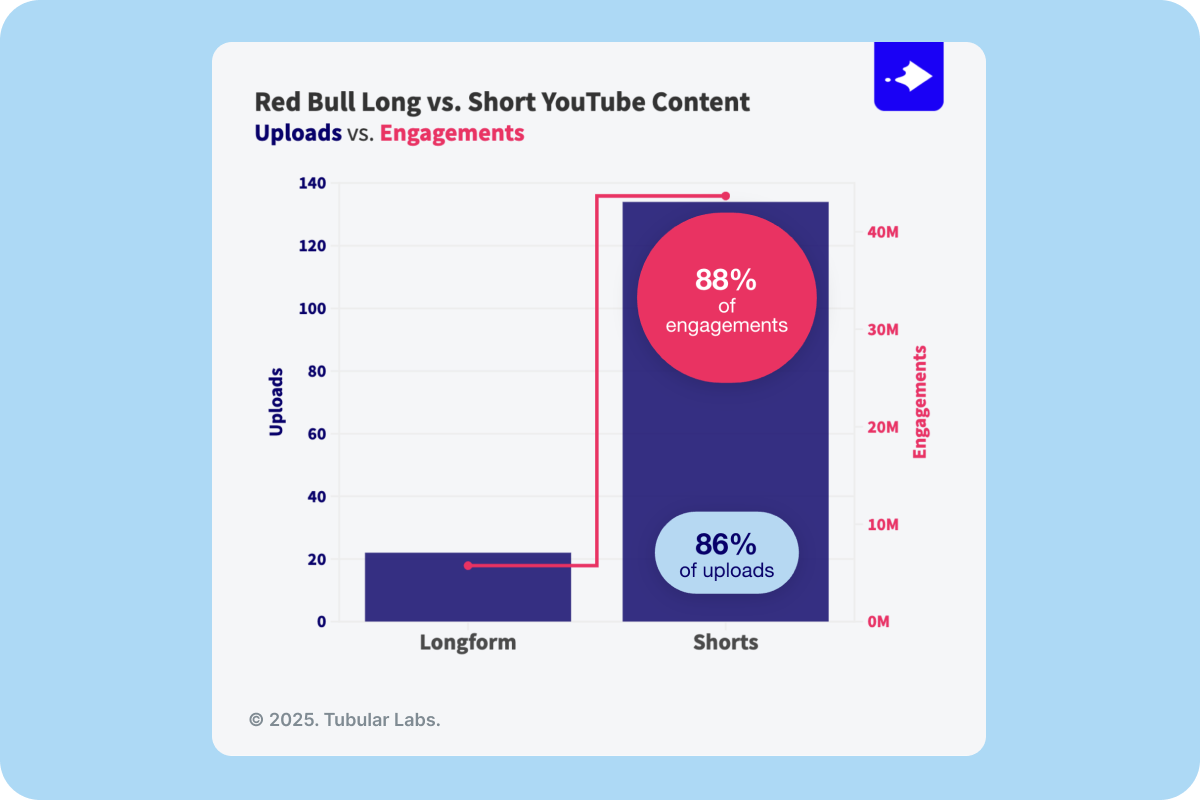
Data shows that 77% of global YouTube views in 2025 came from videos less than a minute long. Energy drink powerhouse Red Bull met this trend head-on, deploying a high-volume short-form video strategy. However, performance metrics revealed a striking nuance in cross-platform consumption:
YouTube Alignment: Red Bull’s engagement on both short- and long-form YouTube content aligned closely with their upload volume.
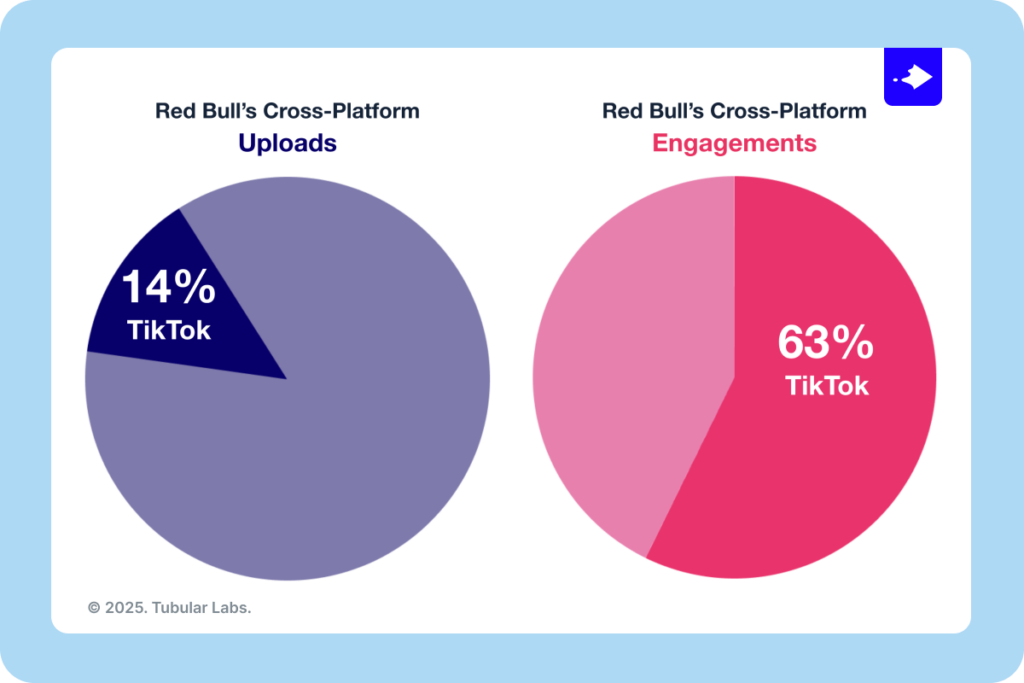
The TikTok Discrepancy: Despite accounting for a mere 14% of their total cross-platform uploads, TikTok videos generated a staggering 63% of their total brand engagement.
This disparity highlights a vital lesson for marketers: video duration optimization and content performance do not translate uniformly across ecosystems. Understanding individual platform nuances is essential for maximizing return on investment.
2. Heineken’s Niche Creator Breakthrough
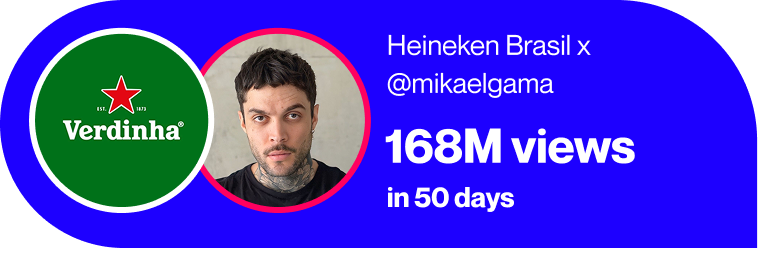
Traditional CPG logic would dictate that a beer brand should partner strictly with beverage reviewers or sports personalities. Heineken shattered this convention by partnering with Brazilian men’s fashion creator Mikael Gama (@mikaelgama) on Instagram and TikTok.
Despite Gama having an initial following of just 136,000, the targeted campaign drove 168 million views and 1 million engagements in a mere 50 days.
This performance catapulted Gama to become the #1 most-viewed Brazilian influencer in the first half of 2025.
By prioritizing cultural fit and visual aesthetic alignment over strict category boundaries, Heineken tapped into a deeply engaged audience that standard marketing models would have entirely overlooked.
3. Charlotte Tilbury and the Motorsports Cross-Over
Luxury beauty brand Charlotte Tilbury made history as the first female-founded beauty brand to partner with Formula 1’s all-female academy, F1 Academy. This unexpected pairing bridged two seemingly disparate demographics: high-octane motorsports fans and prestige cosmetics consumers. The data-driven gamble resulted in an immediate surge in User-Generated Content (UGC) on TikTok and rapid mutual audience growth for both entities.
4. Old Spice: Precision Over Proliferation
Old Spice stands as one of YouTube’s most-viewed CPG brands globally. Crucially, this dominance was not achieved by flooding the platform with endless content. Instead, Old Spice focused on strategic, highly targeted publishing—leveraging high-impact formats like YouTube Shorts and precise demographic targeting to expand its reach without inflating its production volume.
Official Responses and Industry Insights
Marketing executives and digital analysts have increasingly emphasized the necessity of moving away from vanity metrics toward deeper audience intelligence.
Industry analysts point out that predicting campaign ROI based solely on follower counts, raw views, and basic engagement rates leaves a massive margin for error. Modern enterprise brands are shifting toward multi-layered analytical frameworks that incorporate:
Search Affinity: Understanding what consumers actively look for outside of brand interactions.
Shopping Affinity: Analyzing purchasing intent markers across digital ecosystems.
Audience Overlap Data: Identifying hidden demographic intersections between entirely different industries.
"A good CPG social video strategy follows best practices. A great one uses audience data to question them," notes a leading digital media strategist. "When you stop guessing how long your videos should be or who your brand should partner with, the data reveals untapped consumer segments you never knew existed."
Furthermore, brand representatives underline that agility is paramount. As algorithms shift and consumer preferences evolve on a monthly basis, rigid annual marketing plans are rapidly being replaced by agile, data-responsive content strategies.
Implications: What This Means for the Future of CPG Marketing
The pivot toward data-backed social video strategy carries profound implications for brands, agencies, and content creators alike.
1. The Death of Category-Siloed Marketing
The successes of Heineken and Charlotte Tilbury prove that modern consumers do not live in neat, categorical boxes. A sports fan can be a luxury cosmetics buyer; a fashion enthusiast can be a beverage consumer. CPG brands must look beyond traditional demographic profiles and embrace cross-industry collaborations that are culturally authentic rather than categories-aligned.
2. Quality and Strategy Over Content Saturation
As demonstrated by Old Spice, the era of endless content flooding is giving way to precision publishing. Brands that master platform-specific optimization—knowing precisely where short-form thrives versus long-form storytelling—will achieve higher ROI with leaner, more impactful production budgets.
3. The Evolution of Influencer Valuations
Micro- and niche-influencers with high cultural resonance are increasingly outperforming mega-influencers with broad, unfocused followings. For CPG brands, vetting creators through deep audience intelligence tools—analyzing actual audience overlap rather than surface-level follower metrics—will become the baseline standard for successful campaign execution.
Conclusion: The Playbook for Modern CPG Brands
The rules of social video are being rewritten in real-time. For CPG brands aiming to maintain a competitive edge, the path forward requires a departure from legacy assumptions and an embrace of rigorous, data-led decision-making.
By optimizing video duration for specific platforms, taking calculated risks on cross-industry partnerships, and prioritizing strategic publishing over sheer volume, brands can successfully convert digital views into lasting brand loyalty. In a social video landscape that moves at breakneck speed, the brands that win will consistently be the ones that let data lead the way.