
The Trust Paradox: Why Wil Reynolds Says Chasing AI Volume is Marketing’s Greatest Trap
In the high-stakes world of digital marketing, the siren song of artificial intelligence is loud, insistent, and undeniably seductive. For many, the promise is simple: leverage generative AI to produce more content, reach more channels, and capture more visibility—all with a fraction of the human labor previously required.
However, according to Wil Reynolds, founder and CEO of Seer Interactive, this pursuit of hyper-efficient output is creating a dangerous imbalance. As marketing teams sprint toward automated volume, they risk sacrificing the very currency that matters most: credibility.
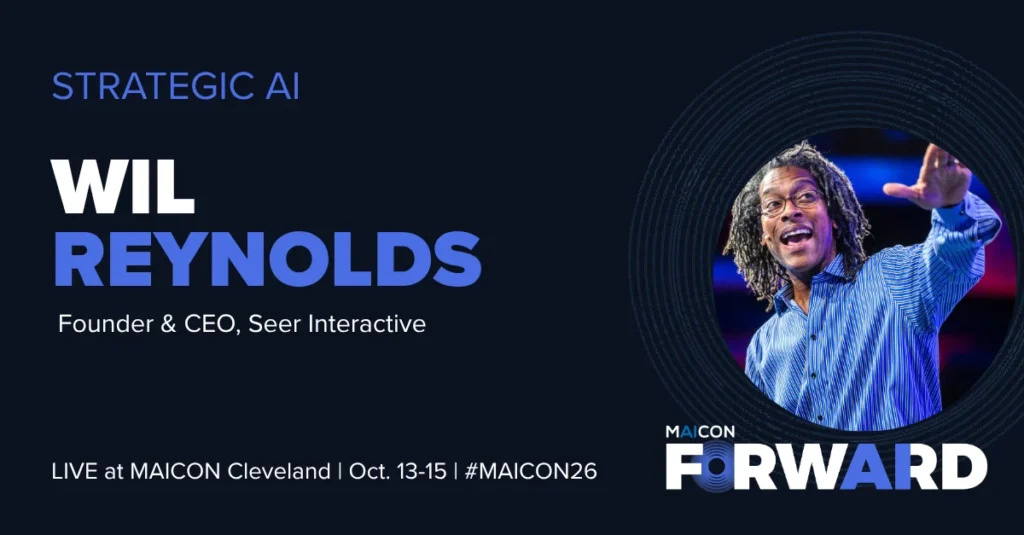
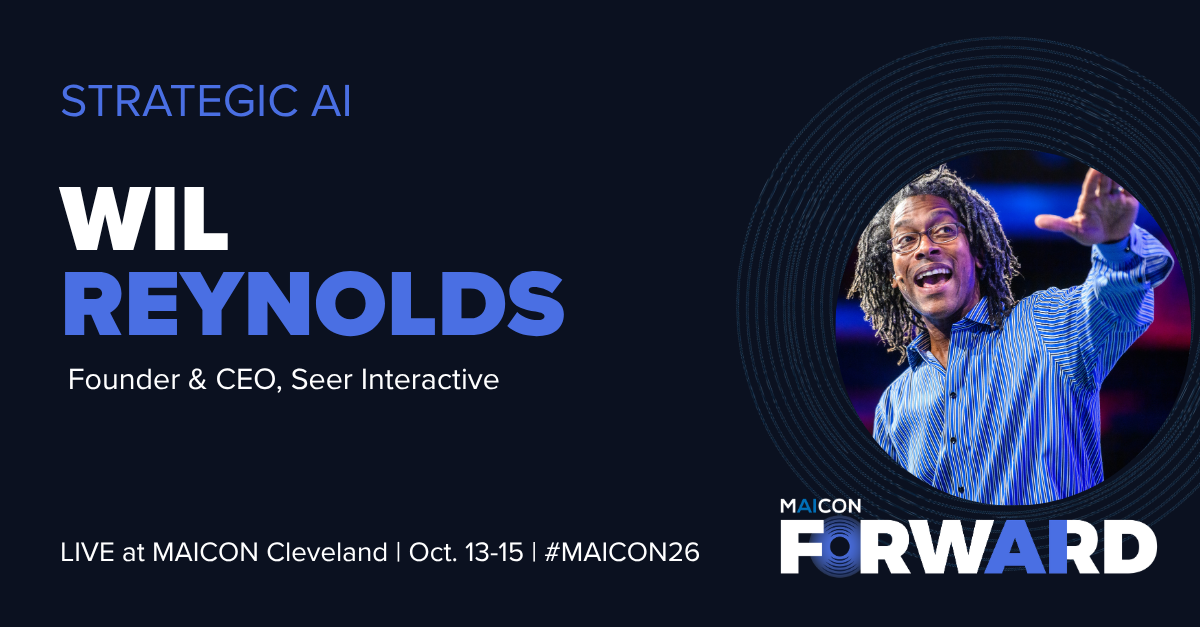
Reynolds, a veteran digital strategist who has steered his agency through two decades of industry shifts, is set to headline MAICON 2026. His session, titled "Seen. Believed. Chosen: AI Optimization That Builds Visibility and Credibility," promises a critical re-evaluation of the current obsession with AI-driven content factories. His message is a warning to marketing leaders everywhere: stop optimizing for the machine and start optimizing for the human.
The Illusion of Scale: Why "Faster" is Failing
For years, the gold standard of digital marketing was "more." More blog posts, more social media updates, and more SEO-optimized landing pages were viewed as the direct path to higher traffic and, eventually, a robust sales pipeline. The advent of Large Language Models (LLMs) like ChatGPT and Gemini seemed to offer a technological shortcut to that promised land.
"Every tool on the market is promising the same thing: more content, faster, with fewer people," Reynolds observes. "That approach can work in a vacuum, but it has gone off the rails. More output does not automatically mean more trust. More visibility does not automatically mean more pipeline. And more AI-generated content does not automatically make a brand more useful, authoritative, or chosen."
The flaw in the "more-is-better" strategy, Reynolds argues, is a fundamental misunderstanding of how search engines now operate. The days of "gaming" Google through keyword density and volume are fading. Modern AI-driven search models—which prioritize intent, authority, and existing brand signals—are increasingly sophisticated in determining which sources are worth citing.
The New Search Reality: Credibility as Currency
To understand the future of SEO, one must look at how models like Gemini and ChatGPT verify information. They don’t just scrape the web for any mention of a topic; they evaluate the provenance of that information.
"ChatGPT and Gemini are now using brands it already sees associated with a topic, then running searches to retrieve information based on those brands and brand signals," Reynolds explains.
This creates a high barrier to entry for brands that have spent years churning out low-quality, AI-generated filler. By prioritizing quantity, these brands have failed to build the "brand signals" that AI models look for when determining authority. As a result, they are finding themselves sidelined by the very search engines that once rewarded volume. For those trying to take shortcuts to visibility without first establishing a bedrock of credibility, the road ahead is not just difficult—it is effectively a dead end.
A Disciplined Approach: The "Think, Don’t Auto-Produce" Philosophy
While some marketing leaders are attempting to automate their entire creative process, Reynolds takes a radically different, highly disciplined approach. He is transparent about his own workflow, which serves as a blueprint for those who want to harness the power of AI without sacrificing their unique voice.
"I use AI to think, challenge, and connect dots between ideas and articles I’ve read," Reynolds says. "It does not auto-produce anything for me personally. No emails, no video edits are my two biggies."
This distinction is vital. Reynolds argues that the goal of AI should be to elevate the quality of human thinking, not to replace the human perspective. Because he values his own unique voice and the specific insights he brings to his audience, he refuses to spend time forcing a model to mimic him.
The lesson here is profound: AI should be a partner in ideation, not a replacement for communication. When a brand floods a channel with generic, AI-generated content, it erodes the trust that took years to cultivate. By contrast, using AI to deepen research or identify patterns allows a brand to maintain its authority while becoming more efficient in its intellectual pursuits.
The KPI Problem: A Disconnect in Measurement
Perhaps the most significant challenge facing marketing leaders in the AI era is the disconnect between vanity metrics and actual business outcomes. Reynolds has been candid about a phenomenon he observed at Seer Interactive: a significant drop in organic traffic accompanied by a simultaneous increase in pipeline.
This divergence serves as a case study for the "KPI Problem." Many organizations are stuck in a measurement paradigm that values clicks and impressions—metrics that were easily tracked in the "old" internet—while ignoring the harder-to-measure realities of how AI-influenced buying journeys actually function.
"Metrics is the biggest issue of all these days when it comes to AI visibility," Reynolds notes. "Everyone wants to be more visible AND tie the results down to a specific ROI, or else. It’s early innings and these things are not even close to being settled."
His warning to his peers is blunt: "Scared marketers will stick to outdated KPIs instead of having the tough conversations we need to have. Things are harder to track than ever."
For Reynolds, the drop in traffic was a wake-up call, but also a gift. It provided him with a head start on the uncomfortable conversations that all marketing leaders will eventually have to navigate with their stakeholders. It highlighted that traffic is not a proxy for trust, and that in the AI-driven landscape, the metrics that matter are shifting toward engagement, authority, and conversion quality rather than mere visibility.
Implications for Future Strategy: The Road to MAICON 2026
As the marketing industry gathers for MAICON 2026, the discourse is shifting from "how to use AI" to "how to use AI responsibly." Reynolds’ upcoming session is designed to provide attendees with a practical framework to navigate this shift.
Attendees can expect to explore:
- The Visibility-Credibility Tradeoff: How to evaluate AI strategies that prioritize long-term brand authority over short-term traffic spikes.
- The "Seen. Believed. Chosen." Framework: A step-by-step guide to building a brand that AI models view as a primary source of truth.
- Scaling with Integrity: Identifying which parts of the marketing stack are ripe for AI augmentation, and which should remain strictly human-driven.
The goal for participants is to leave the session with a clear roadmap for deciding what to scale, what to slow down, and what to refuse entirely. In an era of rampant noise, the most effective strategy may not be to shout louder, but to be the one voice that the audience—and the AI—can actually trust.
Leading Through the Shift
Wil Reynolds’ career is a testament to the idea that independent thinking and a focus on core values are the most reliable predictors of long-term success. From his early days in 2002 to leading a 200-person agency, he has consistently prioritized strategy over trends.
For marketing leaders currently feeling the pressure to "do more with AI," Reynolds’ session offers a rare combination of technical expertise and philosophical grounding. He isn’t just offering advice on search algorithms; he is advocating for a shift in leadership mindset.
As organizations prepare for the next cycle of AI integration, the winners will be those who recognize that visibility is a commodity, but credibility is an asset. The transition from being "seen" to being "chosen" is the fundamental challenge of the modern digital era. For those ready to move beyond the hype and build a sustainable, high-authority brand, Reynolds’ insights will be an essential guide.
To hear more from Reynolds and over 50 other leaders shaping the future of AI in business, join the industry at MAICON 2026. In a time where the rules are being rewritten in real-time, learning from those who have already navigated the minefield is the most valuable investment a marketing leader can make.
Register today to secure your spot at MAICON 2026 and prepare your organization for the next generation of marketing excellence.
