
Navigating the Future: Why the "Martech for 2026" Report is Essential Reading
As the calendar turns toward December, the marketing technology industry typically finds itself inundated with hyperbolic "prophecy" pieces. These end-of-year missives often trade in buzzwords and speculative fever dreams that offer little in the way of actionable intelligence. However, for the past several years, a counter-narrative has emerged from the partnership between industry thought leader Scott Brinker and researcher Frans Riemersma. Their annual end-of-year report has become a touchstone for pragmatism, stripping away the hype to reveal the structural shifts occurring within the global marketing technology ecosystem.
This year, the duo is set to release their latest findings, titled Martech for 2026, on December 2. Unlike the typical industry "hot takes," this document—spanning over 100 pages—is a rigorous, data-backed assessment designed to help CMOs, marketing operations leads, and technology architects prepare for the coming 6 to 12 months.
Main Facts: The Methodology of Realism
The core premise of Martech for 2026 is simple: stop guessing and start observing. By analyzing real-world patterns in existing marketing tech stacks and the broader industry, Brinker and Riemersma provide a roadmap for the year ahead.
The report is not merely a collection of opinions; it is the culmination of extensive data collection, including the findings from their AI & Data in Marketing survey. The upcoming launch will be accompanied by a comprehensive online seminar, providing attendees with a deep dive into the findings. Key details include:
- Release Date: Tuesday, December 2, 2025.
- The Format: A 100+ page investigative report coupled with an hour-long, high-intensity keynote presentation.
- Accessibility: The content will be available both live and on-demand throughout December for those who register in advance.
- The Goal: To provide a "no-holds-barred" look at the evolution of marketing operations and the integration of emerging AI technologies.
Chronology: The Evolution of an Industry Standard
The trajectory of this report series reflects the rapid maturation of the martech sector. When Brinker and Riemersma began this annual project, the focus was largely on the consolidation of software and the "stack" as an organizational asset. However, as the industry entered the era of generative AI, the focus shifted toward architectural transformation.
- The Early Years: The focus was on identifying the "Supergraphic" trends and the sheer volume of vendors.
- The Mid-Cycle: The focus turned toward stack hygiene, integration challenges, and the rise of composable martech.
- The Present Moment: The focus has pivoted entirely toward the "AI Agent" revolution.
The Martech for 2026 report arrives at a critical juncture. Organizations have moved past the initial excitement of ChatGPT and are now grappling with the practical realities of deploying agents that act, rather than just chat. This report marks the latest chapter in a multi-year effort to document this transition from curiosity to operational necessity.
Supporting Data: Peeling Back the AI Layers
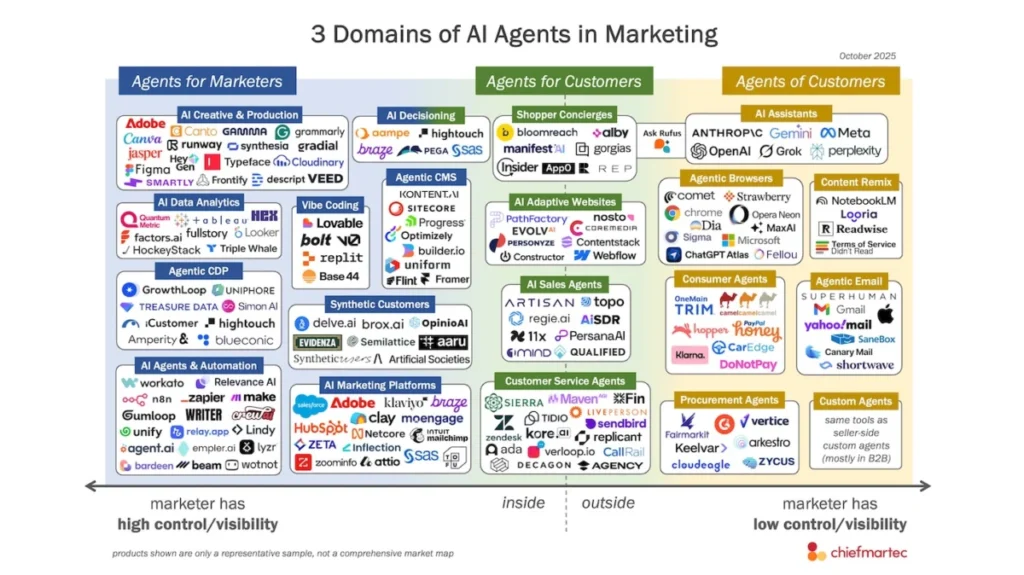
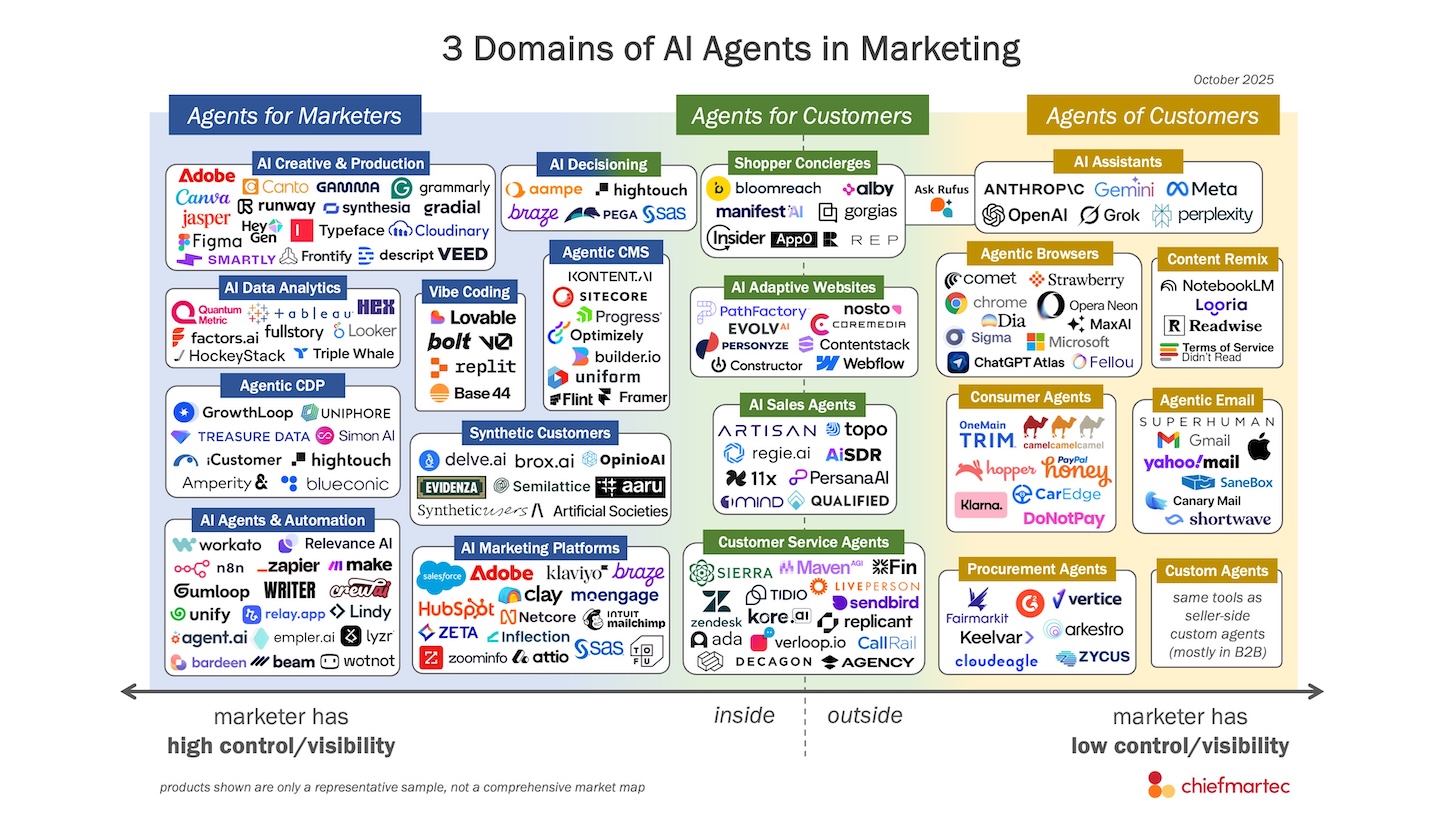
Perhaps the most anticipated section of this year’s report is the granular analysis of the three domains of AI agents currently orbiting the marketing function. The researchers have moved beyond surface-level observations to categorize these agents based on their functional impact and their place within the enterprise ecosystem.
1. The "Science Fair" vs. Production
A significant portion of the report utilizes data from the AI & Data in Marketing survey to distinguish between technologies that are currently scaling in production environments and those that remain experimental. For marketing leaders, this distinction is crucial for budget allocation. Understanding which tools are "battle-tested" versus those still in the "science fair" phase can prevent significant capital waste.
2. The Art of Context Engineering
One of the most profound insights in the upcoming release centers on "context engineering." The report argues that the performance of an AI agent is only as good as the data ecosystem that feeds it. By mapping the full spectrum of data sources currently being connected to these agents, Brinker and Riemersma provide a technical blueprint for companies aiming to move beyond basic automation into the realm of intelligent, context-aware execution.
3. The SaaS Relationship Model
The report poses a fundamental question: Is AI augmenting existing SaaS platforms, replacing them entirely, or creating entirely new categories of use cases? The data suggests a complex, non-linear relationship. Rather than a simple "replacement" narrative, the findings indicate a nuanced environment where AI agents act as a layer of intelligence that sits atop—and sometimes between—traditional marketing applications.
Official Responses and Industry Collaboration
A unique feature of this year’s release is the inclusion of candid, non-sales-focused interviews with leaders from the industry’s most influential companies. By inviting representatives from sponsors like GrowthLoop, Hightouch, Intuit Mailchimp, MetaRouter, Progress, SAS, and Treasure Data, the report provides a multi-dimensional perspective on the state of the market.
These discussions are designed to bypass the marketing "fluff." The goal, as stated by the authors, is to get senior product and marketing leaders to share what they are seeing on the front lines of their own organizations. This collaborative approach ensures that the report reflects not just the researchers’ perspective, but also the lived reality of those who are building the tools that define the modern marketing stack.
Implications: Preparing for the 2026 Landscape
The implications of the Martech for 2026 findings are wide-ranging for the modern enterprise. As companies head into the holiday season, the report serves as a diagnostic tool for planning the next fiscal year.
Strategic Planning
For CMOs, the report offers a filter through which to view their 2026 budgets. By understanding the three domains of AI agents, leaders can better identify where to invest in automation, where to prioritize human-led strategy, and where to consolidate redundant technology.
Technical Architecture
For marketing technologists and architects, the analysis of "context engineering" provides a framework for future-proofing their data infrastructure. The ability to pipe the right data into the right agent at the right time is becoming the single greatest competitive advantage in the digital space.
Talent and Operations
The shift toward agentic workflows implies a significant change in the skill sets required for marketing teams. As agents take over repetitive tasks, the role of the "Marketing Ops" professional is evolving into something closer to an "AI Orchestrator." The Martech for 2026 report helps identify these emerging roles and the operational changes required to support them.
Conclusion: A Call to Action
The "prophecy season" of year-end marketing content is often a time of noise, but Martech for 2026 promises to be a signal amidst that noise. By focusing on evidence-based analysis and real-world application, Scott Brinker and Frans Riemersma continue to provide a vital service to the marketing community.
The decision to provide this 100+ page report and the accompanying seminar for free—supported by industry sponsors—lowers the barrier to entry for teams of all sizes. Whether you are a solo practitioner looking to optimize your stack or a multinational organization navigating the complexities of enterprise-scale AI, this report offers the clarity needed to navigate the coming year.
As we look toward 2026, the question is no longer whether AI will impact marketing, but how we will choose to integrate it into the fabric of our businesses. For those who want to be at the front of the line, the journey begins on December 2. Registration is open, and for those who value pragmatism over hyperbole, it is a mandatory destination.
