
Beyond the Hype: How Open USD and the Next Generation of Payment Networks Are Redefining Global Fintech
LONDON / SINGAPORE — The global payments ecosystem is undergoing a quiet yet seismic restructuring. When Open Standard officially announced the launch of Open USD on June 30, 2026, it instantly became a lightning rod for debate across financial boardrooms, fintech incubators, and traditional banking institutions. Initially greeted with a mix of cautious skepticism and intense curiosity, the initiative has quickly forced industry observers to reevaluate how digital currencies interact with legacy financial infrastructure.
In the early days following its debut, market analysts questioned whether Open USD was merely another speculative token trying to elbow its way into an already crowded market. A formidable roster of early supporters could easily generate short-term marketing momentum, but history shows that high-profile backing rarely translates automatically into sustained market liquidity, widespread merchant acceptance, or systemic transaction volume.
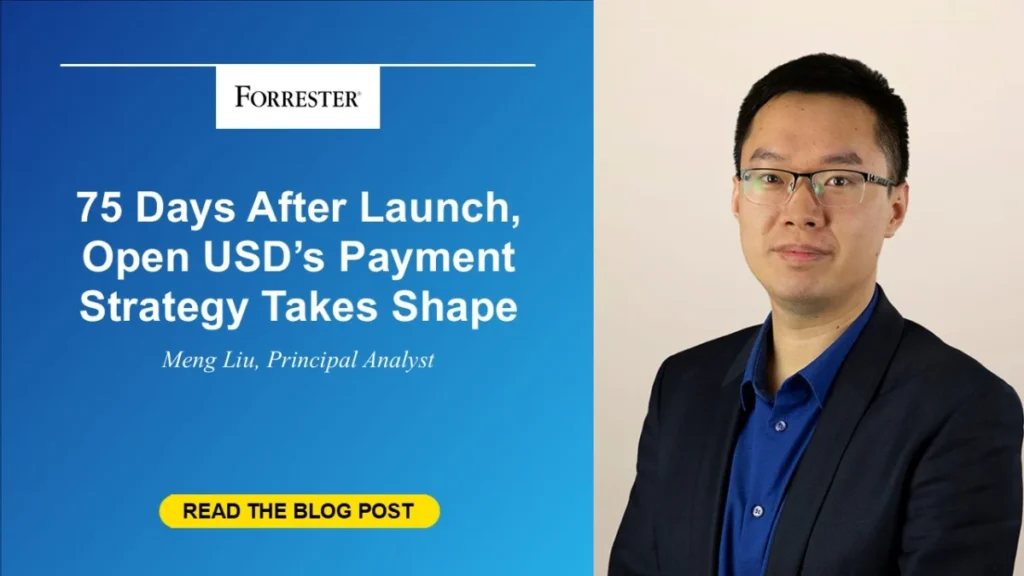
However, recent developments suggest the narrative is shifting. A pivotal face-to-face meeting on August 25, 2026, between industry analysts and Zach Abrams, founding CEO of Open Standard—the commercial entity steering Open USD—at the Stripe Tour event in Singapore, has provided much-needed clarity. The dialogue revealed that Open USD is not trying to beat Tether (USDT) or USD Coin (USDC) at their own game. Instead, it is executing an entirely different playbook: positioning itself as an active, high-velocity payment network measured by the sheer volume of capital it moves, rather than functioning as a static investment vehicle evaluated by its aggregate market capitalization.
1. Main Facts: Deconstructing the Open USD Blueprint
At its core, Open USD represents a fundamental departure from the first- and second-generation stablecoins that dominated the early web3 financial era. While traditional stablecoin issuers derive the vast majority of their operating revenue from holding and investing the fiat reserves backing their tokens, Open Standard has architected an economic framework that prioritizes transactional throughput over reserve accumulation.
A New Economic Alignment
The most striking distinction between Open USD and incumbent stablecoins lies in how financial incentives are distributed. Tether and Circle operate largely like institutional asset managers. Their profitability is intrinsically tied to interest-rate environments; the larger their market capitalization, the more interest they earn on the U.S. Treasury bills and cash equivalents sitting in their reserve vaults.
Open USD flips this model on its head. Open Standard has structured its framework to share the vast majority of its reserve earnings directly with ecosystem partners. By passing these yields down to commercial banks, fintech platforms, payment service providers (PSPs), and enterprise software companies, Open Standard is effectively offering a financial incentive for these gatekeepers to integrate, distribute, and champion Open USD within their respective ecosystems.
Transforming Corporate Treasury and Institutional Liquidity
This revenue-sharing mechanism unlocks use cases that were previously economically unviable due to high friction costs. Corporate treasurers, for instance, constantly seek ways to maximize yield on idle corporate cash. With Open USD, enterprises could theoretically programmatically shift idle funds into and out of tokenized money market funds for micro-durations—sometimes lasting only a few minutes.
Previously, exiting these positions through legacy fiat rails incurred prohibitive costs ranging between five and 10 basis points, effectively wiping out the yields generated during ultra-short holding periods. By lowering these barriers, Open USD makes micro-duration cash management practical. Similarly, institutional trading desks can utilize these rails to move collateral and optimize liquidity across fragmented global markets instantaneously, bypassing the restrictive operating hours of traditional banking systems.
2. Chronology of Evolution: From Summer Launch to Singapore Strategy
Understanding the trajectory of Open USD requires tracing its rapid evolution over the summer of 2026:
- June 30, 2026: Open Standard officially unveils Open USD to the global market. The announcement triggers immediate industry-wide speculation. Early analyses categorize it as an ambitious contender, but highlight a critical vacuum in proven payment network liquidity and merchant adoption metrics.
- July – August 2026: Ecosystem testing and strategic partnership onboarding begin behind the scenes. Industry stakeholders debate whether the market has room for another U.S. dollar-pegged asset amid tightening global regulatory scrutiny.
- August 25, 2026 (Stripe Tour Singapore): Zach Abrams sits down for a comprehensive briefing regarding the strategic roadmap of Open USD. This pivotal conversation reframes the industry’s perception, moving the discourse away from market capitalization comparisons and toward transaction-led utility, backend settlement efficiencies, and API-driven distribution models.
- Late 2026 and Beyond: The focus shifts from global blockchain availability to localized banking integrations, regional compliance frameworks, and deep-tier partnerships with domestic financial institutions capable of bridging the gap between on-chain assets and local fiat clearing systems.
3. Supporting Data and Structural Mechanics: Beyond the Point of Sale
To evaluate Open USD’s long-term viability, industry analysts are looking past surface-level metrics like wallet generation and focusing on operational infrastructure—specifically card payments, collateral management, and real-time settlement.
Upgrading the Backend of Card Payments
For decades, traditional card networks (such as Visa and Mastercard) have relied on multi-day batch settlement processes. In many existing card programs, institutional collateral remains locked up and unavailable over weekends, creating capital inefficiency for issuers and acquirers alike.
Stablecoin-backed backend architecture changes this dynamic entirely. By integrating Open USD into the settlement layer, financial institutions can adjust collateral requirements and execute settlements dynamically outside conventional banking hours. Merchants no longer need to wait days for funds to clear; they can receive payouts and immediately deploy working capital 24 hours a day, 7 days a week.
Crucially, this structural transformation does not require consumers to change their daily habits. Customers do not need to see, hold, or even understand Open USD at the point of sale. Plastic cards, mobile wallets, and QR codes can remain the consumer-facing interface while blockchain rails power the invisible funding, collateral, and cross-border settlement layers behind the scenes.
4. Official Responses and Industry Perspectives
The emergence of network-first stablecoins has elicited a complex spectrum of responses from legacy institutions, fintech pioneers, and regulatory bodies.
Financial institutions are increasingly realizing that ignoring tokenized infrastructure is no longer a viable risk-management strategy. Instead of viewing stablecoins as existential threats to fractional-reserve banking, forward-thinking banks are exploring how tokenized deposit networks and programmable assets can reduce operational overhead and eliminate counterparty risk.
However, fintech leaders emphasize that blockchain technology alone is not a silver bullet. During discussions in Singapore, industry executives underscored a vital reality: local bank connectivity matters far more than raw blockchain reach.
While a stablecoin can traverse global cryptographic networks in a fraction of a second, the transaction remains incomplete—and often slow and expensive—if the receiving institution cannot efficiently convert that digital token into the destination country’s local fiat currency and distribute it through domestic payment systems. Consequently, the ultimate winners in the stablecoin race will not necessarily be the networks with the most prominent tech-sector backers, but rather those that secure deep, legally compliant integrations with dominant regional banks.
5. Strategic Implications for the Future of Fintech
As Open USD and competing network models mature, their implications will reverberate across multiple layers of the global financial architecture:
A Paradigm Shift in Adoption Metrics
For years, the crypto and fintech sectors measured the success of digital assets using vanity metrics: daily active wallets, total value locked (TVL), and speculative market capitalization. Open USD forces a much more rigorous, enterprise-grade evaluation framework.
If Open USD functions primarily as a wholesale settlement asset, consumer-facing wallet numbers become entirely irrelevant. Instead, market analysts must look toward metrics that reflect true economic utility:
- Aggregate Payment Volume (APV): The total monetary value successfully routed through the network.
- Repeat Flows and Velocity: How frequently capital cycles through the rails rather than sitting dormant in speculative accounts.
- Active Corridors: The breadth and depth of bilateral trade and remittance lanes utilizing the network.
- Conversion and Payout Efficiency: The speed, cost, and reliability of turning on-chain liquidity into local fiat currency.
The Regional Battleground: The Asia-Pacific Test
The true proving ground for network-first stablecoins will likely be the Asia-Pacific (APAC) region. APAC boasts massive retail crypto-trading activity and deep on-chain stablecoin volumes, creating robust liquidity pools for digital asset traders. However, payment-ready stablecoin-to-fiat liquidity, regulatory clarity, and institutional access vary wildly from one jurisdiction to the next.
For example, a global crypto exchange may provide deep liquidity for USDT or USDC trading pairs, yet fail to offer a fully licensed, institutional off-ramp into the Japanese Yen or the Philippine Peso. Successfully executing a cross-border transfer into Tokyo or Manila via Open USD requires far more than technological infrastructure—it demands regulated on- and off-ramps, competitive foreign exchange conversion rates, local bank accounts, and seamless access to domestic clearing systems like Japan’s Zengin or Singapore’s FAST.
This dynamic explains why strategic partnerships with regional financial heavyweights—such as DBS Bank in Southeast Asia—are infinitely more valuable to Open Standard than simply adding another tech startup to its partner roster. The banks that control local liquidity pools and manage the final fiat leg of a transaction will ultimately dictate which global corridors become commercially viable.
Conclusion: The Road Ahead
Open USD enters the market not as a consumer-facing retail novelty, but as an ambitious architectural experiment aimed at modernizing the plumbing of global commerce. By divorcing its economic model from reserve-interest accumulation and focusing squarely on transactional velocity, partnership incentives, and backend settlement efficiency, Open Standard has sparked a necessary evolution in how the industry approaches digital money.
Whether Open USD ultimately achieves ubiquitous adoption will depend less on the hype of its launch and everything on its execution at the local level—forging the unglamorous, highly regulated banking connections required to turn instant blockchain transfers into real-world economic value.
