
Seamless Engagement: Crazy Egg Launches Inline Embedded Surveys to Transform User Interaction
In the rapidly evolving landscape of digital marketing and user experience (UX) optimization, the ability to collect high-quality, actionable data without disrupting the user journey is the "Holy Grail" for website owners. Today, Crazy Egg—the industry-recognized leader in website optimization and heatmapping—has announced a significant expansion of its Surveys tool. By introducing the ability to embed surveys directly into the body of page content, Crazy Egg is shifting the paradigm from intrusive popups to integrated, context-aware engagement.
This update represents a strategic pivot for the platform, acknowledging that while modals and popups serve a purpose, they often suffer from "banner blindness" or, worse, irritate users who are in the middle of consuming content. By allowing businesses to place forms inline, Crazy Egg is providing a more natural, organic way to capture leads, feedback, and support queries.
The Evolution of User Feedback: Main Facts
For years, the standard approach to gathering customer sentiment involved interrupting the browsing experience. Whether it was a sticky bar at the top of the screen or a sudden center-page modal, these tools were designed to capture attention—often at the expense of user flow.
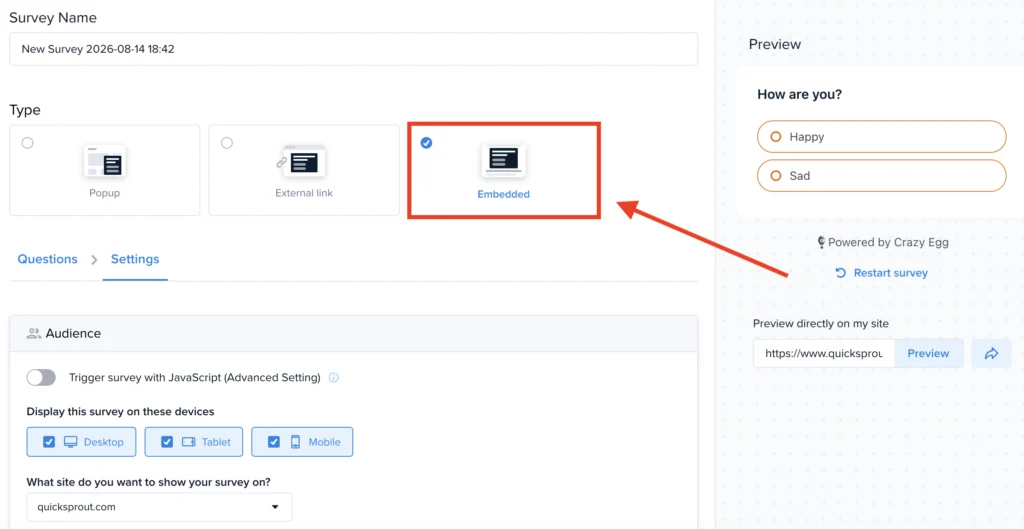
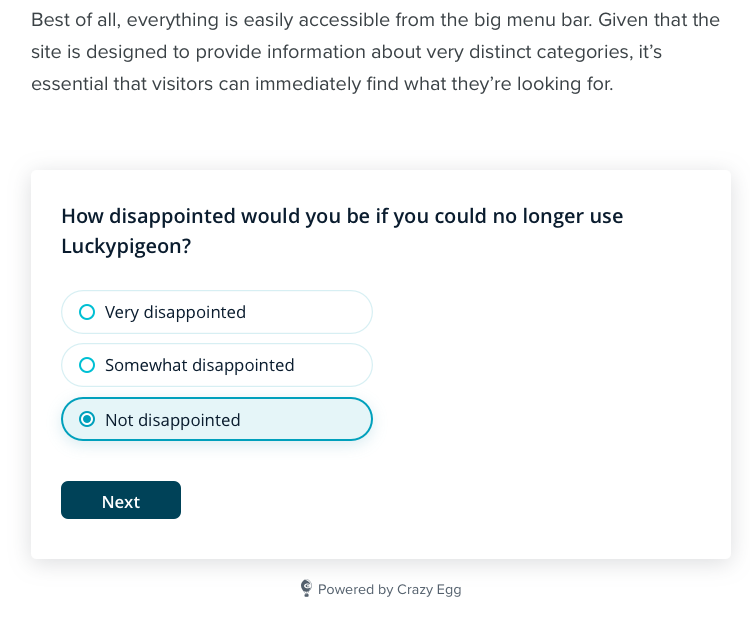
The new embedded feature changes this dynamic entirely. By integrating the survey directly into the HTML structure of the page, the widget becomes a part of the content itself. This allows for "contextual questioning." For example, a user reading a deep-dive blog post about a specific product feature can now be prompted with a relevant feedback form immediately following that section, rather than being asked a generic question upon site exit.
Key capabilities of the new integration include:
- Native Integration: The survey appears as a seamless block of content rather than a disruptive overlay.
- Versatility: Suitable for capturing sales leads, conducting market research, or gathering support tickets.
- Unlimited Utility: As with the existing toolset, Crazy Egg is maintaining its commitment to unlimited usage for all account tiers, ensuring that data collection is never throttled by budgetary constraints.
A Chronology of the Update: From Modals to Native Integration
To understand the significance of this development, one must look at the trajectory of Crazy Egg’s feature roadmap.
- Phase 1: The Foundations of Behavioral Analysis. Crazy Egg initially made its mark by helping users understand what visitors were doing through heatmaps and scroll maps. The "what" was covered, but the "why" remained elusive.
- Phase 2: The Introduction of Surveys. Recognizing the need for qualitative data, the company launched its Surveys tool. Initially, this was limited to traditional delivery methods: popups that appeared based on time-on-page or exit-intent triggers, and external link-based surveys.
- Phase 3: The Demand for Non-Intrusive UX. As design trends shifted toward cleaner, more minimalist interfaces, users began to reject heavy-handed overlays. Data from the Crazy Egg community indicated that engagement rates on popups were plateauing.
- Phase 4: The Embedded Rollout. In the current quarter, the engineering team finalized the infrastructure to allow for direct injection of survey widgets via standard embed codes. This allows for a more personalized "in-content" experience that respects the user’s intent to consume information.
Supporting Data: Why Inline Matters
The move toward inline integration is supported by a growing body of UX research suggesting that context-dependent forms achieve higher completion rates.
According to industry benchmarks, popup conversion rates often hover between 2% and 4%. However, early testing by teams utilizing inline-style widgets shows that when a question is relevant to the content being read, conversion rates can jump significantly.
Conversion Drivers:
- Reduced Cognitive Load: Because the survey is part of the flow, the user doesn’t have to "switch modes" to engage with it.
- Trust Signals: A survey embedded within an article feels like a request for feedback from a publication or a brand, rather than a sales pitch from a marketing engine.
- Content-Specific Feedback: By placing a survey after a specific product comparison chart, businesses can ask, "Did this comparison help you decide?"—a question that would feel out of place in a generic exit popup.
Official Perspectives: The Strategy Behind the Shift
While the company has not issued a formal press release, the sentiment among product leadership at Crazy Egg is clear: the focus is on "Human-Centric Optimization."
A spokesperson for the product team noted that the objective was to remove the friction between the brand and the consumer. "We’ve heard from our power users that they want to be more surgical with their questions," the representative stated. "They don’t want to blast every visitor with the same question. They want to ask the right person the right question at the right time. The inline embed feature is the technical realization of that philosophy."
The technical documentation provided by the company highlights a streamlined process for implementation:
- Access the Dashboard: Navigate to the Surveys section in the Crazy Egg interface.
- Configure the Survey: Draft the questions and select the display format.
- Select the "Embedded" Option: Instead of selecting a popup, toggle the new "Embedded" display setting.
- Copy and Deploy: Copy the unique embed code provided and paste it directly into the CMS (Content Management System) editor of your choice.
Implications for the Future of Web Marketing
The implications of this update extend beyond just a new UI element. It signals a broader shift in how digital businesses should approach customer relationship management.
Implications for Lead Generation
Marketing teams will no longer rely solely on landing pages for lead collection. By embedding lead magnets or newsletter signups directly into high-traffic blog posts or resource pages, companies can convert readers into leads while they are actively engaged in the research phase of the buyer’s journey.
Implications for Customer Support
Support teams can leverage this tool to reduce ticket volume. By embedding a "Was this article helpful?" survey directly at the bottom of help desk documentation, businesses can capture feedback on their support content in real-time, allowing them to iterate and improve their knowledge base instantly.
Implications for Content Strategy
Content creators and bloggers can now treat their pages as dynamic interfaces. Rather than just pushing information out, they are creating a two-way dialogue. This shift transforms a static blog into an active tool for community building and audience segmentation.
Best Practices for Implementation
As organizations adopt this new feature, experts suggest following a few golden rules to maximize effectiveness:
- Don’t Overload: While the feature is unlimited, do not clutter pages with multiple surveys. One well-placed, relevant survey is worth more than five disjointed ones.
- Test for Placement: Use the new tool to A/B test placement. Does the survey work better after the introduction, or at the very end of the article?
- Maintain Brand Alignment: Ensure that the questions asked are consistent with the tone of the page content. A dry, technical article should have a professional, concise survey. A creative, lifestyle-focused article can afford a more conversational tone.
- Analyze and Pivot: Because Crazy Egg provides robust analytics alongside the survey tool, users should review their data monthly. If a specific survey has a high drop-off rate, the content of the question—or its placement on the page—should be adjusted.
Conclusion
The launch of the inline embedded Surveys tool by Crazy Egg is a testament to the platform’s commitment to evolving alongside the needs of its users. By removing the friction inherent in popup-based data collection, Crazy Egg has empowered website owners to gather more accurate, meaningful, and helpful data.
As we look toward the future of web design, the line between content and interaction will continue to blur. With this update, Crazy Egg has positioned itself at the forefront of that transition, proving that the most powerful tool in a marketer’s kit isn’t just the ability to track a user—it’s the ability to listen to them in the right place, at the right time. For those currently utilizing the platform, the upgrade is available immediately, offering a fresh, sophisticated way to turn visitors into stakeholders.
