
The Need for Speed: Crazy Egg Unveils Free Automated Tool to Revolutionize Web Performance
In the modern digital economy, speed is not merely a technical metric—it is a fundamental business imperative. As consumer attention spans continue to shrink and search algorithms grow increasingly sophisticated, the performance of a website has become the primary arbiter of success. Recognizing this, Crazy Egg has officially launched its Page Speed Audits, a robust, 100% free solution designed to demystify web performance and provide actionable, code-level optimizations for site owners.
By moving beyond simple diagnostic reports, this new feature aims to bridge the gap between identifying a performance bottleneck and actually resolving it.
Main Facts: What Are Page Speed Audits?
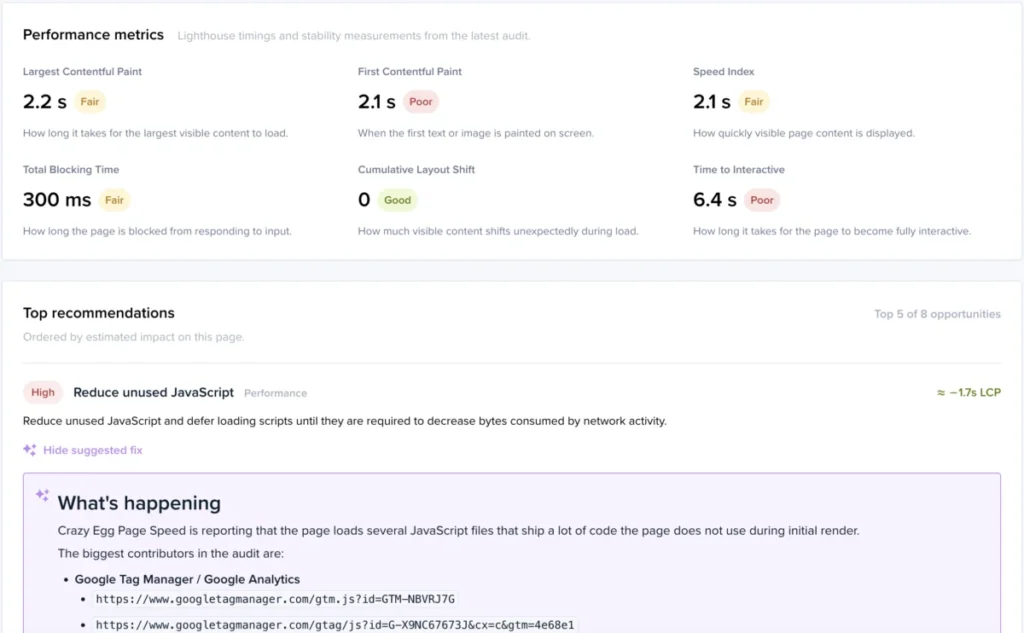
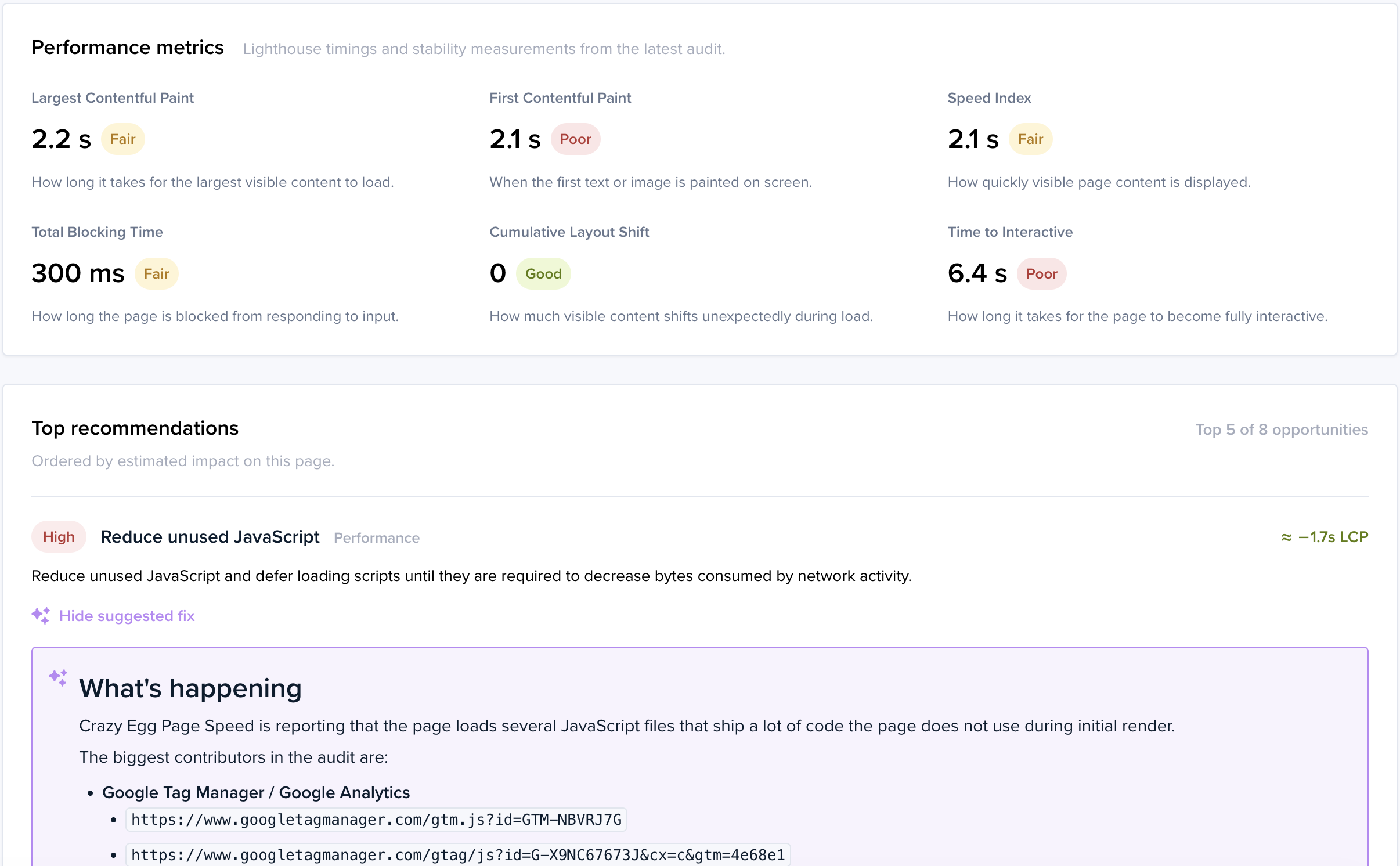
Crazy Egg’s new Page Speed Audits feature is an automated diagnostic engine that monitors websites on a daily basis. Unlike legacy auditing tools that provide generic suggestions—such as “optimize your images” or “reduce server response time”—Crazy Egg’s implementation takes the heavy lifting a step further.
Core Capabilities:
- Daily Automated Scanning: The tool performs routine checks to ensure that performance remains consistent as new content or plugins are added to a site.
- Deep-Dive Analysis: It scours every corner of a page, identifying heavy media files, unoptimized scripts, and bloated code blocks that hinder load times.
- Copy-and-Paste Optimization: Perhaps the most significant differentiator, the tool generates specific, site-ready code snippets. Users do not need to be veteran developers to apply these fixes; they simply copy the provided code and implement it according to the generated instructions.
- Zero-Installation Requirement: In a departure from traditional tracking tools, users do not need to install the full Crazy Egg tracking script to benefit from Page Speed Audits. This lowers the barrier to entry for prospective users significantly.
The Chronology: The Evolution of Web Performance Expectations
The necessity for such a tool arises from a decade-long evolution in how users interact with the internet.
The Early Days: The "Seconds" Era
In the early 2010s, a three-second load time was considered the gold standard. Businesses were encouraged to prioritize content over technical overhead, and performance was largely the domain of backend engineers.
The Mid-2010s: The Rise of Mobile
With the shift toward mobile-first browsing, the tolerance for slow load times plummeted. Google began incorporating page speed as a ranking factor in 2018, signaling that technical performance was no longer a "nice-to-have" but a core component of Search Engine Optimization (SEO).
2026 and Beyond: The AEO Frontier
Today, we have entered the era of Answer Engine Optimization (AEO). As AI-driven search engines and chatbots scrape websites to provide instant answers to user queries, the structure and speed of a page have become more critical than ever. If a bot cannot parse a site quickly, it may bypass the content entirely. The August 20, 2026 launch of Crazy Egg’s tool arrives precisely at this junction, providing a necessary bridge for businesses trying to keep pace with these high-velocity requirements.
Supporting Data: Why Speed Equals Revenue
The correlation between page speed and conversion rates has been documented extensively across the technology sector. Data consistently indicates that for every 100 milliseconds of latency, conversion rates can drop by nearly 1%.
The Cost of Inefficiency
- Bounce Rates: Research shows that 40% of users will abandon a website if it takes longer than three seconds to load.
- SEO Penalties: Search engines prioritize "Core Web Vitals"—a set of metrics that measure real-world user experience. A slow site is often suppressed in search rankings, leading to lower organic traffic.
- The "Impatient Visitor" Phenomenon: Modern internet users are conditioned for instant gratification. When a site lags, the user’s subconscious perception of the brand shifts from "professional" to "unreliable."
Crazy Egg’s internal testing suggests that most websites contain significant "low-hanging fruit"—small code adjustments that can cumulatively shave seconds off a load time. The audit tool is designed to identify these specific adjustments, allowing businesses to reclaim lost traffic without requiring a full site redesign.
Official Perspective: Simplifying Complex Tech
Stephen Ngo, Director of Growth Marketing at Crazy Egg, emphasizes that the goal of this initiative is to democratize web performance.
"The technical barrier to improving a website is often too high for the average business owner," says Ngo. "You shouldn’t need a degree in computer science to understand why your site is dragging or how to fix it. Our mission is to take the ambiguity out of site speed by providing not just a report card, but the actual solution in code format."
By making the tool free and removing the requirement for an initial installation, Crazy Egg is positioning itself as an essential utility for small to medium-sized businesses that may lack dedicated DevOps teams.
Implications: The Future of Site Management
The release of this tool has broad implications for the digital landscape. As more tools move toward "self-healing" or "automated-fix" architectures, the traditional role of a webmaster is shifting.
1. The Democratization of SEO
Previously, SEO was divided into two camps: content-driven marketers and performance-focused developers. By providing automated code fixes, Crazy Egg effectively merges these two roles, allowing content creators to manage technical performance tasks that were once siloed.

2. Reduced Dependency on Third-Party Developers
Small businesses often rely on expensive consultants to optimize their sites. By providing automated, step-by-step instructions, businesses can now address performance issues in-house, significantly reducing operational costs.
3. Increased Competition
As the "playing field" for page speed is leveled, businesses that previously relied on technical speed as a competitive advantage will need to innovate further. This will likely drive a new wave of performance-based competition, where "instant load" becomes the baseline expectation for every visitor.
How to Utilize the Tool
For those looking to leverage these audit capabilities, the process is streamlined to prioritize user accessibility.
- Access the Dashboard: Log into your Crazy Egg account.
- Navigate to Page Speed: On the left-hand sidebar, locate the "Page Speed" tab.
- Add Your URL: Click the "+ Add New Page" button in the upper-right corner.
- Review and Deploy: Once the scan is complete, the dashboard will display a prioritized list of issues. Each item is accompanied by a "fix" button that provides the specific code snippet required to resolve the issue.
Users are encouraged to track unlimited URLs, ensuring that landing pages, product pages, and blog posts are all performing at their peak.
Conclusion
In an era where "time is money" is a literal description of digital revenue streams, Crazy Egg’s Page Speed Audits offer a critical advantage. By turning complex technical diagnostics into a simple, automated, and free workflow, the platform is setting a new standard for how site owners manage their digital presence. Whether you are a solo entrepreneur or managing a growing e-commerce empire, the ability to identify and rectify performance bottlenecks is no longer a luxury—it is the foundation of a successful online business.
As of late 2026, the tool is available to all users, reinforcing the importance of proactive site management in an increasingly competitive digital marketplace. By investing a few minutes to audit your pages today, you ensure that your business is not just visible, but fast enough to capture the attention of the modern, impatient consumer.
