
The Infinite Expansion: Analyzing the 2025 Marketing Technology Landscape
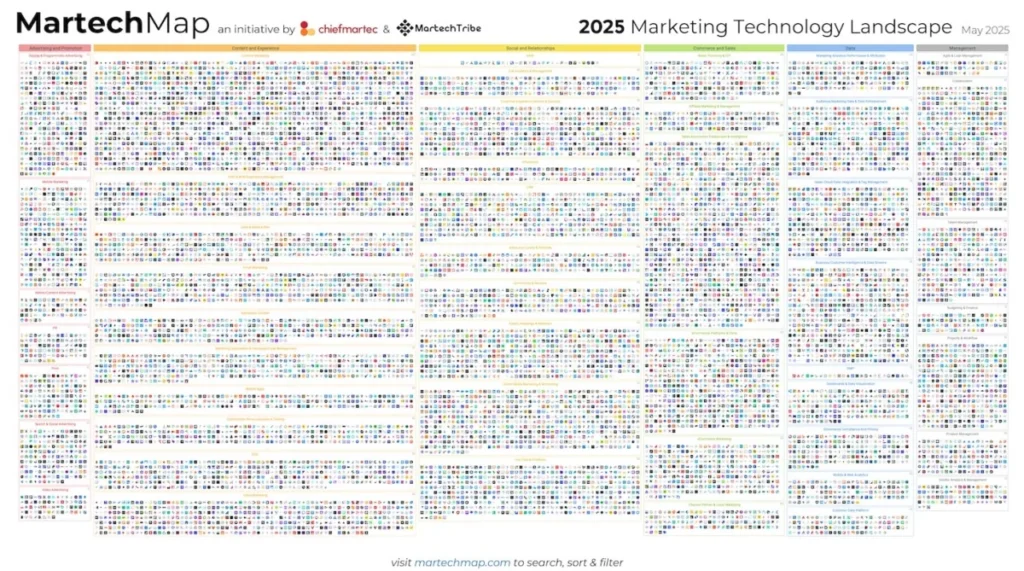
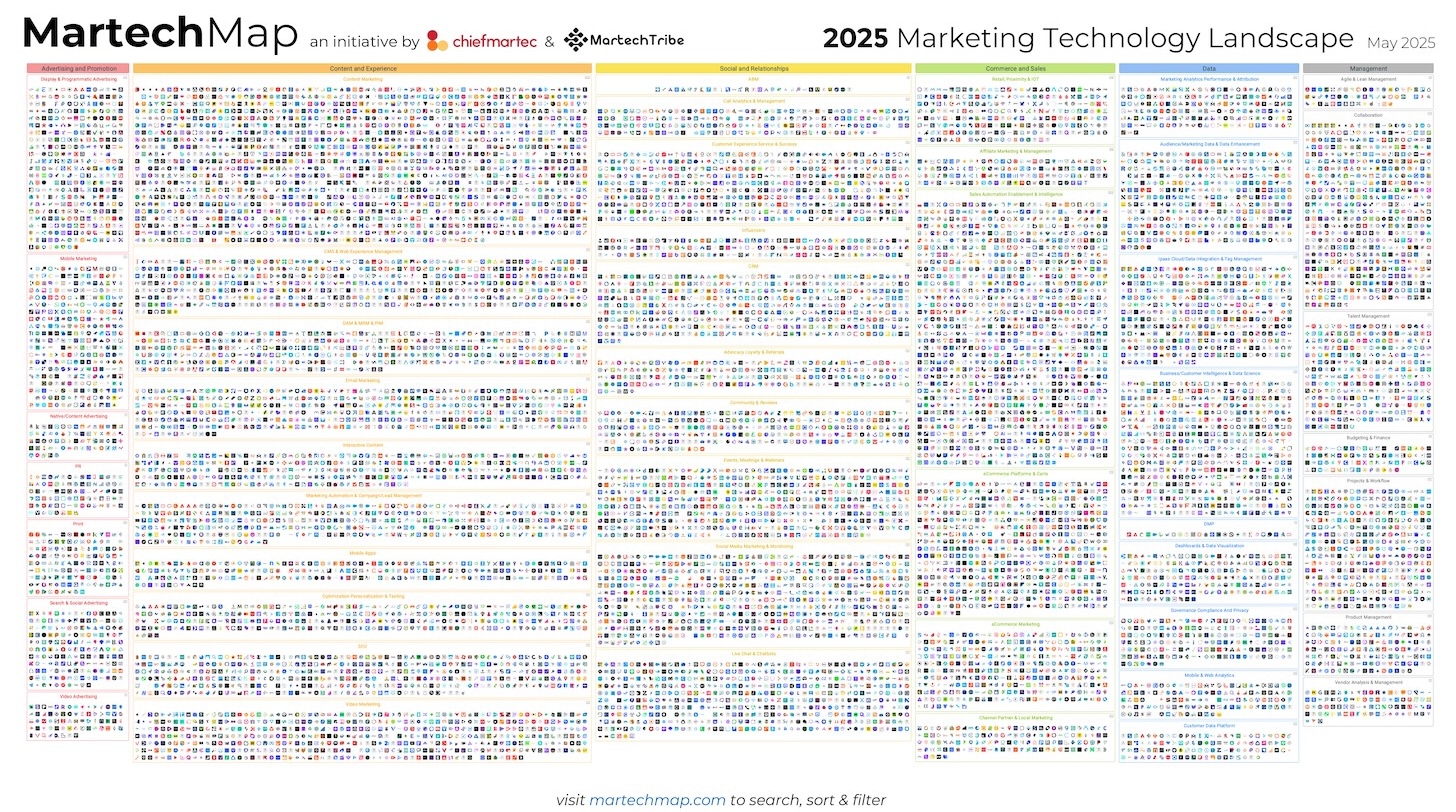
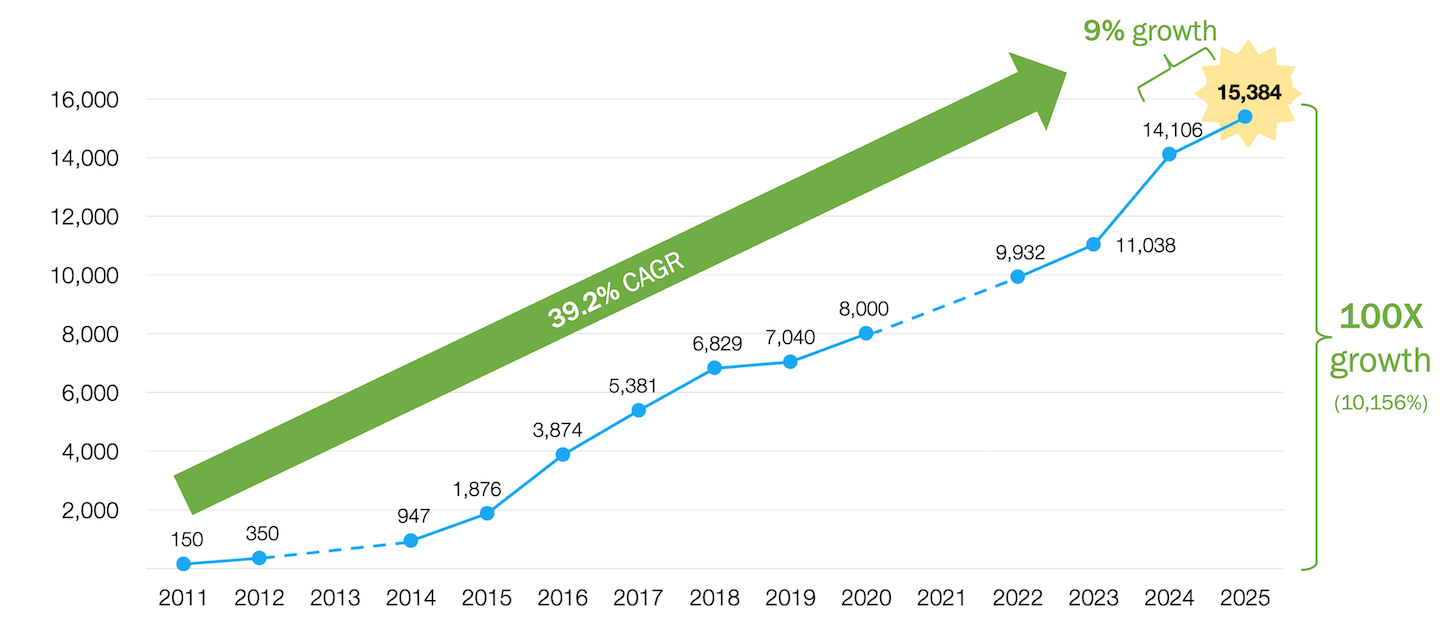
The marketing technology (martech) industry, once a niche subset of IT and advertising, has officially solidified its status as the backbone of modern commerce. With the release of the 2025 Marketing Technology Landscape, industry pioneer Scott Brinker—in collaboration with Frans Riemersma—has unveiled a staggering reality: the ecosystem now encompasses 15,384 distinct solutions.
This represents a 9% year-over-year increase from the 14,106 products identified in 2024. Far from the periodic predictions of a "martech bubble" bursting, the sector has demonstrated remarkable resilience, evolving from a simple slide of logos into a complex, multi-layered global infrastructure.
A Chronological Evolution: From 150 to 15,000+
To understand the current state of martech, one must look at its humble beginnings. Fifteen years ago, the concept of a "marketing technologist" was a radical proposal—an argument that marketing was fundamentally becoming an engineering-led discipline.
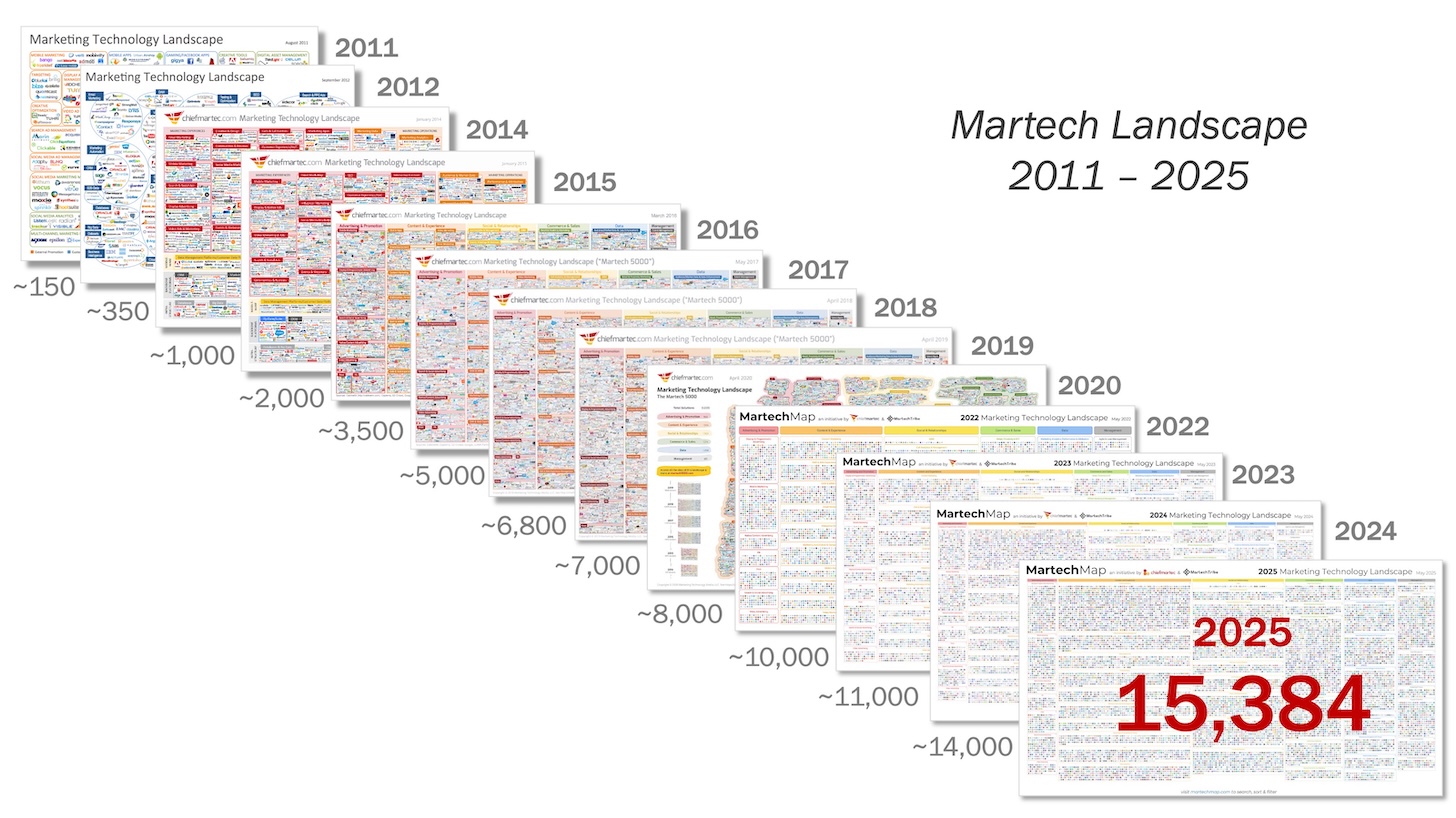
When the first official landscape was published in 2011, it featured a mere 150 solutions. Critics at the time scoffed, suggesting the market was already saturated. Yet, year after year, the "unreadable" slide grew. By 2025, that initial number has been eclipsed by a 100x growth factor—a staggering 10,156% expansion. This growth has not been linear; it has been exponential, fueled by the democratization of software development, the explosion of SaaS business models, and, most recently, the generative AI revolution.
Supporting Data: The Dynamics of Churn and Consolidation
A common criticism of the annual martech landscape is that it includes "everything under the sun." To address this, the 2025 report provides rigorous transparency. Researchers evaluated 11,133 new candidates this year, yet only 2,489 met the strict criteria for inclusion.
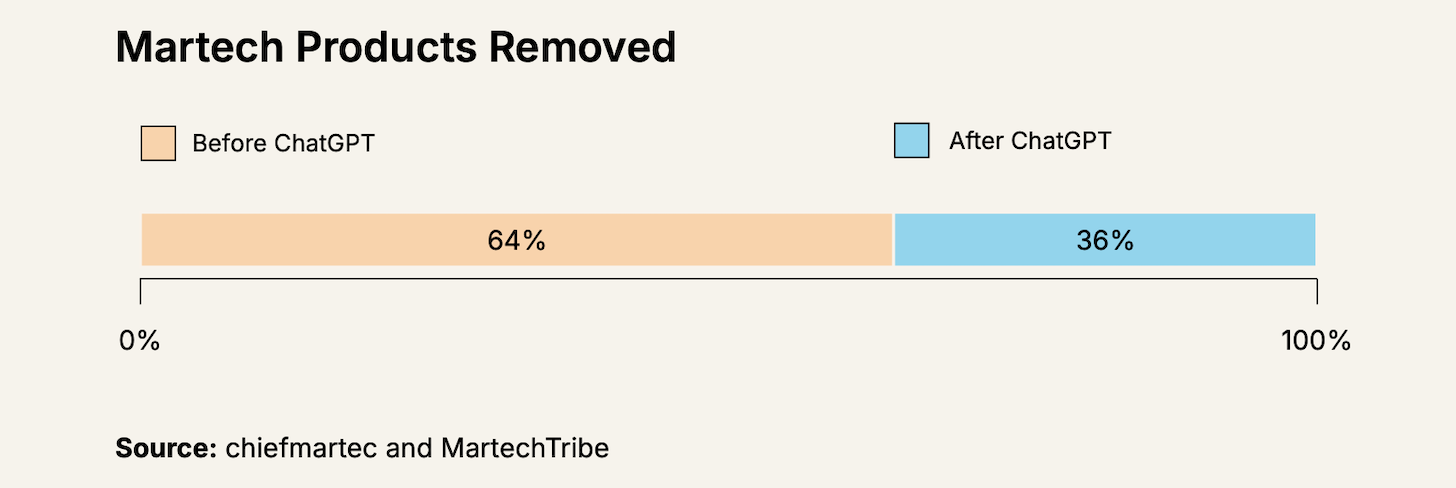
Simultaneously, the industry is experiencing a necessary "cleansing." A total of 1,211 products were removed from the 2024 list—a churn rate of 8.6%. Interestingly, these exits were not merely recent AI-native startups failing to gain traction. In fact, two-thirds of the removed companies originated from the 2010–2020 era. This suggests that the "first wave" of martech is finally hitting a maturity wall, with legacy providers being swallowed by acquisitions or shuttering as they fail to compete with modern, agile alternatives.
Growth by Category
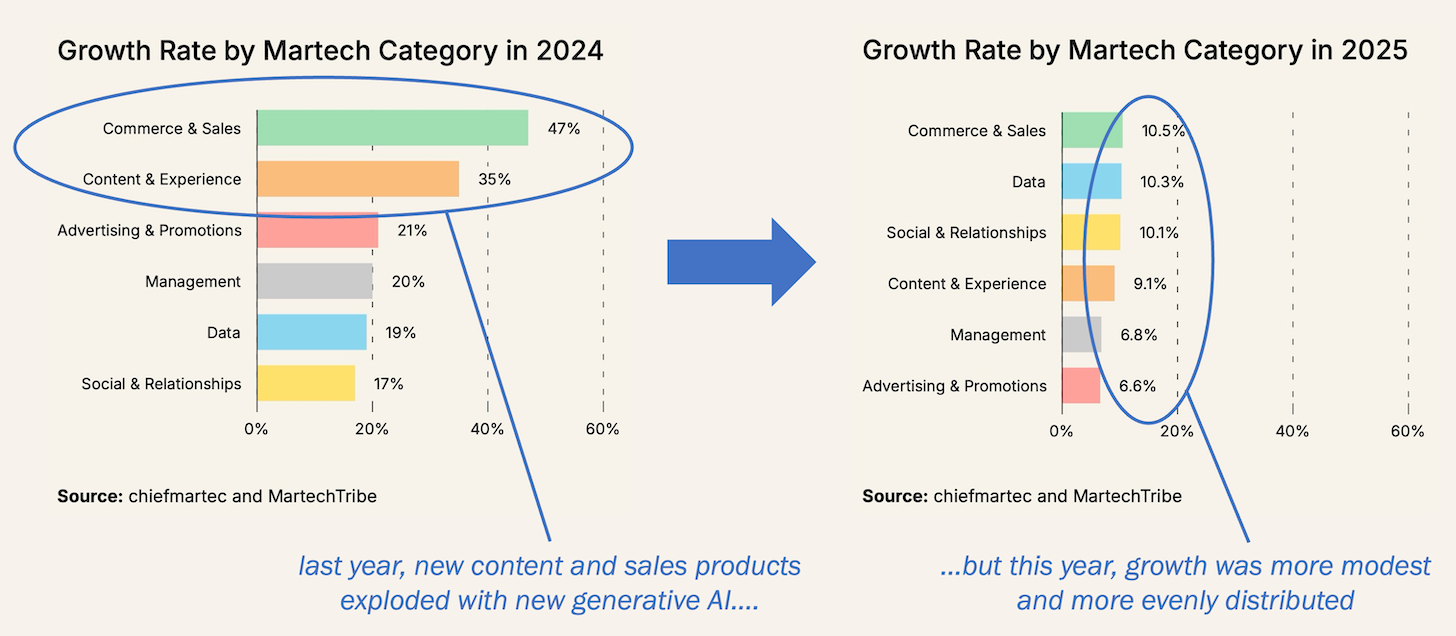
While the previous year saw an astronomical surge in content and sales technology—driven by the immediate utility of generative AI—growth in 2025 has stabilized. Each of the six major domains in the landscape reported a steady 7–10% increase.
Perhaps most surprising is the resurgence of SEO. Despite persistent claims that "SEO is dead" in the age of AI-generated search results, the category grew by 24%, expanding from 212 to 262 products. This growth is driven by a pivot toward "AI Optimization" (AIO), as marketers scramble to ensure their content remains discoverable not just by traditional search engines, but by Large Language Models (LLMs).
The Shifting Center: Where Does the Stack Live?
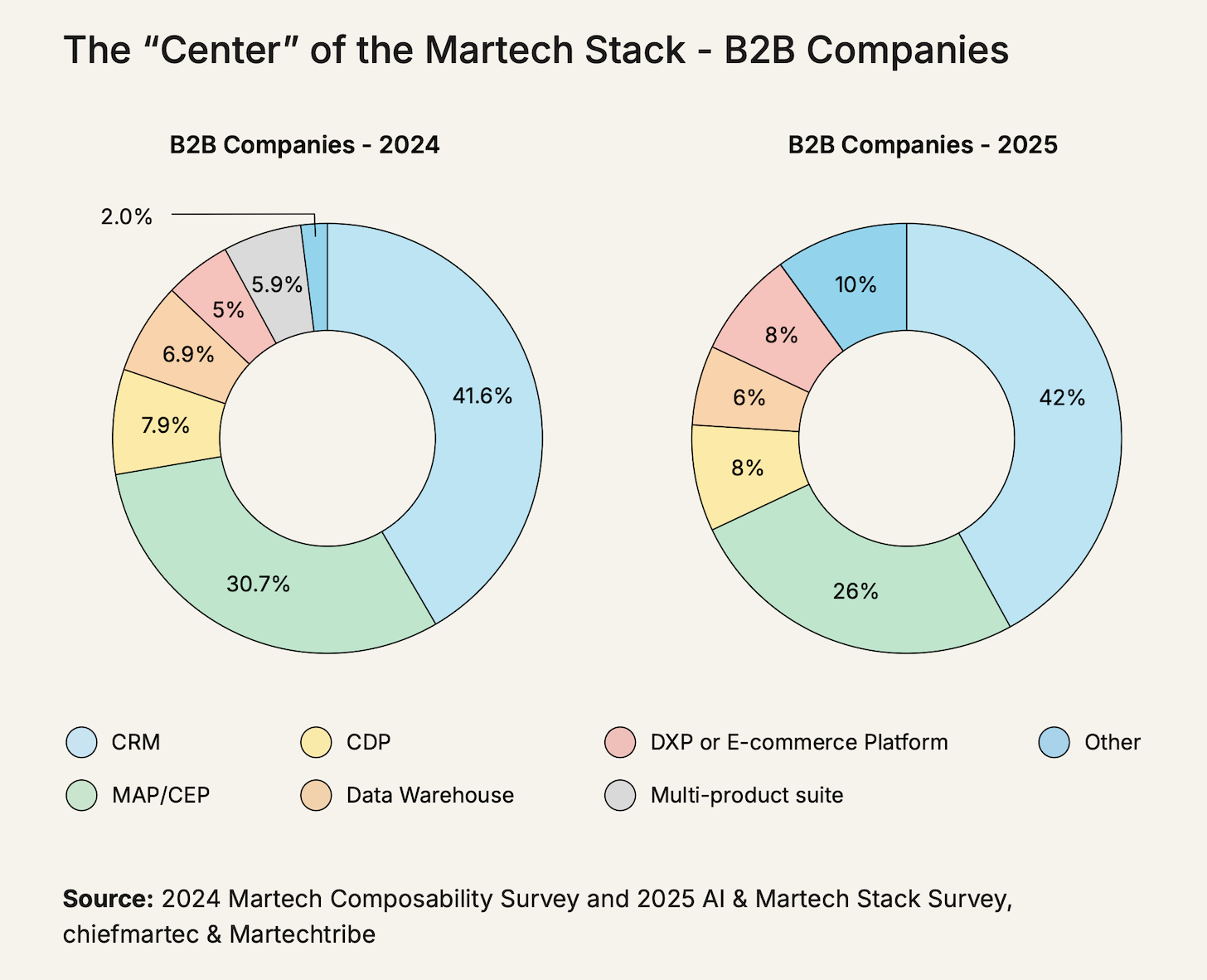
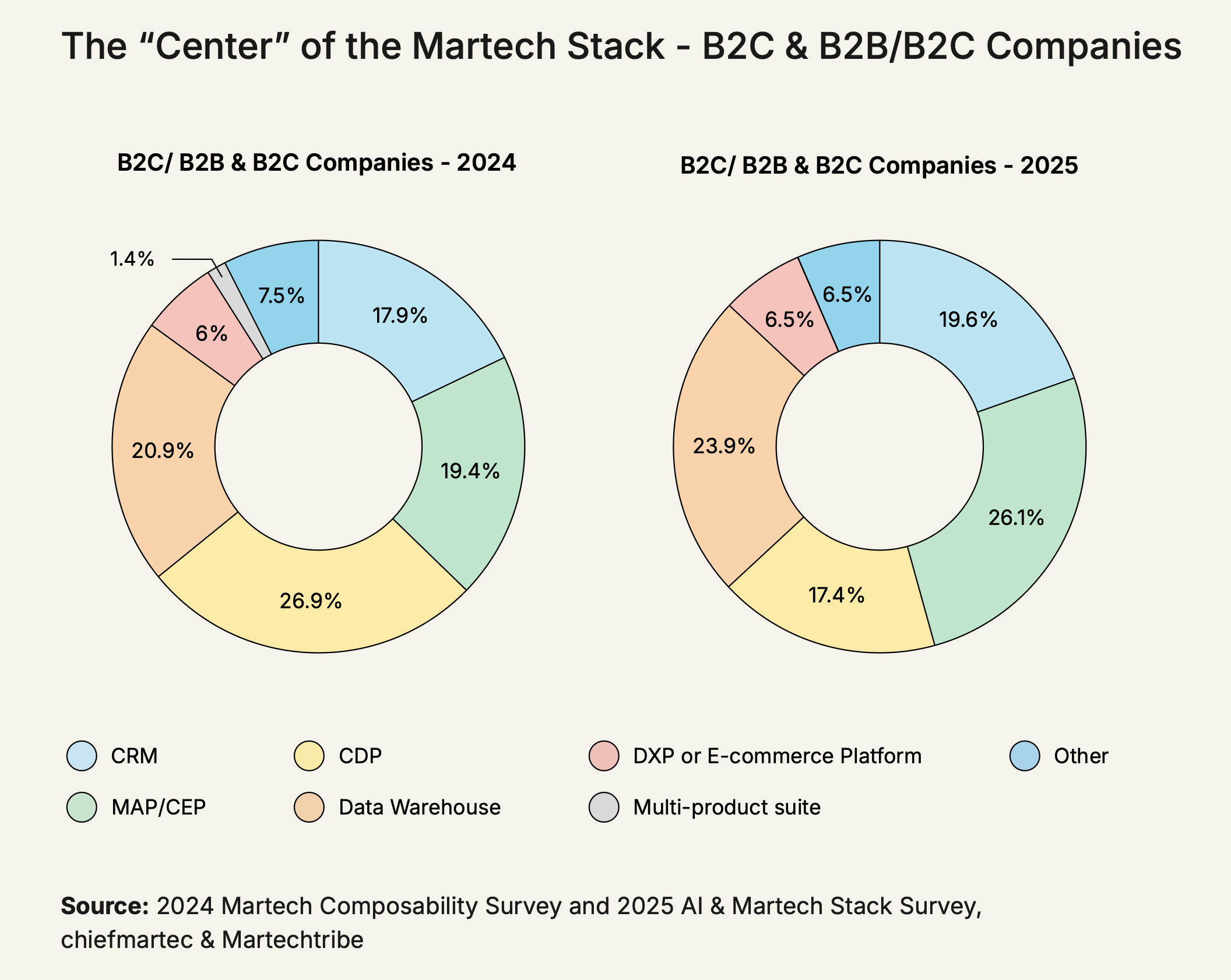
For years, the Customer Data Platform (CDP) was the undisputed "holy grail" of the marketing stack. However, the 2025 data indicates a significant architectural shift. In B2C and hybrid environments, the percentage of leaders citing CDPs as the center of their stack dropped from 26.9% to 17.4%.
This decline is not due to a lack of utility, but rather a functional redistribution. CDPs are being squeezed from two sides:
- The Data Layer: Cloud data warehouses are increasingly serving as the "source of truth," with adoption as the central platform rising from 20.9% to 23.9%.
- The Engagement Layer: Marketing Automation Platforms (MAPs) and Customer Engagement Platforms (CEPs) have grown in centrality, moving from 19.4% to 26.1%.
In effect, the CDP is becoming "composable." Its capabilities are either moving deeper into the infrastructure (the warehouse) or surfacing higher into the application layer (the engagement tools).
The "Hypertail": The New Frontier of Custom Software
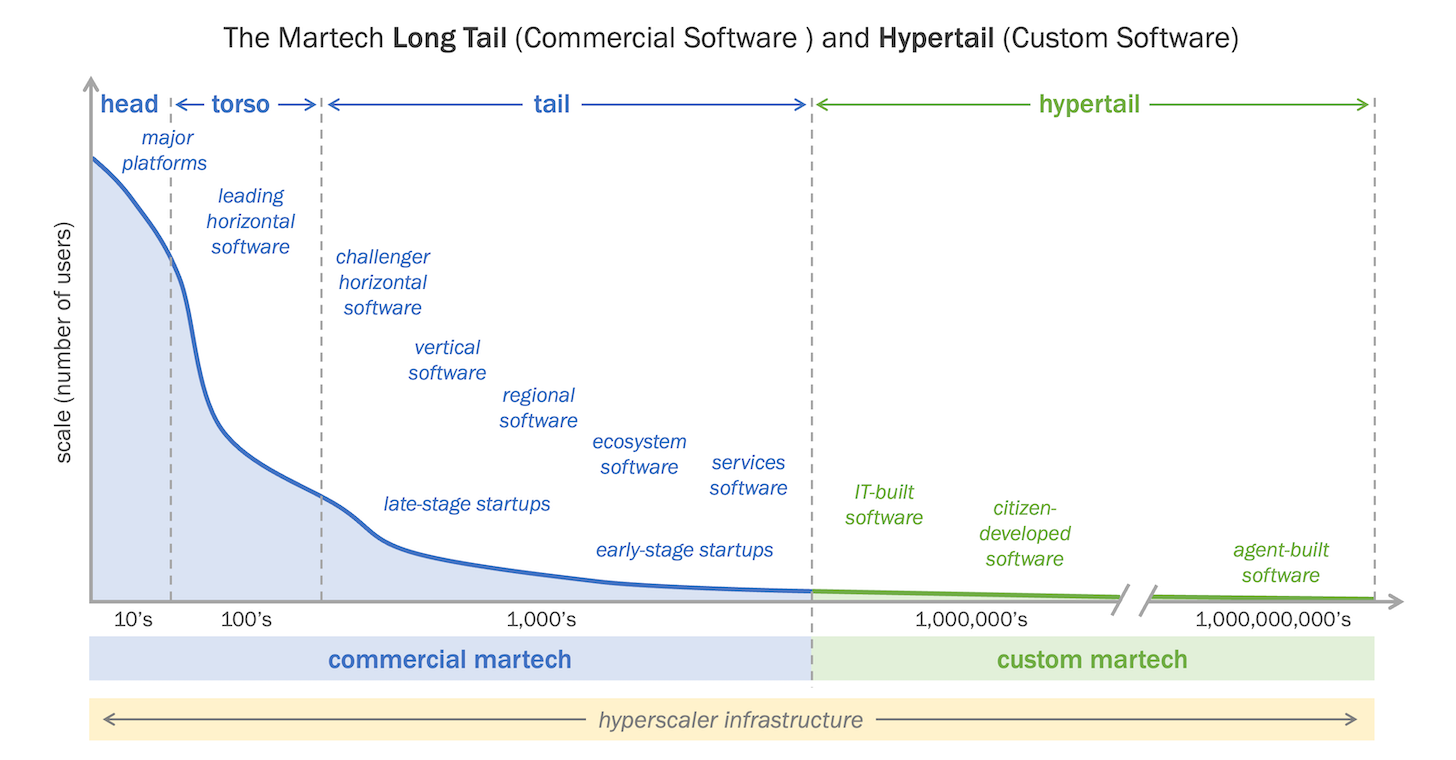
Perhaps the most significant revelation in the 2025 report is the emergence of the "hypertail." While the 15,384 products in the public landscape represent the commercial market, there is an invisible, massive layer of custom-built software growing inside corporations.
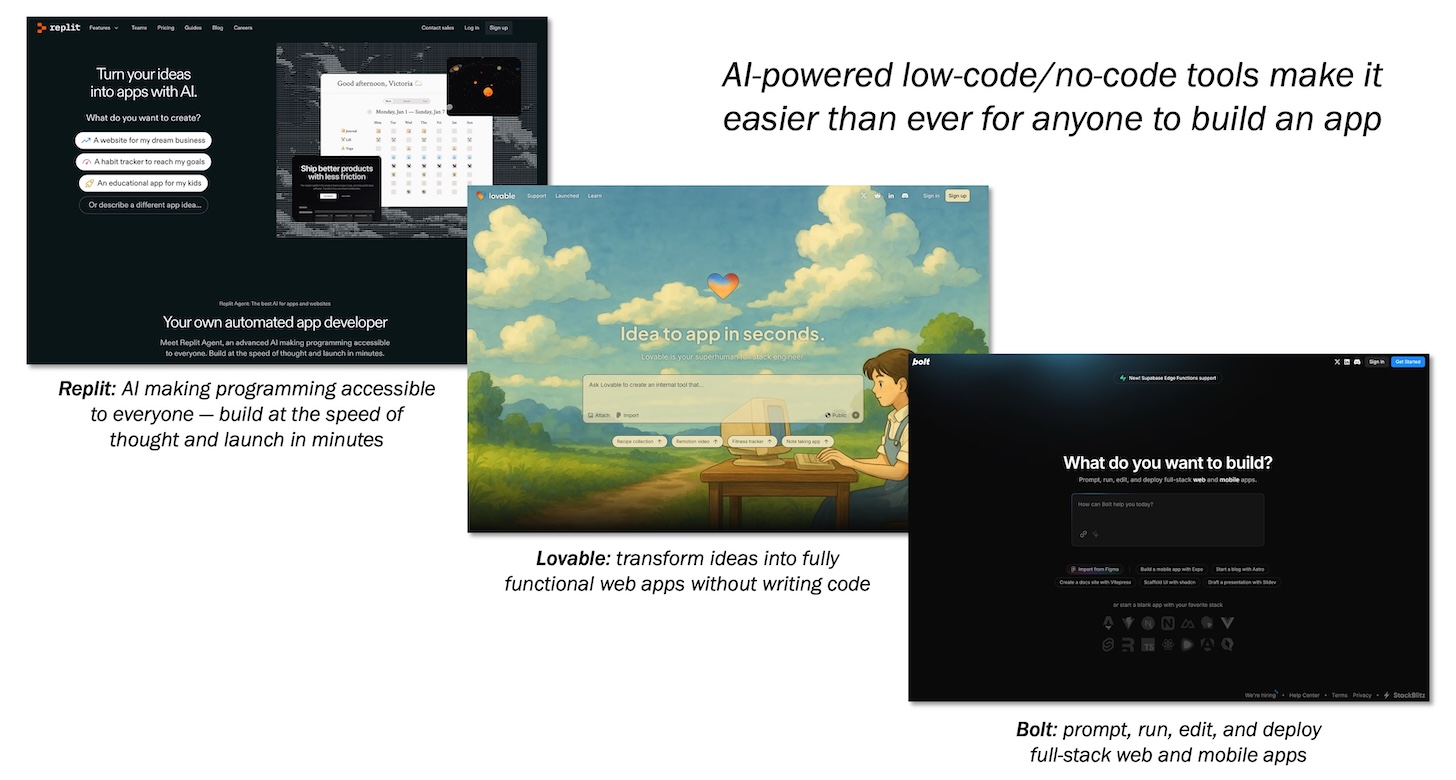
Historically, custom software was the domain of highly funded engineering teams. Today, the barrier to entry has evaporated. Low-code and no-code platforms, combined with the "vibe coding" capabilities of generative AI, allow non-technical marketers to become "citizen developers."
When a user prompts an AI assistant to automate a workflow, they are effectively deploying custom software. This is occurring at such a scale that we are likely witnessing the creation of billions, if not trillions, of transient applications that exist only to solve a specific, momentary business problem. This "hypertail" is no longer an edge case; it is the new standard for operational agility.
Implications for the Modern CMO
The implications of this data for leadership are profound. The primary challenge for marketing operations is no longer the acquisition of tools, but the orchestration of them.
1. The Death of the Monolith
The rise of the "hypertail" proves that the era of the all-encompassing, singular marketing suite is likely coming to an end. Instead, companies are moving toward a modular architecture where a central hub (CRM or Cloud Data Warehouse) connects to a fluid, ever-changing periphery of specialized apps.
2. The AI-Native Integration
Companies are no longer asking if they should use AI; they are asking how to integrate AI-native products into their existing stacks. The growth of AIO (AI Optimization) subcategories suggests that the "SEO" of tomorrow will be entirely focused on model-based retrieval.
3. Talent as the Ultimate Competitive Advantage
As software becomes easier to build, the competitive advantage shifts away from the tools themselves and toward the ability to orchestrate them. Marketing teams must prioritize "marketing technologists"—individuals who can bridge the gap between business strategy and the rapid, iterative deployment of AI-driven automations.
Conclusion: A Living, Breathing Ecosystem
The 2025 Marketing Technology Landscape is more than a report; it is a map of a rapidly evolving digital civilization. While the sheer volume of 15,384 solutions may appear daunting, it reflects a healthy, competitive, and highly innovative market.
As we look toward the future, the distinction between "buying" and "building" will continue to blur. The most successful organizations will be those that embrace this fluidity, treating their martech stack not as a static foundation, but as a dynamic, evolving organism capable of adapting to the rapid pace of technological change.
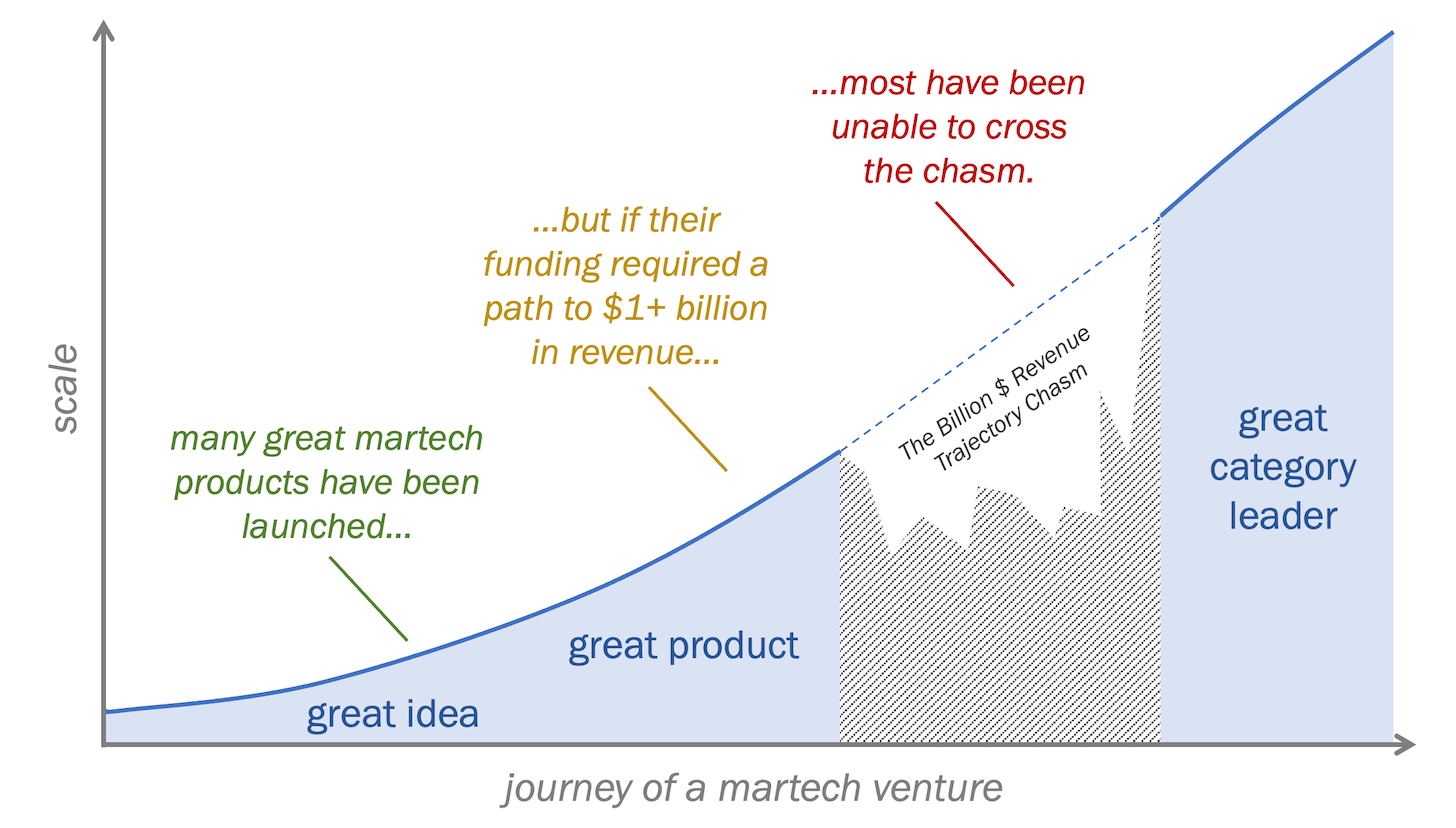
For those looking to navigate this landscape, the full State of Martech 2025 report remains a critical resource, offering a roadmap for balancing consolidation with the necessary, relentless experimentation required to stay ahead in the age of AI.
