

The Art of the Pivot: Mastering Corporate Change Announcements to Preserve Customer Trust
In the lifecycle of a business, change is not merely inevitable—it is often the hallmark of growth. Whether a company is navigating a high-stakes merger, undergoing a total brand transformation, or simply updating its operational infrastructure, the way it communicates these shifts is a defining moment for its relationship with its customer base. A poorly handled announcement can trigger confusion, erode trust, and lead to a surge in churn. Conversely, a well-executed transition strategy acts as a bridge, reassuring loyal clients that the value they cherish remains intact, even as the "name on the door" evolves.
The Anatomy of a Corporate Change Announcement
A formal company change announcement is more than a courtesy; it is a critical strategic touchpoint. It serves to inform clients, stakeholders, and the public about significant modifications in the business identity. These communications typically address rebrands, name changes, mergers, acquisitions, or shifts in contact information.
The overarching goal is threefold: maintaining continuity, preventing unnecessary friction, and re-engaging the audience. When companies treat these transitions as an opportunity to reinforce their mission rather than just a technical update, they convert potential instability into a marketing advantage.

Why Communication Strategy Impacts the Bottom Line
The stakes of a company announcement are high, and they manifest directly in a business’s operational health.
1. Protecting Sender Reputation
In the digital age, companies rely heavily on email deliverability. A sudden, unannounced change in an email domain or sender name is a classic "red flag" for spam filters. If customers do not recognize the entity sending them an email, they are prone to marking it as junk. This damages the company’s sender reputation, which can take months to repair. A transparent announcement allows the brand to "bridge the gap," linking the old identity to the new one before the transition occurs.
2. Mitigating Unsubscribes and Complaints
Abrupt changes breed confusion. When customers receive messages from an unfamiliar source, their instinct is to disengage. Providing clear, early context ensures that the subscriber base remains intact. According to industry benchmarks, emails that provide a narrative "why" behind a change see significantly higher engagement rates than those that treat the transition as a mere administrative update.

3. Strengthening Customer Relationships
Transitions offer a rare window to remind customers of your core value proposition. By explaining that the name might be changing, but the commitment to service quality is not, companies can actually deepen customer loyalty during the period of change.
A Strategic Chronology: How to Manage the Transition
A successful announcement is not a singular event; it is a campaign. To ensure a smooth transition, businesses must follow a structured timeline.
Phase 1: Preparation (4–6 weeks prior)
- Audit Automated Systems: Ensure that every touchpoint—from transactional receipts to "welcome" sequences—is updated with new branding.
- Segment Your Audience: Prepare different messages for long-term power users, new customers, and partners.
- Drafting Assets: Create a clear, concise narrative that explains the "why" and "what."
Phase 2: The Soft Launch (2–4 weeks prior)
- The Initial Announcement: This is the first wave of communication. It should be sent from your existing, recognized email address to ensure it reaches the inbox.
- Transparency: Use clear subject lines. Avoid vague language like "An update regarding our company." Instead, lead with the news: "[Old Name] is now [New Name]."
Phase 3: The Go-Live (Day of change)
- The Confirmation: Send an email on the day of the transition confirming that the changes are now active.
- Technical Support: Provide a direct line to support for customers who may have concerns about their accounts, billing, or access.
Phase 4: Follow-up and Maintenance (1–4 weeks after)
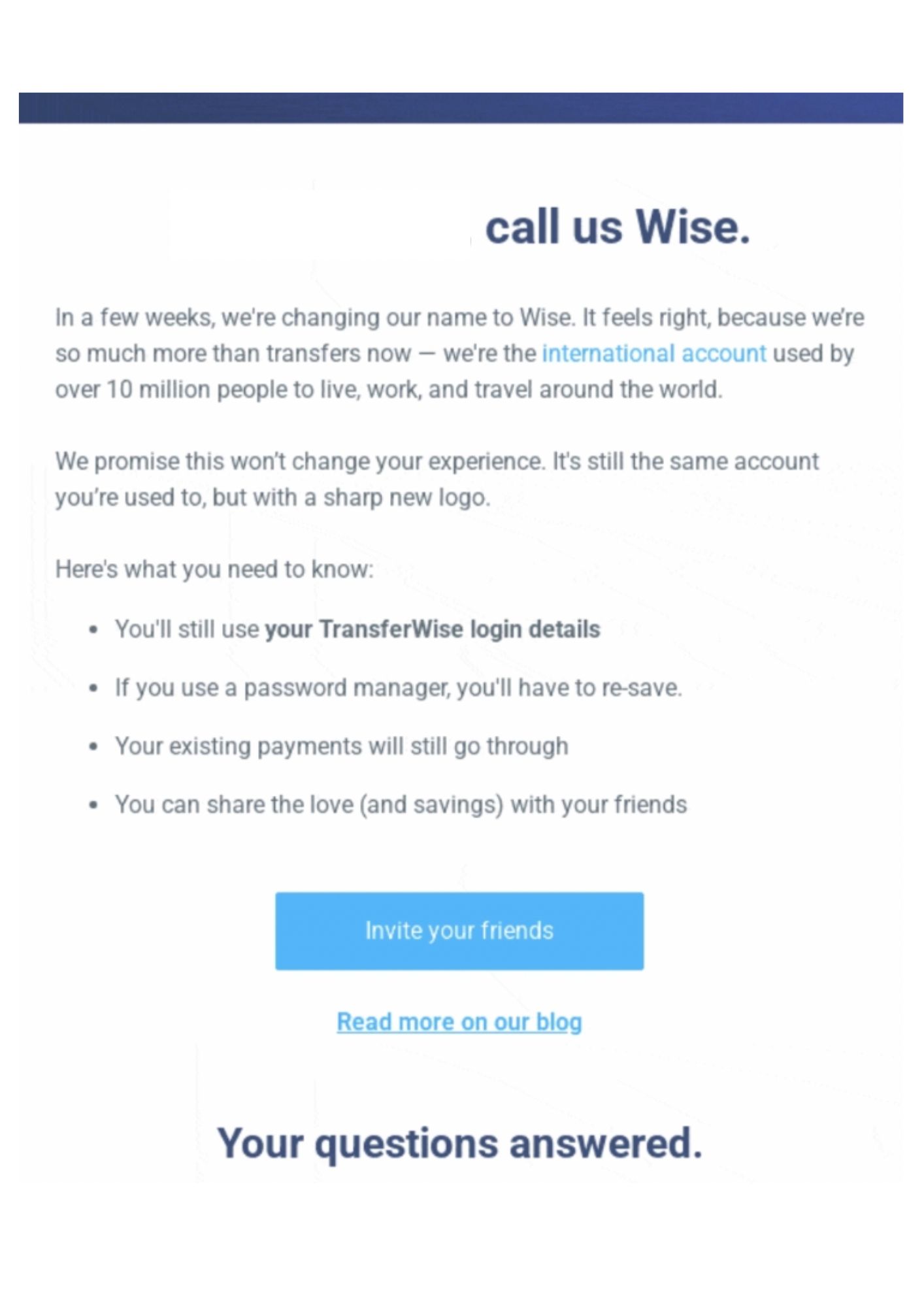
- Addressing FAQs: Many customers will have questions. Proactively send a follow-up email that addresses common pain points, such as, "Do I need to change my login?" or "Is my payment information still secure?"
- Monitoring Analytics: Track open rates and click-through rates. If a segment of your audience did not engage with the first email, re-target them with a simplified message.
Supporting Data and Best Practices
The effectiveness of these announcements often hinges on the "Do’s and Don’ts" of corporate messaging.

| Category | Best Practice | The "Avoid" List |
|---|---|---|
| Timing | Provide 4 weeks of advance notice. | The "Overnight Surprise" (leads to spam flags). |
| Messaging | Focus on what is staying the same. | Over-explaining with walls of text. |
| Visibility | Use a series of emails to ensure reach. | The "One-and-Done" approach. |
| Technical | Ask users to whitelist your new domain. | Switching the "From" address without warning. |
Official Responses and Managing Customer Concerns
A common point of failure is the inability to address customer anxiety. When a company changes, customers often fear the worst—that the service will decline or that the company has been sold to a less reputable party.
To manage these concerns, communication teams should be equipped with standard, empathetic responses. For instance, if a customer asks, "Why are you changing? Are you being sold?" the response should be transparent: "We are evolving to better serve our growing client base, but our core team and our commitment to [Value Proposition] remain identical."
Furthermore, proactively addressing account-related fears—by explicitly stating, "No action is required on your end"—is the single most effective way to prevent a spike in support tickets.
Implications of a Rebrand on Marketing Channels
While email is the cornerstone of any transition strategy, it cannot work in a vacuum. A holistic approach includes:
- SMS Marketing: For high-value customers, a short, urgent text message can provide peace of mind. Keep it brief: "Company X is now Company Y. Same service, new look. Questions? Reply HELP."
- Social Media: Use your channels to create a "visual story." Share behind-the-scenes content that humanizes the transition.
- In-App Messaging: For SaaS companies, an in-app modal that triggers upon login is the most effective way to reach active users who may have ignored their email.
- Website Presence: Update your footer, contact page, and About Us section simultaneously. A mismatch between your website and your email branding is a common cause of customer distrust.
Measuring Success: Beyond the Click
To evaluate whether your announcement succeeded, you must look at a blend of metrics:
- Email Deliverability: Monitor for sudden drops in open rates or spikes in "Mark as Spam" reports.
- Support Volume: A successful announcement should not result in a surge of "What is happening?" support tickets.
- Churn Rate: Track whether your cancellation rate deviates from the baseline in the 30 days following the announcement.
- Sentiment Analysis: Pay close attention to social media mentions and direct replies to your announcement emails.
Final Reflections
A company change announcement is far more than a formality; it is a defining test of corporate maturity. By leading with clarity, maintaining consistency in your sender identity, and proactively addressing the anxieties of your user base, you can ensure that the transition acts as a catalyst for growth rather than a hurdle to retention.

The bottom line is simple: Your customers are loyal to the value you provide. When you communicate change with transparency and respect for their time, you aren’t just notifying them of a new name or look—you are inviting them to participate in the next, most exciting chapter of your company’s journey. By planning carefully, using multi-channel communication, and keeping the focus on the customer experience, your brand will emerge from the transition stronger than before.
