
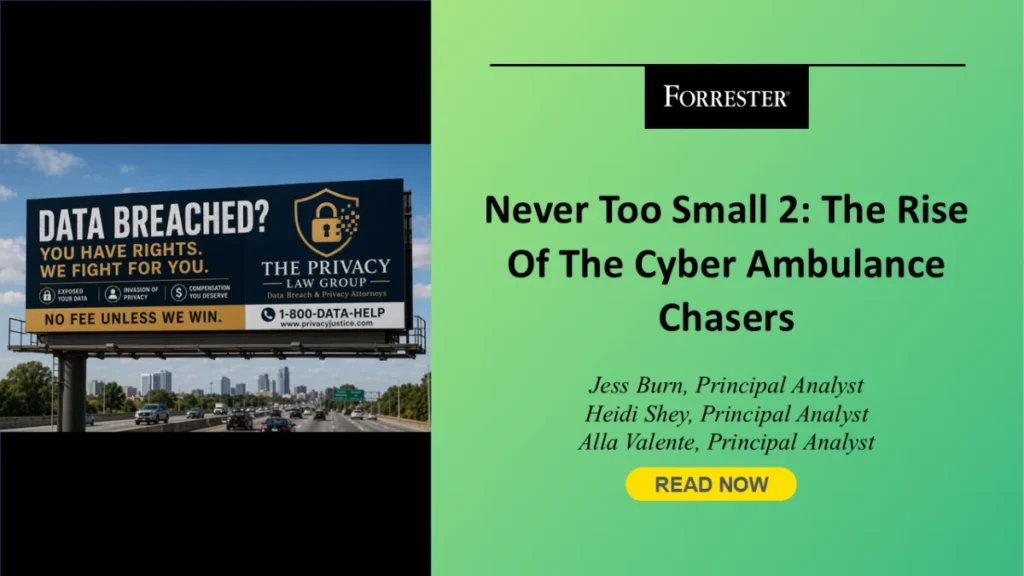
The Double Jeopardy of the Digital Age: Why SMBs are the New Frontline for Cyber-Litigation
For years, a pervasive myth has circulated within the boardrooms of small-to-medium-sized businesses (SMBs) and municipal governments: “We are too small to be targeted.” The logic was simple—if you aren’t a Fortune 500 titan, you aren’t worth a hacker’s time.
Two years ago, that myth was shattered when the town of Arlington, Massachusetts, fell victim to a business email compromise (BEC) scheme that siphoned nearly half a million dollars from a municipal construction project. The criminals didn’t need to breach a global bank; they simply identified a municipality with finite staff, limited resources, and zero margin for financial error.
However, a new, more pervasive threat has emerged. It is no longer just about the immediate financial loss from a cyberattack. Today, small organizations are discovering that they aren’t just targets for cybercriminals—they are prime targets for class-action attorneys. A recent class-action lawsuit involving a regional steel manufacturer confirms that the era of "security through obscurity" is officially over.
The Anatomy of a Modern Breach Lawsuit
The case of the steel manufacturer serves as a grim template for the new reality of digital liability. The company experienced a breach involving sensitive employee HR and benefits data, including Social Security numbers, dates of birth, driver’s license information, and protected health data. The breach affected approximately 5,000 individuals.
The intrusion was relatively short-lived, contained within roughly 48 hours of detection. Yet, within weeks of the mandatory notification letters reaching the affected employees, the company was hit with a class-action complaint. The lawsuit alleged systemic failures in training, oversight, and cybersecurity safeguards. While the incident was small by global standards, the legal repercussions were immediate and aggressive.
This is no longer the exception; it is the new standard of operations for a segment of the legal industry that has effectively "industrialized" the data breach response.
The Legal Evolution: From Actual Harm to "Future Risk"
To understand why this is happening, one must look at the shifting tides of the American judicial system. Prior to 2017, the barrier to entry for a data-breach class action was high. Plaintiffs were generally required to demonstrate "actual misuse" or tangible financial harm to establish Article III standing in federal court. If your data was stolen but hadn’t yet been used to drain your bank account, you typically didn’t have a case.
That changed between 2017 and 2018. A series of circuit court rulings determined that a "substantial risk of future identity theft" could satisfy Article III standing. Suddenly, the mere exposure of data became enough to trigger a lawsuit.
This opened the floodgates. By allowing plaintiffs to sue before a single dollar was stolen, the courts effectively turned every minor data incident into potential class-action fuel. Plaintiffs’ attorneys began to treat data breaches with the same methodical precision as the hackers themselves—monitoring public breach disclosures and rapidly recruiting plaintiffs to build cases centered on claims of corporate negligence.
Industrialized Litigation: The Data Surge
The scale of this shift is documented in recent industry reports. According to Forrester’s 2025 predictions, breach-related class-action costs have now surpassed regulatory fines by 50%. The numbers are staggering:
- Explosive Growth: In 2025 alone, more than 3,000 data breach class actions were filed in U.S. federal courts.
- Monthly Velocity: The Duane Morris 2026 Class Action Review tracked over 1,800 privacy class-action filings in 2025—a rate exceeding 150 per month. This represents a 25% increase over 2024 and a massive 200% climb since 2022.
- Diversified Triggers: Breaches are no longer the only entry point. Cyber risk firm KYND reports that privacy-related lawsuits—often triggered by tracking pixels or website configurations—have surged from hundreds annually to over 2,000.
The economics of these lawsuits are incentivized by state privacy laws, most notably the California Consumer Privacy Act (CCPA). Under the CCPA, plaintiffs do not need to prove actual harm to seek statutory damages ranging from $100 to $750 per resident per incident.
When you apply these figures to a "small" breach of 5,000 records, the statutory liability alone creates a massive settlement incentive. Furthermore, the 1967 California Invasion of Privacy Act (CIPA) is increasingly being weaponized against modern web-tracking tools like Meta Pixel, with 11% of claims in the 2026 Coalition Cyber Claims Report citing improper data sharing as the primary cause of action.
Employee Data: The Hidden Liability
Large enterprises often focus their defensive posture on customer databases and intellectual property. However, SMBs often possess something just as valuable to litigation: deep, centralized records on their employees.
Every business, regardless of size, maintains payroll, tax, health insurance, and retirement records. These files contain the exact high-value PII (Personally Identifiable Information) that courts view as the most sensitive. From a litigation perspective, an employee data breach is often "easier" to litigate than a customer data breach because the duty of care between an employer and employee is clearly defined and widely understood by juries.
When a small business loses employee Social Security numbers, they aren’t just facing a PR problem; they are facing a direct claim of failing to protect the most vulnerable assets of their own staff.
Redefining "Reasonable Cybersecurity"
The most frustrating aspect for small organizations is the legal requirement to maintain "reasonable" cybersecurity. In the absence of a federal standard, "reasonable" is a nebulous term that often defaults to whatever a plaintiff’s expert says it should have been.
However, the legal environment is shifting toward a standard of demonstrable security. It is no longer enough to have a firewall; organizations must be able to prove they have a risk-based, documented, and defensible strategy. This is where frameworks like the NIST Cybersecurity Framework (CSF) and CIS Controls become vital.
The courtroom defense of the future is not "we did everything to stop the hack," but rather "we implemented a risk-based program that aligns with industry standards, and here is the documentation to prove it." This necessity has led researchers, including Forrester’s James Plouffe, to advocate for a "Minimum Viable Zero Trust" approach—a way for smaller entities to achieve high-level security without needing the massive budgets of a Fortune 500 company.
Implications and Strategic Recommendations
For SMBs, municipalities, and regional providers, the message is clear: The cyber-threat landscape has converged with the litigation landscape. A security incident is now a legal incident by default.
Recommended Steps for Immediate Action:
- Formalize Documentation: Move beyond "best effort" security. Use recognized frameworks (NIST, CIS) to create a defensible, written security policy that maps to current operational realities.
- Audit Web Assets: Given the rise in lawsuits regarding web-tracking pixels and wiretapping statutes, perform a comprehensive audit of all third-party scripts on your public-facing websites.
- Prioritize Employee Data: If you have limited resources, prioritize the security of internal HR and payroll systems. This is your highest liability surface area.
- Incident Response Planning: Develop a legal-first incident response plan. Ensure that your breach notification procedures are vetted by counsel before an event occurs, as the "notification window" is the moment most class-action firms begin their work.
- Insurance Review: Re-examine cyber-insurance policies to ensure they cover the specific costs of class-action defense, not just the technical costs of restoration and ransom payments.
Conclusion: The New Reality
The lesson from Arlington, Massachusetts, remains as true today as it was two years ago: No organization is too small to be a target. But the lesson from the recent steel manufacturer case adds a critical layer to that reality: You are not too small to be litigated into oblivion.
Cyber risk and litigation risk are now two sides of the same coin. For organizations with limited budgets and tight margins, the goal is no longer just to prevent an intrusion, but to ensure that when an incident inevitably occurs, the organization has the documentation and posture to withstand the inevitable legal onslaught that follows. The era of the "unnoticed breach" is over. In its place is an era of constant vigilance, where the burden of proof rests firmly on the shoulders of the business owner.
