
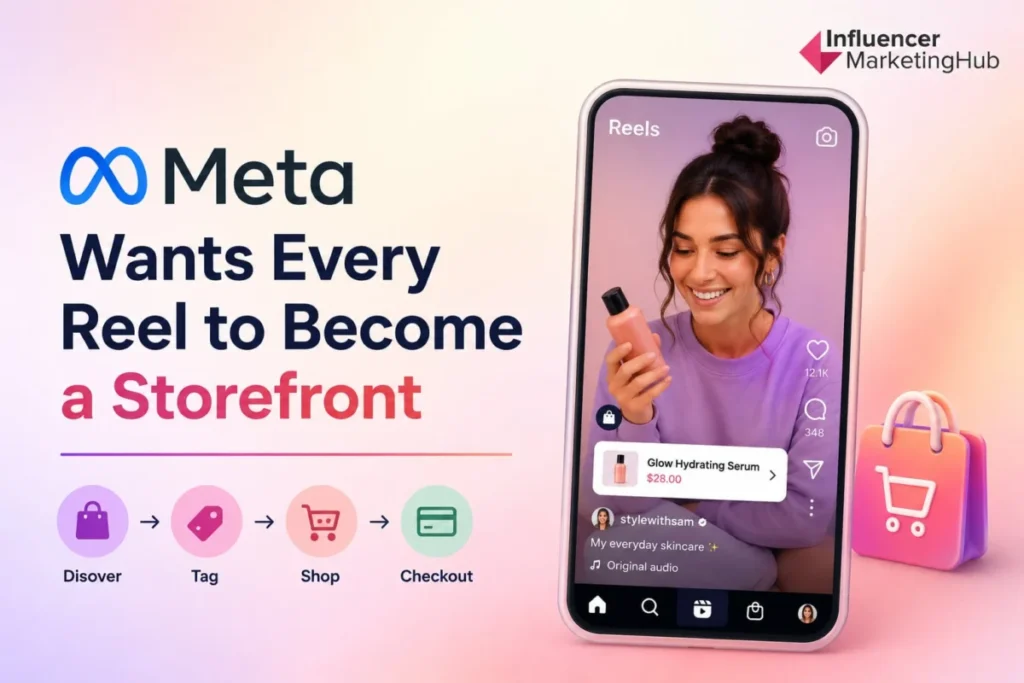
The End of "Link in Bio": Meta’s Strategic Pivot to Frictionless Social Commerce
"The era of link in bio is finally over."
This bold proclamation, delivered by Nicola Mendelsohn, Meta’s Head of Global Business Group, at the Shoptalk conference earlier this year, serves as the manifesto for a seismic shift in how we buy online. For years, the "link in bio" has been the awkward, high-friction bridge between social discovery and digital commerce. It was the digital equivalent of seeing a product in a store window but being forced to leave the building, find a map, and walk three blocks to a warehouse to complete the purchase.
Meta, through a series of aggressive updates unveiled at Cannes Lions 2026, is effectively tearing down that wall. By integrating seamless, direct-purchase capabilities into the heart of Facebook and Instagram, the social giant is repositioning its platforms from mere discovery engines to full-stack commerce ecosystems.
Main Facts: The New Commerce Landscape
The core of Meta’s latest update centers on the total removal of navigation friction. For brands and creators, this is not just a feature tweak; it is a fundamental redesign of the sales funnel.
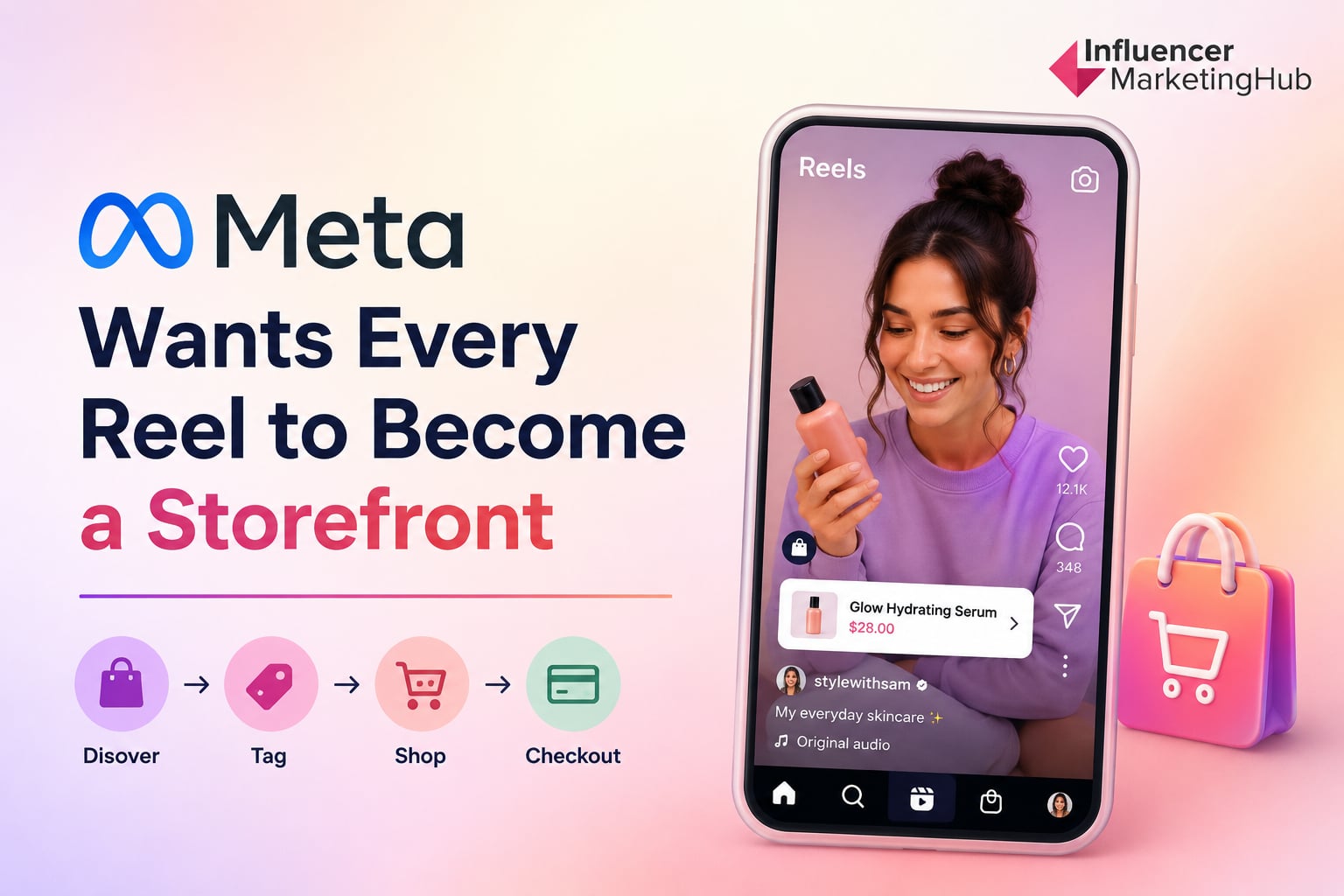
Eligible creators across 22 countries are now empowered to tag products directly from a brand’s catalog within Instagram Reels and Feed posts. Furthermore, they can embed affiliate links that facilitate an immediate purchase journey without the user ever needing to navigate away from the content.
This update addresses the "conversion leakage" that has plagued social commerce for a decade. By allowing up to 30 tagged products per Reel, Meta is enabling creators to craft elaborate shopping experiences—ranging from "Get Ready With Me" (GRWM) fashion hauls to in-depth beauty tutorials—where the viewer can tap on a featured item and transition to checkout instantly.
Chronology: The Evolution of Social Selling
The path to this moment has been a gradual, yet deliberate, migration of Meta’s product roadmap:
- 2018–2020: The Experimental Phase. Meta began testing shoppable tags on organic posts, allowing users to tap images to see product prices.
- 2021–2023: The Rise of Reels. As user behavior shifted toward short-form video, Meta prioritized Reels, but commerce remained secondary, often relegated to the "link in bio" workaround.
- Early 2026: The "Shoptalk" Declaration. Nicola Mendelsohn officially signaled the death of the external link as a primary conversion tool, setting the stage for deep-platform integration.
- Mid-2026: The Cannes Lions Rollout. Meta officially launched the direct-tagging infrastructure, the expansion of Live Video Ads, and the backend AI-driven advertising overhaul.
- Late 2026 and Beyond: The focus is shifting toward the global integration of virtual payment cards and automated, AI-assembled shopping experiences.
Supporting Data: Why Friction Costs Billions
The urgency behind these updates is driven by hard data. In the current social media ecosystem, consumer behavior is heavily influenced by creators. Research indicates that as much as 27% of all beauty and luxury shoppers rely exclusively on influencer recommendations to make their purchasing decisions.
However, the "journey" from inspiration to transaction has historically been plagued by abandonment. Every click required—from the profile page to the external link, through a slow-loading website, and finally to a payment gateway—acts as a filter that sheds potential customers.
Industry benchmarks suggest that for every additional step in a checkout process, conversion rates drop by as much as 20%. By removing the necessity of the "link in bio," Meta is effectively reclaiming this lost revenue, turning what was previously a "top-of-funnel" awareness channel into a bottom-of-funnel conversion powerhouse.
Official Responses and Strategic Intent
Meta’s leadership has been vocal about the necessity of this pivot. The rationale is simple: the modern consumer values time and convenience above all else.
"We are moving from a world where discovery happens on social and shopping happens on the web, to a world where the two are entirely synonymous," a Meta spokesperson noted during the Cannes rollout.
This is not just about helping creators make money; it is about protecting Meta’s relevance in a landscape increasingly dominated by search-based commerce (like Amazon) and high-speed social competitors. By incentivizing creators with commission-based affiliate models and simplifying the user experience, Meta is ensuring that the most valuable digital real estate—the user’s attention—stays within its walls.
Implications: A New Era for Brands and Creators
The shift to a "closed-loop" commerce ecosystem has profound implications for every stakeholder in the digital marketing economy.

1. The Death of the "Link in Bio" Aesthetic
For years, influencer marketing agencies and brands have obsessed over Linktree-style landing pages. Those assets are rapidly becoming obsolete. Moving forward, the creative is the store. Brands will need to invest more in high-quality assets that support product tagging, rather than relying on external web design to "close the deal."
2. The Rise of the "Catalog-First" Strategy
Perhaps the most significant change is the shift in how brands manage their product catalogs. With Meta’s AI now dynamically assembling shopping experiences based on product data, the quality of a brand’s metadata—descriptions, high-resolution imagery, and availability tracking—is now just as vital as the influencer’s charisma. If your catalog is disorganized, Meta’s AI cannot effectively present your products, meaning your ad spend will yield diminishing returns.
3. Creator Partnerships as Sales Channels
Influencer marketing is officially moving out of the "PR/Awareness" budget and into the "Performance Marketing" budget. Because these new features provide a direct, measurable path from a Reel to a sale, brands can now calculate the exact ROI of an influencer partnership with unprecedented precision. This will likely lead to a surge in performance-based compensation models (affiliate commissions) over the traditional flat-fee sponsorship model.
4. The AI-Driven Commerce Revolution
Meta’s move to use product catalog data as the foundational input for all Sales campaigns marks a turning point for advertisers. Instead of manually A/B testing ad formats, marketers will provide the content (the creator’s video) and the inventory (the catalog), and Meta’s AI will handle the rest. This creates a "personalized storefront" for every individual user based on their specific browsing habits and preferences.
Future Outlook: The Seamless Future
As we look toward the remainder of the decade, the line between social media and the point of sale will continue to blur. The introduction of virtual cards developed in partnership with Mastercard and Visa—allowing users to pay without sharing sensitive details with third-party merchants—removes the final hurdle: trust.
For the modern brand, the takeaway is clear: the era of redirecting traffic is over. We have entered the era of the "all-in-one" experience. The platforms that succeed in the next five years will not be the ones that drive traffic to a website, but the ones that allow the website to exist entirely within the user’s feed.
The "link in bio" was a necessary bridge for an analog era of digital marketing. Today, Meta is building a highway, and it’s time for brands to decide if they are ready to drive on it. The future of commerce isn’t just about what you show your audience—it’s about how easily they can buy it before they decide to scroll away.
