
The New Search Frontier: Why LLM Rankings are the Next Battleground for Brand Authority
For over two decades, the digital economy has been governed by a singular mantra: "Search Engine Optimization." Businesses spent billions chasing the "blue link" supremacy on Google, treating search engine results pages (SERPs) as the definitive map of the internet. But today, that map is being rewritten. Large Language Models (LLMs) are no longer just a technological novelty; they are quietly evolving into the primary interface for information discovery and consumer decision-making.
If Google Search was the map, LLMs—such as ChatGPT, Claude, Gemini, and Perplexity—are the local tour guides. They don’t just point you toward a list of websites; they synthesize data, provide direct answers, and curate product recommendations, often leaving traditional search results as a secondary, background thought. For brands, this represents a tectonic shift. "LLM Rankings"—the visibility your brand achieves within these AI-generated responses—have become the new gold standard for digital presence. If you aren’t tracking your influence in these AI models, you are effectively invisible in the rooms where the most important purchase decisions are being made.
The Evolution of Discovery: From Links to Synthesis
To understand why LLM rankings matter, one must look at the shift in user behavior. Historically, a user searched for a term, scanned a list of ten results, and clicked to navigate through different domains. This was a process of manual filtering.
Modern AI interaction is different. A user asks a complex, intent-driven question—e.g., "What is the best project management software for a remote team of 50?"—and receives a synthesized, authoritative answer. The AI acts as the final arbiter of information. If your brand is not mentioned in that response, you haven’t just lost a click; you have lost the opportunity to even be considered.
This transition is not merely a change in format; it is a change in the psychology of consumption. Users are increasingly prioritizing speed and convenience, favoring the curated "answers" provided by AI assistants over the effort of browsing multiple websites.
The "Big Four" and the Fragmentation of Search
While Google dominated the era of the hyperlink, the era of the LLM is characterized by competition. The market has coalesced around four primary pillars, each with a unique audience and methodology:
- OpenAI (ChatGPT): The current market leader in consumer perception, driving massive traffic through its conversational interface.
- Google (Gemini): Leveraging its unique advantage through deep integration into the Google Search ecosystem, effectively turning the SERP into an AI-native experience.
- Anthropic (Claude): Gaining rapid traction among business users and professionals due to its advanced reasoning capabilities and reputation for "human-like" nuance.
- Perplexity: The rising star in the research and news space, which prioritizes real-time, cited data—a crucial battleground for brands looking to establish factual authority.
Ignoring these platforms is akin to ignoring the rise of the mobile web in the late 2000s. You might choose to wait, but by the time the trend becomes an industry standard, the early movers will have already captured the "AI mindshare."
The Anatomy of an LLM Audit: Process and Strategy
Unlike the mature infrastructure of Google Search Console, there is no centralized "LLM Search Console." Tracking performance requires a shift from passive observation to active, synthetic testing.
1. The Importance of API-Driven Data
To get an accurate snapshot, you cannot rely on a single, casual prompt. You must use current models via API to simulate the high-volume, programmatic way AI models process information. API access allows for consistent, scalable testing that reflects how the model behaves at scale, rather than how it responds to one-off human questions.
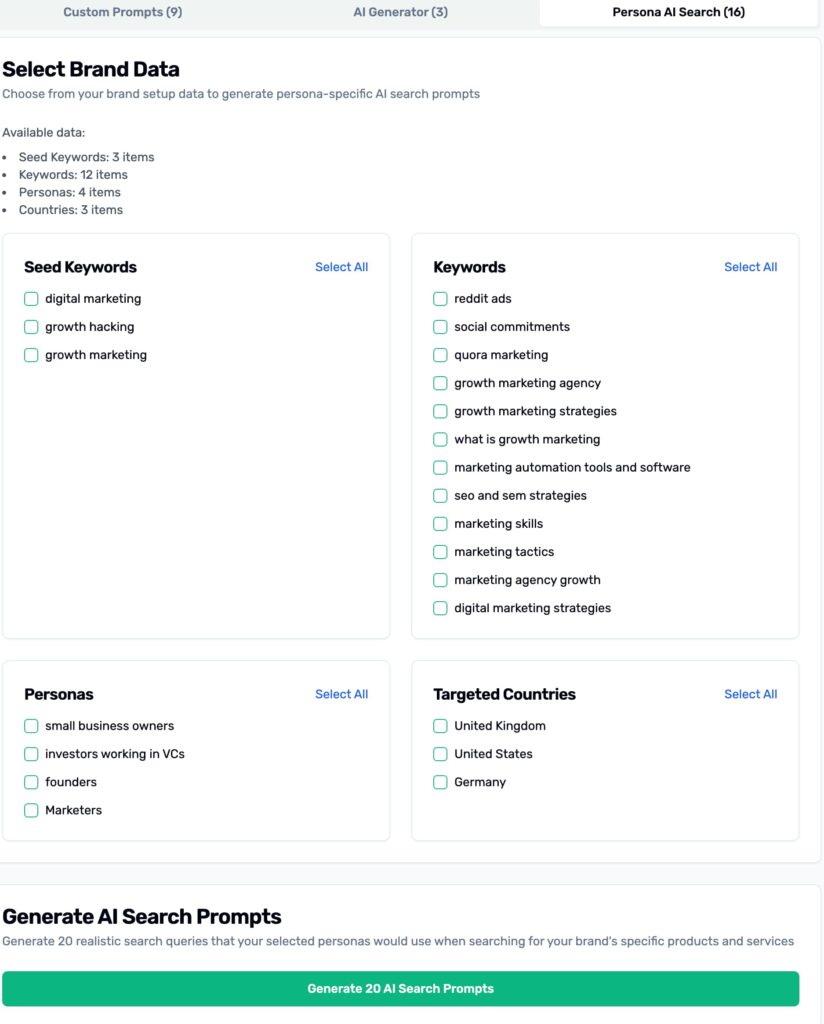
2. Building a Robust Prompt Set
Your ranking is only as good as your input. Effective LLM monitoring relies on a categorized prompt set that mimics real-world user intent. This includes:
- Broad Informational Prompts: E.g., "What are the best [Category] solutions?"
- Comparison-Based Prompts: E.g., "Compare [Brand A] and [Brand B] for [Specific Use Case]."
- Problem-Solution Prompts: E.g., "How can I fix [Common Industry Pain Point]?"
- Niche/Long-Tail Prompts: Even if search volume seems low, these are critical for understanding how the AI associates your brand with specific attributes.
3. Analyzing the "Why" Behind the Answer
Visibility is just the first step. You must analyze the sentiment of the mention. Is your brand being recommended as a cost-effective solution, or is it being cited as "expensive" or "outdated"? Understanding the AI’s "opinion" of your brand—based on the vast corpus of data it has been trained on—is the ultimate feedback loop for your marketing department.
Implications: The Cost of Inaction
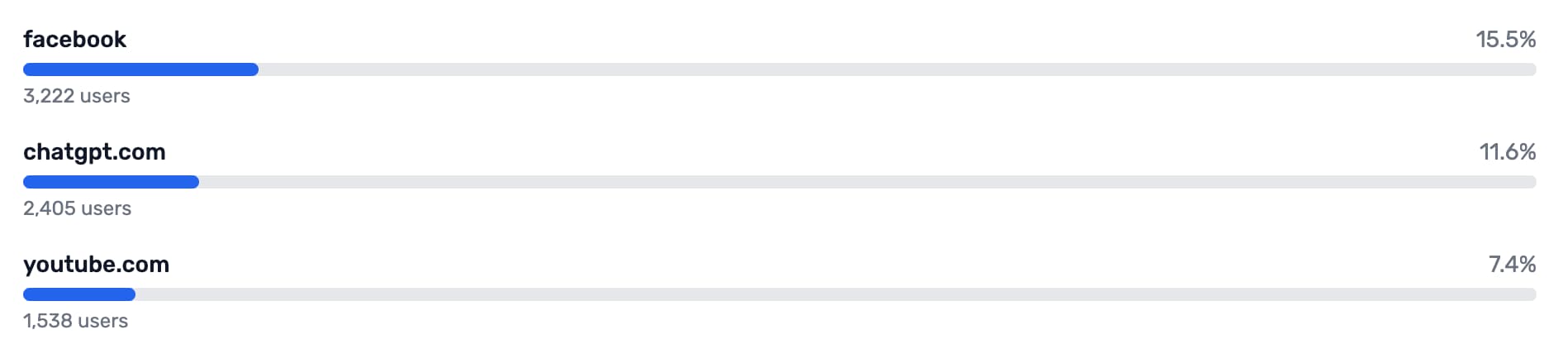
The math behind the shift is undeniable. Estimates suggest that LLM-driven traffic already accounts for 10% to 13% of total inbound visits for digitally mature companies. However, the value isn’t just in the volume; it is in the intent quality.
Because an AI has already "vetted" the user’s request and provided a targeted recommendation, the resulting traffic is often higher in intent than a random click from a search engine results page. When a user acts on an AI recommendation, they are operating with a higher degree of trust.
The Financial Reality
Monitoring this space is not free. The costs are categorized by:
- Compute Costs: Running thousands of API queries across multiple models is computationally expensive.
- Data Processing: Storing and indexing the outputs to identify trends over time.
- Human Oversight: The necessity of manual review to ensure the AI’s "hallucinations" or logical leaps are understood within the context of your brand strategy.
When you factor in the sheer volume of query combinations, the cost of "being informed" rises. Yet, compared to the cost of losing market share to a competitor who is optimizing for the AI era, the investment is arguably a prerequisite for survival.
From SEO to AIO: The New Marketing Discipline
We are witnessing the birth of AI Optimization (AIO). Unlike traditional SEO, which relies heavily on backlinks and technical site audits, AIO is about authority and association.
To rank in an LLM, you must ensure that the AI understands your brand’s value proposition through a consistent, high-quality digital footprint. This means:
- Content Consistency: Creating resources that answer complex questions in a way that is easy for LLMs to ingest and synthesize.
- Entity Association: Strengthening the link between your brand and the specific keywords or problems you want to be known for.
- Structured Data: While LLMs are becoming better at reading raw text, providing clear, high-quality information remains the best way to ensure the AI gets the facts right.
As companies like those behind "Growth OS" continue to develop tools for this specific purpose, the market is moving toward a future where brands don’t just "show up" in search—they are programmed to be the primary answer.
Conclusion: The New Battleground
The era of "passive visibility" is coming to an end. In the same way that early internet pioneers learned to master the Google algorithm, modern brand managers must now learn to master the AI conversation.
LLM rankings are not a fad; they are the next phase of the digital transformation. The brands that start tracking their performance in AI models today will own the trust of the consumers of tomorrow. Those who remain anchored to traditional search metrics will eventually find themselves in a precarious position: invisible to the very users who are using AI to make their most important decisions.
The question is no longer "How do I rank on Google?" but "What does the AI say when a customer asks about my industry?" If you don’t know the answer, you are already behind.
