
Unlocking Precision: How Crazy Egg’s New Audience Segment Reporting Revolutionizes Conversion Optimization
In the high-stakes world of digital marketing, the ability to discern not just that a user converted, but who that user is, represents the holy grail of analytics. Crazy Egg, a long-standing leader in website optimization and user behavior tracking, has unveiled a significant enhancement to its reporting suite: the integration of granular Audience Segment breakdowns within its Conversions tool. This development marks a pivotal shift for marketers and site owners who have long sought to bridge the gap between abstract conversion data and concrete audience personas.
The Core Update: Precision Analytics Without the Technical Burden
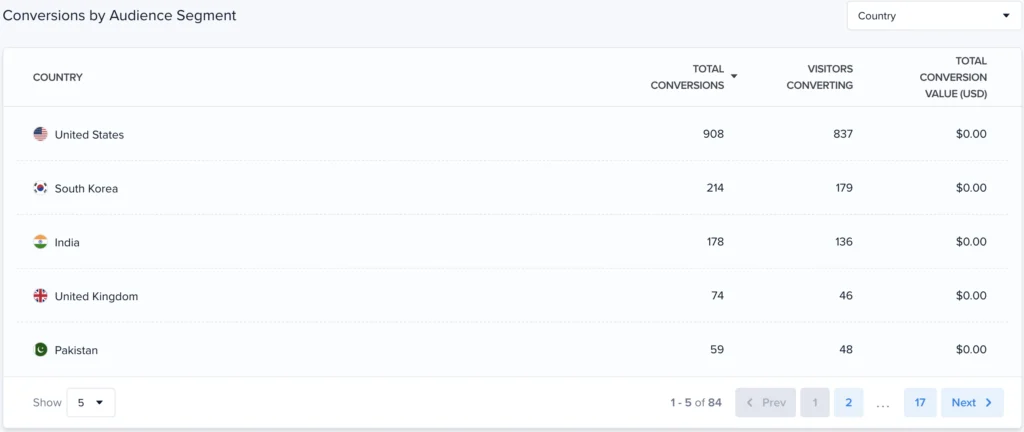
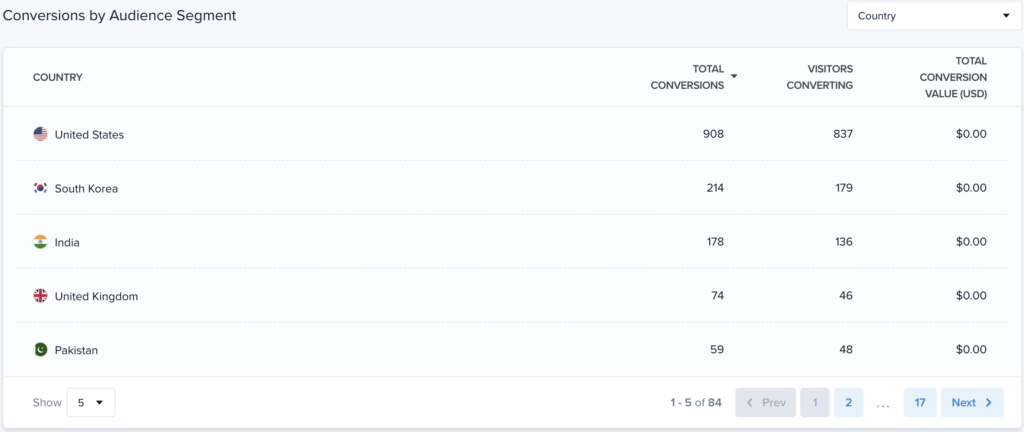
The newly launched feature allows users to analyze the performance of tracked conversions through the lens of specific Audience Segments. By breaking down conversion rates by these segments, Crazy Egg provides a diagnostic view of site performance that was previously obscured by aggregate data.
Perhaps the most significant aspect of this update is its "plug-and-play" nature. The feature requires no additional tracking code, no complex API integrations, and no waiting period for data accumulation. Because Crazy Egg’s architecture is designed to capture and categorize user behavior retroactively, this new reporting view is immediately available for any conversion event previously tracked within the user’s account. This retrospective capability allows teams to gain immediate strategic insights from historical data, turning stagnant reports into actionable business intelligence.
Chronology of Innovation: The Evolution of Behavior Tracking
To understand the impact of this update, one must look at the trajectory of digital analytics. In the early 2000s, web analytics were largely limited to page views and referral sources. As the industry matured, the focus shifted to "Goals" and "Conversions"—measuring the completion of a purchase or a sign-up. However, these metrics often existed in a vacuum.
In recent years, the market demand shifted toward personalization. Marketers realized that a 2% conversion rate was not a monolithic figure; it was an average of a 5% conversion rate from high-intent return visitors and a 0.5% rate from first-time mobile visitors.
Crazy Egg’s path to this feature reflects a steady commitment to this nuance:
- The Early Years: Focus on heatmaps and scroll-maps to identify visual friction.
- The Integration Phase: Connecting visual behavior to specific conversion goals.
- The Segment Era: The current push to categorize users based on traffic sources, device types, and behavioral patterns.
- The Predictive Future: The transition from seeing who has converted to identifying segments that should be targeted for growth.
Supporting Data: Why Segmentation is the Key to ROI
The rationale behind this update is supported by a fundamental tenet of digital marketing: the Pareto Principle, or the 80/20 rule. Often, 80% of a website’s conversions come from 20% of its audience segments. Without segmentation, marketers operate in the dark, treating all traffic as a homogeneous group.
When a marketer identifies that "Returning Visitors from Email Campaigns" convert at three times the rate of "New Visitors from Social Media," the strategy shifts immediately. Instead of spending budget on broad-spectrum advertising, they can reallocate resources to double down on the high-converting segments.
Data visualization plays a critical role here. By scrolling to the bottom of the Conversion report page within the Crazy Egg dashboard, users are presented with a clear, tabular, and graphical breakdown. This visual interface minimizes the "time-to-insight," allowing even non-technical stakeholders to identify which demographic or behavioral buckets are driving the most revenue or lead volume.
Strategic Implications for Modern Businesses
The implications of this feature extend far beyond mere reporting. For e-commerce managers, product leads, and growth marketers, the ability to segment conversion data acts as a force multiplier for several key strategies:
1. Precision Traffic Acquisition
If data shows that a specific Audience Segment has an exceptionally low conversion rate, it may signal that the traffic source or the messaging directed at that segment is misaligned. Conversely, identifying high-performing segments allows for the precise expansion of paid media campaigns.
2. Tailored User Experiences
Once a segment is identified as a "high converter," teams can create custom landing pages, personalized hero sections, or targeted pop-ups designed specifically for that group. By tailoring the site experience to the user’s known history or segment, businesses can further elevate those already impressive conversion rates.
3. Friction Identification
Why do mobile users from a specific geographic region fail to convert? With this new tool, users can contrast the conversion journeys of high-performers against underperformers. This identifies "pockets of friction"—specific steps in the funnel where a particular segment drops off—allowing for surgical A/B testing and site fixes.
4. Efficient Resource Allocation
"Work on converting better" is a vague mandate. By identifying the exact segment that is underperforming despite having high traffic volume, businesses can focus their UX/UI development hours where they will have the most significant impact on the bottom line.
How to Access the Data: A Step-by-Step Guide
The user interface for this feature has been designed with simplicity in mind, adhering to the "three-click rule" common in high-usability software.
- Navigate: Log into the Crazy Egg dashboard and navigate to the "Conversions" tab located in the sidebar menu.
- Select: Choose a specific conversion event from your list of tracked goals. Clicking the linked Conversion Name opens the detailed report.
- Analyze: Scroll to the bottom of the page. You will find the "Conversions by Audience Segment" section.
- Evaluate: Review the data points. Look for outliers—both high and low performers—and use these as the basis for your next round of site experiments or marketing budget adjustments.
Industry Expert Perspective
"The shift toward segment-based optimization is not merely a trend; it is a necessity for survival in a competitive digital marketplace," says industry analyst Sarah Jenkins. "Tools like Crazy Egg are moving away from being simple ‘tracking’ utilities and becoming ‘intelligence’ platforms. By allowing users to see their conversion data through the lens of audience segments without the overhead of complex tagging, they are effectively lowering the barrier to entry for data-driven decision-making."
The feedback from early testers of the feature has been overwhelmingly positive, particularly regarding the ease of implementation. Many teams noted that they had spent months planning complex CRM integrations to achieve this level of detail, only to find the data already waiting for them within their existing Crazy Egg dashboard.
Conclusion: The Future of Conversion Optimization
The addition of Audience Segment reporting to Crazy Egg’s conversion suite represents a significant maturity in the product’s lifecycle. It acknowledges that the modern digital landscape is too fragmented for one-size-fits-all strategies.
For the average business owner or digital marketer, this update provides a bridge between data and action. It replaces guesswork with granular insight, ensuring that every dollar spent on traffic and every hour spent on site optimization is backed by empirical evidence. As businesses continue to navigate the complexities of digital growth, the ability to understand who is converting—and why—will remain the most powerful tool in the arsenal of any successful online enterprise.
Whether you are a startup looking to find your product-market fit or a large enterprise seeking to optimize a complex conversion funnel, these new insights offer the clarity required to move the needle. The data is already there, tracked and waiting; it is time to look at your conversions through a new lens.
