
Beyond the Vanity Metric: The Definitive Guide to Measuring Social Media ROI in 2026
In an era where global social media users are projected to reach 5.75 billion by 2026, the question for modern enterprises is no longer "should we be on social?" but "how much is our presence actually worth?"
Despite the maturation of the digital landscape, 68% of marketers still report significant anxiety regarding their ability to prove the Return on Investment (ROI) of their social efforts to stakeholders. As budgets tighten and the demand for accountability grows, the ability to bridge the gap between "likes" and "revenue" has become the primary differentiator between successful marketing leaders and those struggling to justify their existence.

The Evolution of ROI: From Vanity to Value
Historically, social media measurement was trapped in a cycle of vanity metrics—shares, comments, and follower counts. While these indicators reflect community health, they rarely satisfy a Chief Financial Officer.
The modern definition of social media ROI is the total value—both monetary and non-monetary—that a business derives from its social marketing and advertising investments. This is defined by the classic financial formula: ((Value Generated – Costs) / Costs) x 100.

However, the reality of the customer journey is far more complex than this simple equation suggests. In a multi-touch world, a customer may encounter a brand through an Instagram Reel, research it via a LinkedIn thought-leadership post, and eventually convert through an email-driven search ad. If an organization only credits the final click, they effectively blind themselves to the value social media provided in the awareness and consideration stages.
Chronology of an ROI Strategy
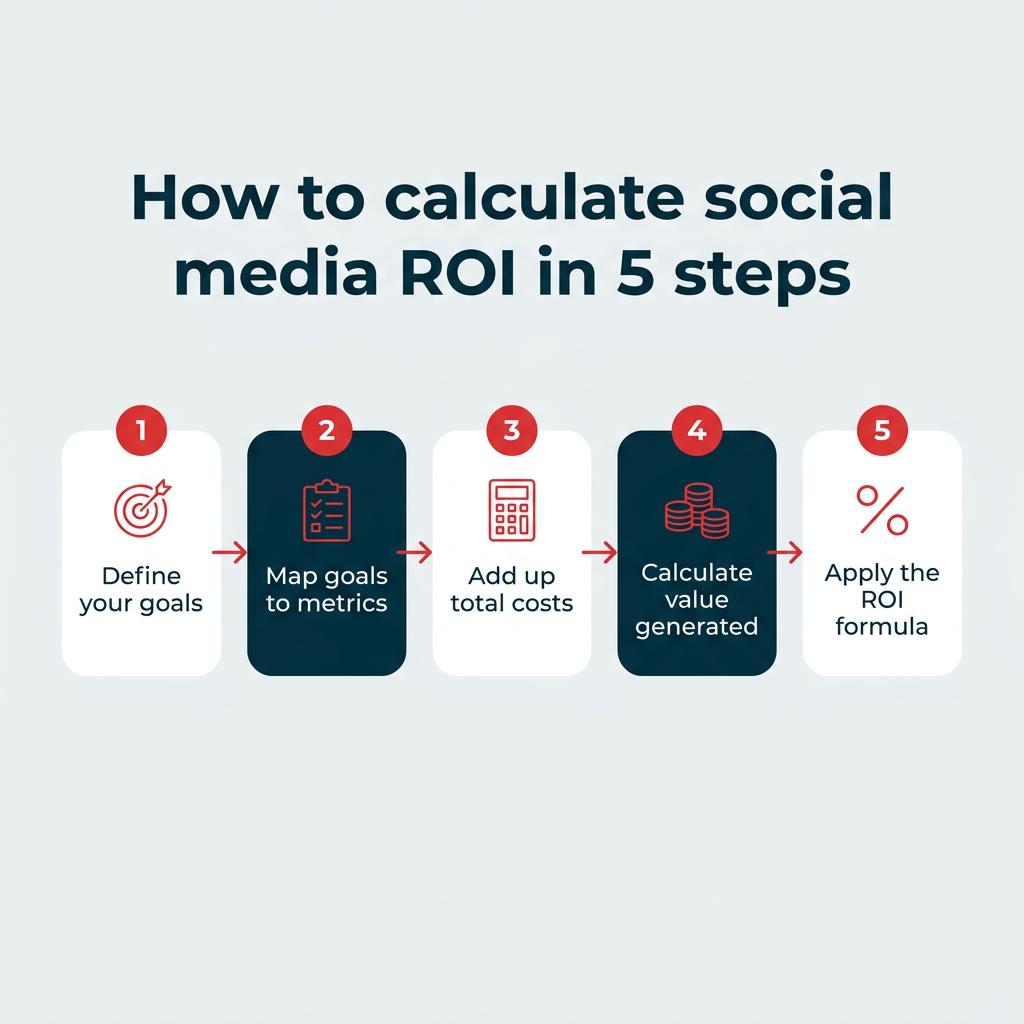
Building a robust ROI measurement system does not happen overnight. To successfully implement a framework, organizations typically follow a defined developmental arc:

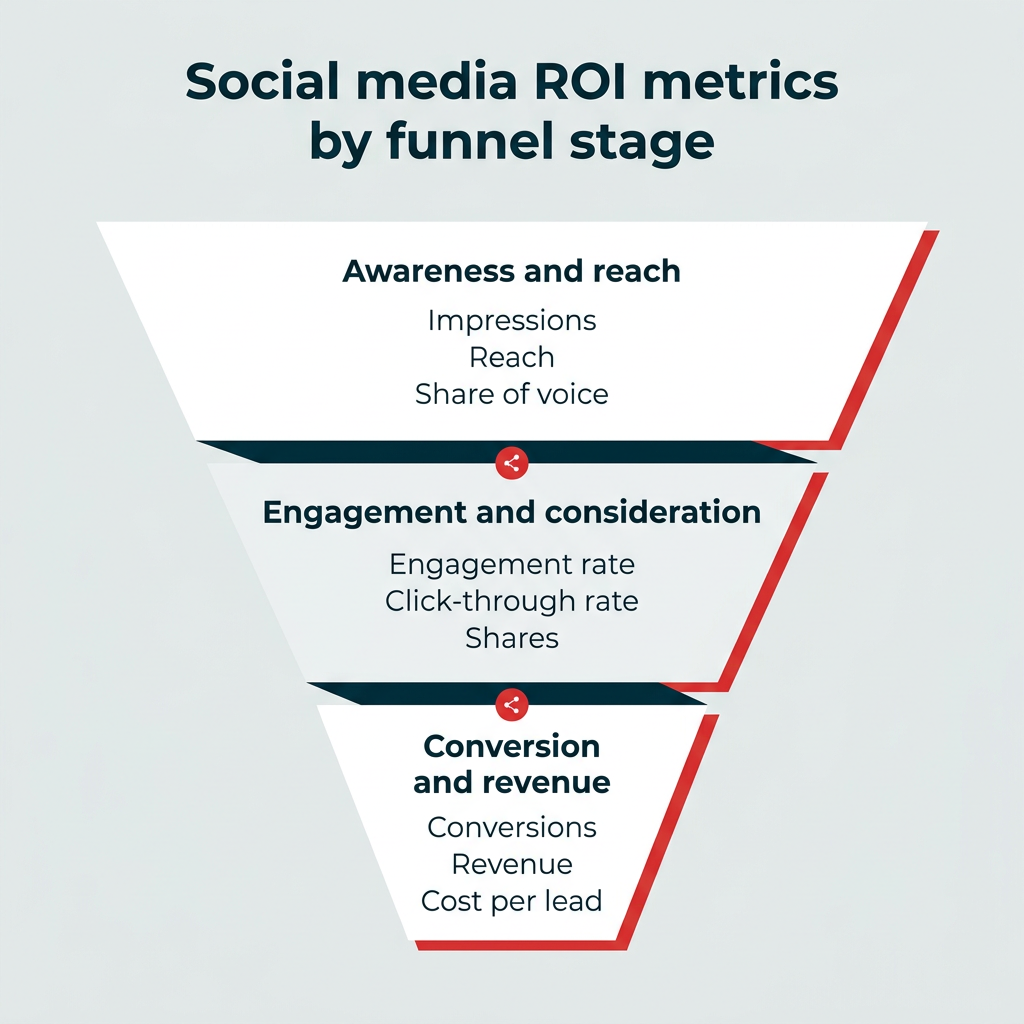
- Goal Alignment (Quarterly): Because business objectives shift with market conditions, teams must revisit their goals every 90 days. Are you chasing top-of-funnel awareness or bottom-of-funnel conversion?
- Metric Mapping: Once goals are set, teams select the specific KPIs that correlate to those goals (e.g., click-through rates for consideration; cost-per-acquisition for conversion).
- Cost Aggregation: A comprehensive view of investment must include more than just ad spend. It must account for agency fees, software subscriptions, creative production time, and personnel hours.
- Value Attribution: For non-monetary outcomes like brand sentiment, teams must assign "proxy values" based on customer lifetime value (CLV) or historical lead-to-sale conversion rates.
- Refinement via Experimentation: Using the data gathered, marketers run A/B tests—comparing, for example, the performance of short-form video against static carousels—to systematically increase efficiency.
The Power of Data: Supporting Statistics
The business case for social media is stronger than ever, supported by a seismic shift in how consumers shop. According to Statista, the global social commerce market is expected to reach $908.5 billion in 2026, a 10.7% year-over-year increase. By 2028, experts anticipate that social-driven purchases will surpass the $1 trillion milestone.
Furthermore, data suggests that 46% of marketers report that social media usage directly improves sales performance. These figures provide the leverage necessary to protect social budgets when they come under internal scrutiny. When a company can point to specific attribution models—showing how a LinkedIn campaign nurtured a lead that closed six months later—social media transitions from a "cost center" to a "growth engine."
Addressing the Roadblocks to ROI
Why is this still so difficult? The obstacles are largely structural.
- Multi-Touch Attribution: Single-touch models are inherently flawed in the modern digital ecosystem. By adopting assisted conversion models, businesses can finally give social the "assist" credit it deserves.
- Delayed Conversions: In B2B and enterprise sectors, the sales cycle is long. Measuring only same-day results is a guaranteed way to undervalue the impact of social content that plants the seeds for future deals.
- Data Silos: As noted in the 2025 Nielsen Marketing Report, the fragmentation of analytics across different platforms (Meta, TikTok, LinkedIn, etc.) is a primary barrier to ROI calculation. Without a centralized dashboard, teams spend more time manually stitching data together than they do analyzing it.
The Role of Technology: Unifying the View
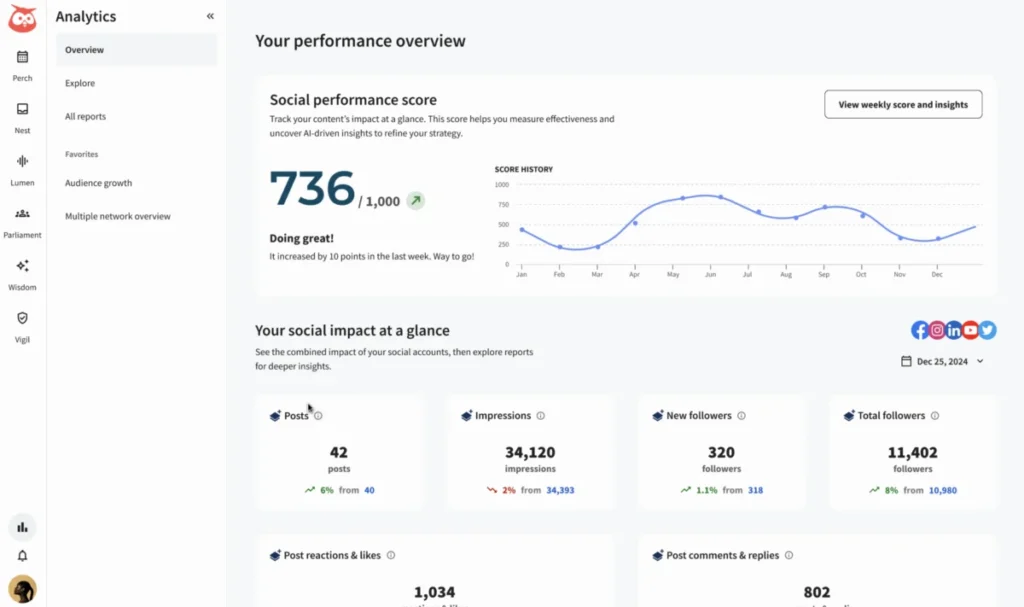
The "silo problem" is exactly where enterprise-grade tools like Hootsuite provide a competitive edge. By integrating native platform analytics with external web analytics (such as Google Analytics or Adobe Analytics), a unified platform allows marketers to connect social activity to tangible business outcomes like sign-ups, demo requests, and direct purchases.
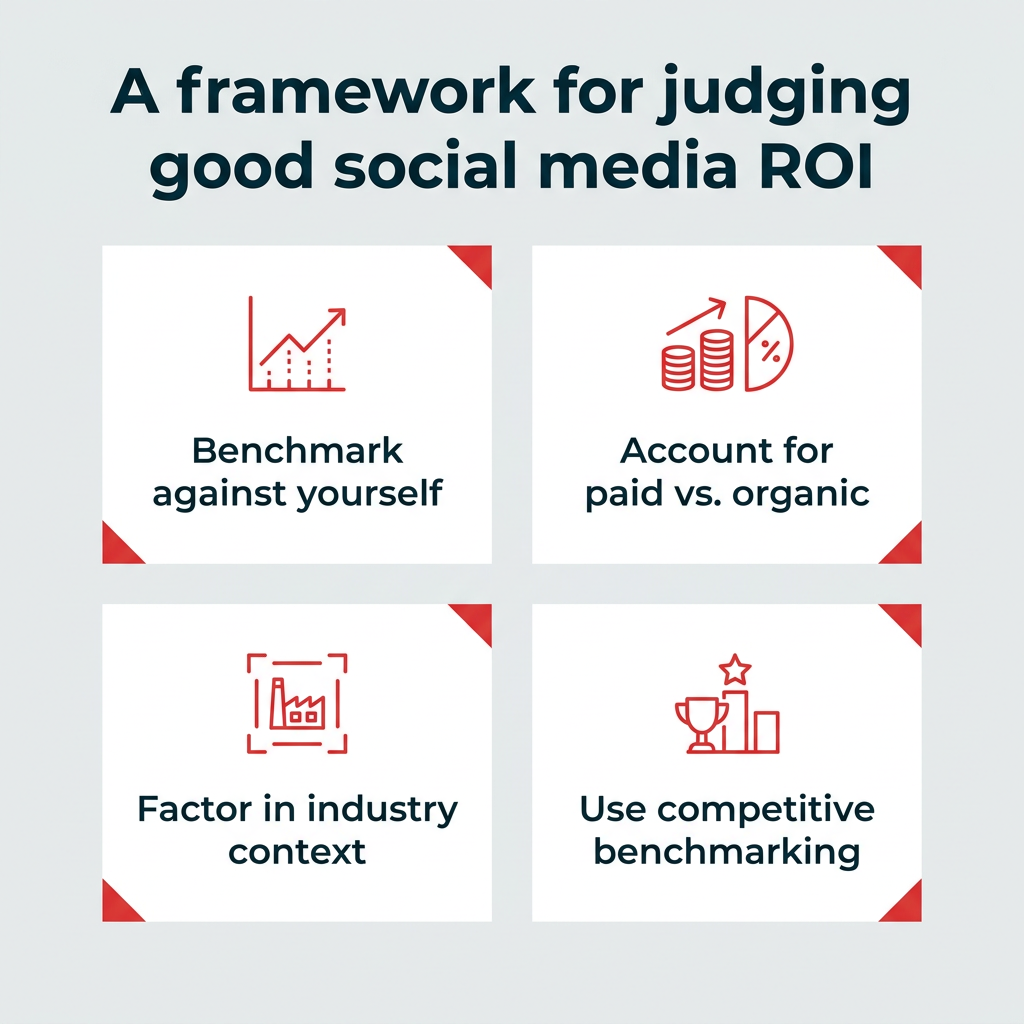
Advanced Analytics tools now allow teams to track competitor performance in real-time, benchmarking their own reach and engagement against industry averages. This allows for an "agile" approach to ROI: if a competitor’s strategy is seeing success with a specific content format, teams can use that data to refine their own output, thereby reducing wasted ad spend and increasing the overall return on their creative investment.
Strategic Implications: How to Report to Stakeholders
The final, and perhaps most important, step in the ROI journey is reporting. To effectively defend a budget, marketers must translate "social speak" into "executive speak."
Best Practices for Reporting
- Tailor to the Audience: Executives care about revenue, growth, and cost efficiency. Keep the report focused on the bottom line.
- Connect Metrics to Outcomes: Don’t just report "impressions." Report on how those impressions contributed to a decrease in the overall cost per lead (CPL).
- Highlight Trends, Not Just Snapshots: Show performance over time to demonstrate the cumulative effect of a strategy.
- Be Transparent About Attribution: Acknowledge the role social played in the funnel. Even if it wasn’t the final conversion point, show how it moved the needle for the rest of the marketing mix.
Conclusion: The Path to Competitive Advantage
A "good" ROI is not a fixed number—it is a positive trend that outpaces your industry peers. Whether you are an e-commerce brand driving direct in-app purchases or a B2B firm building a pipeline of high-intent leads, the formula for success remains the same: define clear goals, track the right metrics, use technology to eliminate data silos, and report with a focus on business impact.
In 2026, the social media landscape will be more crowded and competitive than ever. The teams that thrive will be those that treat their social data with the same rigor as their financial data. By moving beyond simple vanity metrics and embracing a comprehensive, multi-touch view of ROI, you do more than just report on your success—you ensure the longevity and growth of your digital strategy.

As you move forward, remember: you cannot measure what you haven’t defined. Set your targets, leverage your tools, and make your social media investment a source of undeniable growth for your organization.
