
The Anatomy of High-Converting Influencer Ads: A Strategic Blueprint for Modern Brands
In the rapidly evolving landscape of digital advertising, the barrier between "content" and "commercial" has all but vanished. While standard branded advertisements remain a staple of digital marketing, they are increasingly being outperformed by influencer-led content. However, the misconception that simply hiring a creator with a large following will guarantee a surge in revenue is a dangerous one for brands.
True conversion—the kind that moves the needle on ROI—requires a rigorous, almost scientific approach to creative strategy. It is not merely about exposure; it is about the intersection of creator authenticity and performance-driven design.
The Shift Toward Performance-Based Creator Marketing
For years, brands approached influencer marketing as a top-of-funnel awareness play. The logic was simple: pay for reach, gain brand equity. But as platforms like TikTok, Instagram Reels, and YouTube Shorts have prioritized algorithmic discovery over static follower counts, the focus has shifted to conversion-focused influencer ads.
Meta, TikTok, and Google have all pivoted their ad architectures to favor "native" content—ads that look and feel like organic user-generated content (UGC). The implication is clear: consumers are increasingly skeptical of high-production, polished commercials. They crave the "lo-fi" authenticity of a creator speaking directly to them. Yet, this informality is deceptive. Behind every viral, high-converting ad lies a calculated framework of psychological triggers, visual cues, and strategic editing.
1. Mastering the First Three Seconds: The Art of the Hook
The modern attention span is a volatile asset. In the world of short-form video, the first three seconds are the "make-or-break" zone. If an ad does not stop the scroll, the production value of the remaining thirty seconds is irrelevant.
A high-performing hook does not need to be explosive or loud; it must be relevant. According to industry data, the most effective hooks typically employ one of four pillars:
- The Relatable Problem: "Are you tired of waking up with back pain?"
- The Curiosity Gap: "I found a secret setting on your iPhone that changes everything."
- The Result Reveal: Showing the end-product (e.g., a flawless kitchen or a glowing complexion) before explaining the process.
- The Counter-Intuitive Claim: Challenging a common belief, such as "Stop using moisturizer until you watch this."
The objective is to create a seamless bridge between the hook and the product. For instance, in an influencer ad for Unroll.me produced by the agency inBeat, the creator uses an "Internet hack" narrative to build immediate curiosity, dragging the viewer into the value proposition before they have a chance to skip.
2. Product Visibility: The Clarity Imperative
A recurring failure in influencer marketing is the "mystery ad." A creator spends sixty seconds discussing their day, showing their lifestyle, and building a narrative, but the viewer reaches the end of the video without knowing what is actually being sold.
While organic content allows for a slow-burn narrative, paid ads must be explicit. Product visibility should be prioritized through:
- Early Introduction: The product should be introduced or referenced within the first six seconds.
- Contextual Integration: The creator should demonstrate how the product fits into their daily life, rather than holding it like a static prop.
- Visual Focus: Close-ups of the product in use help solidify the viewer’s mental image of the brand.
The Dove "Extreme Wash Test" campaign is a masterclass in this. The creator highlights the product early, discusses specific technical benefits (like MicroMoisture droplets), and maintains a clear visual connection between the product and the solution it provides.
3. Addressing Specific Pain Points
Conversion is rarely driven by "brand love" alone; it is driven by problem-solving. Consumers are not looking for a "better skincare brand"; they are looking for a solution to a specific, annoying skin issue—dry patches, redness, or acne scarring.
Vogue Business recently highlighted how Urban Skin Rx saw a 5x sales spike following a viral TikTok video. The reason for the success was not the creator’s fame, but the specificity of the problem addressed. When a creator speaks to a niche pain point, they bypass the "salesy" barrier. It feels like a peer recommending a solution, not a corporation pitching a product. This is where influencer ads hold an inherent advantage over traditional ads: they provide a human voice to a practical remedy.
4. Demonstrations: Turning Claims into Evidence
The most persuasive evidence in any advertisement is a visual demonstration. A demo serves a dual purpose: it informs the viewer about the product’s functionality and provides "proof" that the claims are true.
If an ad claims a product saves time, the viewer needs to see the time being saved. If a tool is easy to use, the video must show the ease of the process. This is why products in the fitness, food, and home-gadget sectors dominate social advertising. A product like OhSnap—a mobile phone grip—becomes an easy sell when the creator shows, in real-time, how it snaps onto a phone and improves the user experience.
5. The One-Message Strategy
"Less is more" is a cliché, but in performance marketing, it is a mathematical reality. Many influencer ads lose their audience because they try to list every possible feature: the product is organic, eco-friendly, affordable, fast-shipping, and comes in ten colors.
By the time the creator finishes the laundry list, the viewer has forgotten the main value proposition. Successful ads focus on one core benefit. If the product is about "saving time," every element of the ad—the hook, the demo, and the CTA—should reinforce that singular benefit.
6. Visual Contrast and Platform-Native Aesthetics
Visuals often communicate faster than audio. With many users scrolling through social feeds with their sound off, visual contrast becomes essential.
Transformations—before-and-afters, dirty-to-clean comparisons, or disorganized-to-organized workflows—are the gold standard for visual storytelling. Furthermore, the aesthetic of the ad must match the platform. An ad that looks like a high-end television commercial will often perform poorly on TikTok because it triggers the viewer’s "ad-avoidance" instinct.
TikTok-native techniques, such as green-screen effects, text overlays, and "POV" (point-of-view) filming, increase completion rates by up to 27%. The goal is to make the ad feel like a native piece of content that happens to be an advertisement.
7. The Role of Captions and Text Overlays
Accessibility is a major driver of engagement. Not only do captions make content inclusive for the hearing impaired, but they also capture viewers who are watching in public spaces without audio.
Beyond accessibility, on-screen text serves as a reinforcement tool. It can highlight a key pain point or a sense of urgency that the creator might mention only in passing. A creator might say, "I didn’t think this would work," while a text overlay reads, "Tested for 7 days." This layering of information deepens the viewer’s understanding and increases the likelihood of a click.
8. Defining the Call to Action (CTA)
A common mistake is burying the CTA at the end of the video, where the drop-off rate is highest. A clear, directive CTA—"Click the link to get 20% off"—should be both spoken by the creator and visually presented via text overlay.
The CTA must also align with the business goal. If the objective is a direct sale, a soft "learn more" button is often ineffective. Instead, urgency-driven language ("Shop the flash sale now") yields better results.
9. Audience-Influencer Fit: Relevance Over Reach
The most critical factor in conversion is the alignment between the creator’s audience and the brand’s target market. A celebrity with five million followers might seem like an obvious choice, but if their audience is broad and diverse, the engagement rate for a niche product—such as a B2B software or a specific skin treatment—will be low.
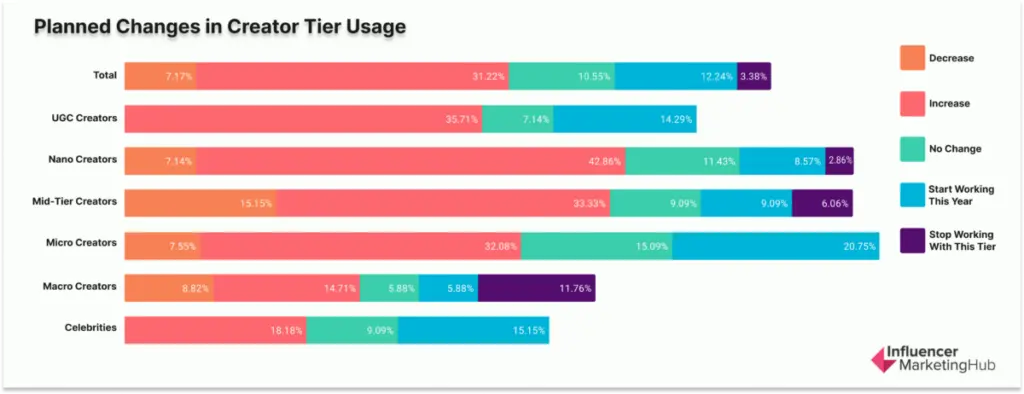
Conversely, a micro-influencer with 50,000 highly engaged followers in a specific niche can drive significantly higher conversion rates. The 2026 Influencer Marketing Hub Benchmark Report highlights a growing trend of brands shifting their budgets away from mega-influencers toward nano- and micro-influencers. The reason is simple: trust. Niche creators have built their audience on specific expertise, making their endorsements far more credible.
Implications for Future Campaigns
As the advertising landscape matures, the brands that win will be those that treat influencer marketing as a performance discipline. The "wild west" era of influencer marketing—where brands threw money at creators and hoped for the best—is coming to an end.
The future belongs to data-informed creative strategy. Brands must conduct A/B testing on hooks, monitor the retention rates of different visual styles, and meticulously analyze which creators produce the highest ROAS (Return on Ad Spend). By balancing the human element of creator trust with the analytical structure of performance marketing, brands can move beyond mere impressions and build a sustainable, conversion-oriented growth machine.
As noted by industry experts, the key is consistency: an influencer ad should feel organic to the platform, yet be as tightly constructed as a professional marketing campaign. In this environment, authenticity is not just a buzzword—it is the most powerful tool in the advertiser’s arsenal.
