

Mastering the Metrics: Your 2026 Guide to Social Media Performance
In an era where digital presence is synonymous with brand survival, the ability to translate raw social data into actionable business intelligence is no longer a luxury—it is a competitive necessity. As we move into 2026, the landscape of digital marketing has shifted from a "growth at all costs" mentality to a precision-based model where revenue impact is the primary mandate for Chief Marketing Officers worldwide.
To thrive, marketers must move beyond surface-level vanity metrics and embrace a sophisticated, multi-layered approach to measurement. This guide explores the 25 essential metrics that define success in the current social media ecosystem, providing the clarity needed to navigate platform-specific discrepancies and align your digital efforts with long-term enterprise goals.

The Foundation: Metrics vs. KPIs
The first step toward data maturity is distinguishing between a metric and a Key Performance Indicator (KPI). Metrics are the raw data points that describe "what happened"—such as the number of impressions, likes, or comments on a post. KPIs, conversely, are the strategic benchmarks that tie those outcomes to specific business objectives.
For instance, "impressions" is a metric, but "increasing qualified leads from LinkedIn by 15% this quarter" is a KPI. Every successful strategy is built on a framework of metrics, but those metrics only gain value when they are contextualized within a broader organizational objective.

The 70/20/10 Content Strategy and Measurement
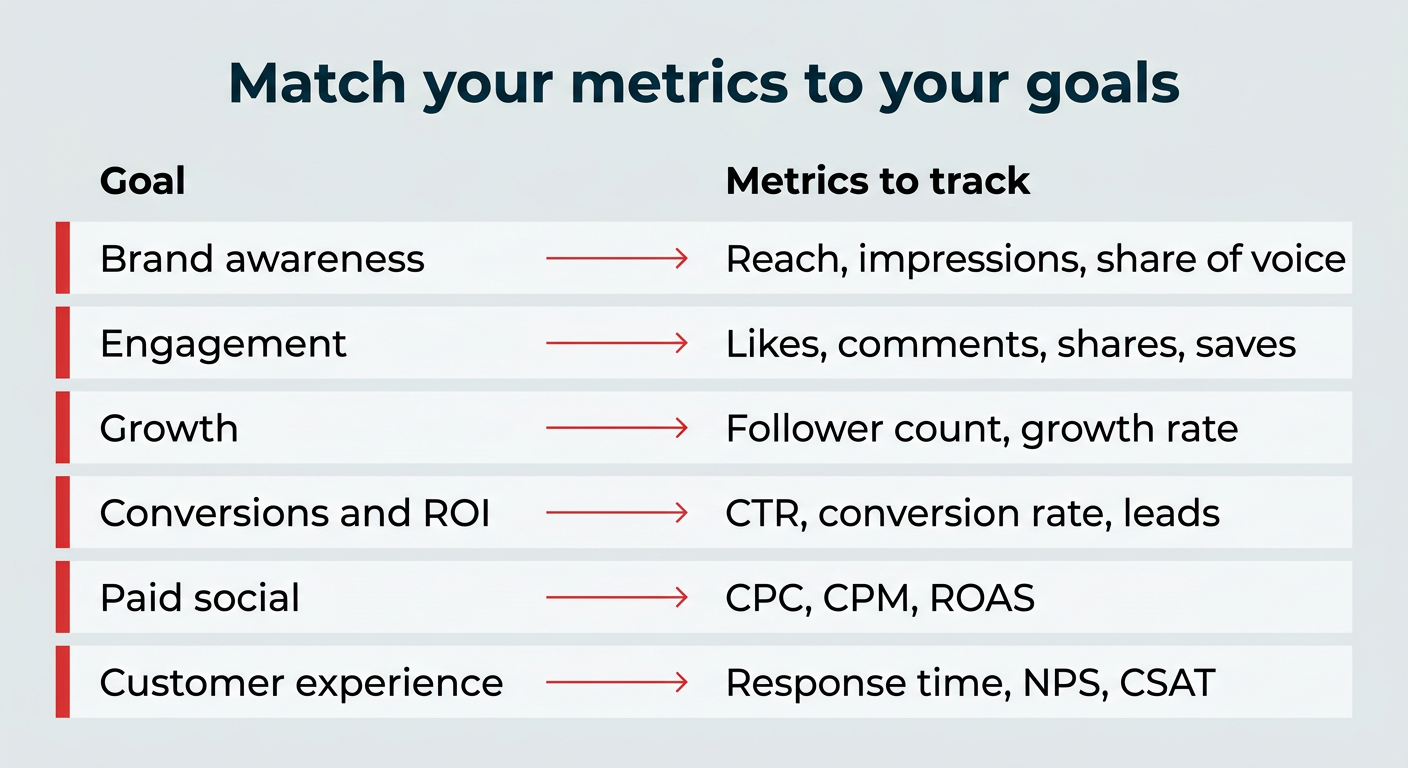
Effective measurement begins with effective planning. A widely adopted standard for content balance is the 70/20/10 rule:
- 70% Value-Driven Content: Educational or entertaining material that builds audience trust. These posts lean heavily on engagement and reach metrics.
- 20% Shared Content: Curation from other industry sources to establish authority.
- 10% Promotional Content: Direct sales pitches. These posts are judged primarily through conversion and ROI metrics.
By categorizing content in this way, you can tailor your reporting to measure what actually matters for each specific type of post, ensuring that your data tells a coherent story rather than a disjointed collection of numbers.
Chronology of Evolution: From Vanity to Value
The evolution of social media measurement has tracked alongside the maturation of the platforms themselves. In the early 2010s, "Likes" were the primary currency of the digital realm. By 2020, the focus shifted to "Engagement Rate" and "Reach."
As we reach 2026, the industry has entered the "Attribution Era." Following the deprecation of third-party cookies and the tightening of global privacy regulations, marketers have shifted their focus to first-party data and high-intent signals. Metrics like "Saves" and "Shares" are now viewed as more predictive of long-term customer value than simple clicks, as they represent a deeper level of audience commitment and content utility.
Navigating Platform-Specific Definitions
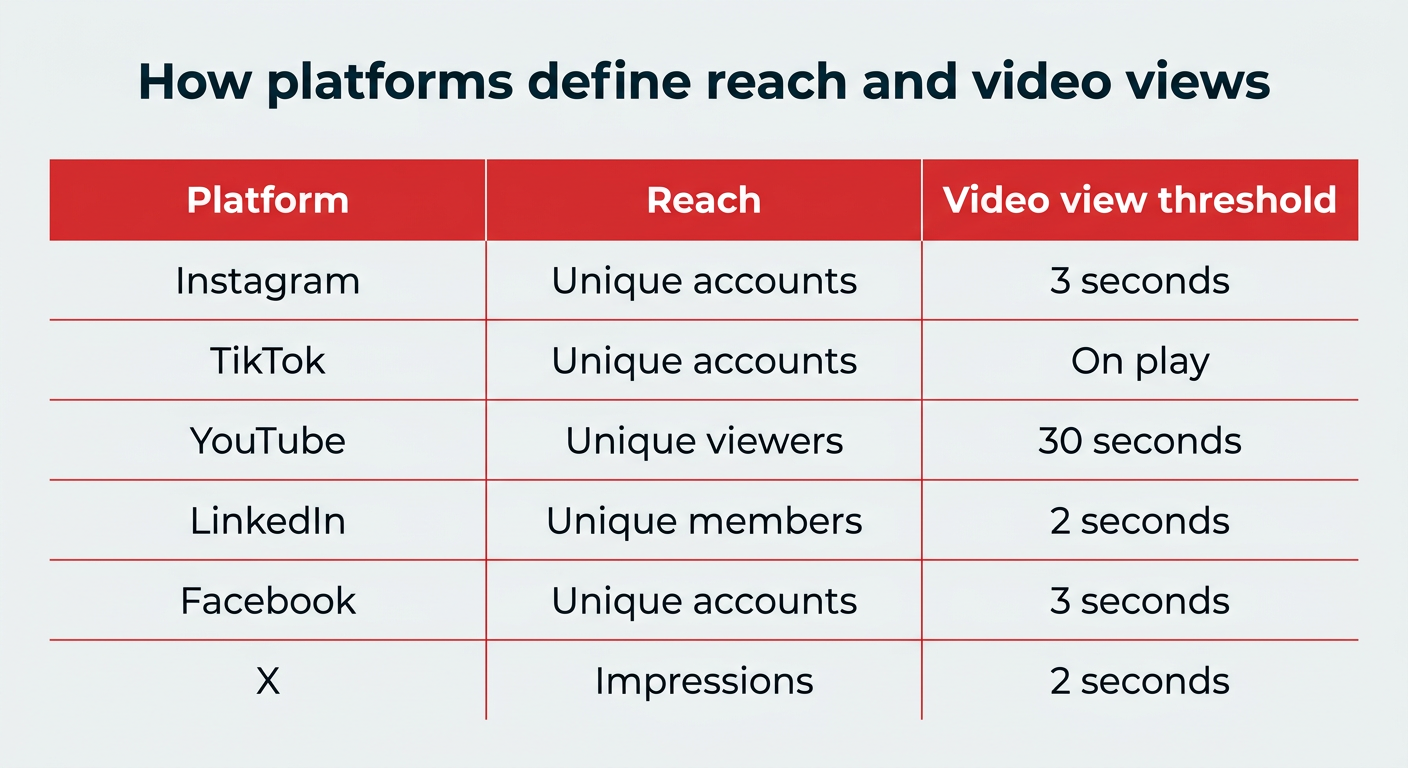
One of the most significant challenges for modern marketers is the lack of standardized definitions across platforms. A "view" on YouTube (30 seconds) is vastly different from a "view" on TikTok (immediate). If you compare these figures directly, your data analysis will be fundamentally flawed.
Comparative Metric Thresholds (2026)
| Platform | Reach Definition | Video View Threshold |
|---|---|---|
| Unique accounts | 3 seconds | |
| TikTok | Unique accounts | Immediate |
| YouTube | Unique viewers | 30 seconds |
| Unique members | 2 seconds (50% in view) | |
| Unique accounts | 3 seconds |
Always verify how your analytics tool aggregates these figures before reporting them to stakeholders. Failing to account for these platform nuances is the quickest way to lose credibility during executive reviews.
The 25 Essential Metrics for 2026
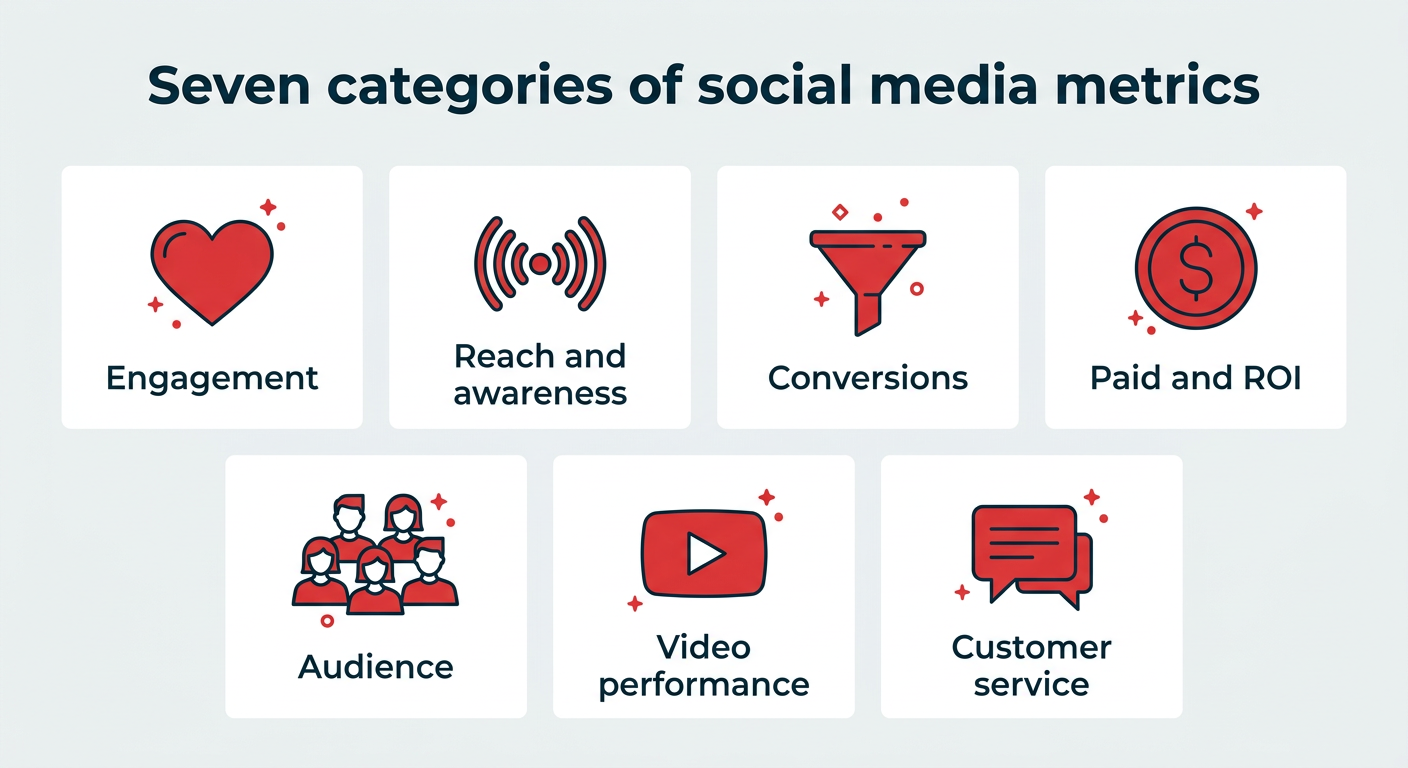
To provide a comprehensive view of performance, your tracking dashboard should be divided into five core pillars:
1. Engagement Metrics
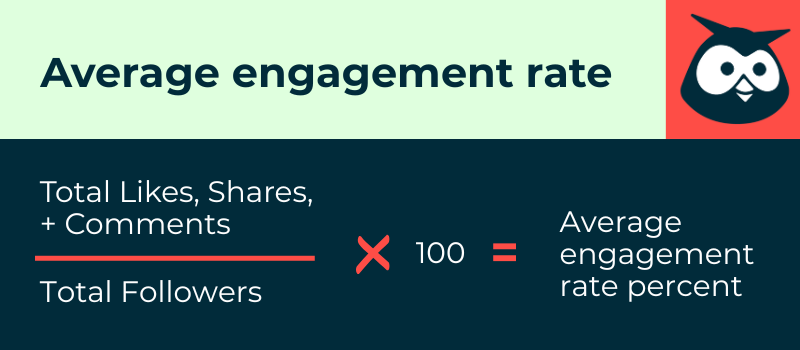
- Engagement Rate: The gold standard for measuring resonance. Formula: (Likes + Comments + Shares + Saves) / Total Followers * 100.
- Likes/Reactions: The baseline signal for content "stickiness."
- Comments: The most vital qualitative signal, offering a direct window into audience feedback and sentiment.
- Shares: A powerful indicator of advocacy; users who share content are essentially endorsing your brand.
- Saves: High-intent engagement. A "save" indicates that the content has long-term reference value.
2. Reach and Awareness
- Reach: The number of unique individuals who encountered your content.
- Impressions: Total views, including repeat exposures.
- Social Share of Voice (SSoV): Your brand’s visibility compared to industry competitors.
- Social Search Visibility: The frequency with which your brand appears in in-platform searches (e.g., TikTok or Instagram search). This is critical as younger demographics increasingly use social apps as primary search engines.
3. Conversion Metrics
- Conversion Rate: The percentage of users who move from social engagement to a business action (purchase, sign-up, download).
- Click-Through Rate (CTR): The efficiency of your call-to-action (CTA).
4. Paid Social and ROI
- Cost Per Click (CPC): The efficiency of your paid traffic acquisition.
- Cost Per Thousand Impressions (CPM): Used for calculating the cost-effectiveness of brand awareness campaigns.
- Return on Ad Spend (ROAS): The ultimate measure of financial efficiency. Formula: (Revenue from Ads / Ad Spend) * 100.
5. Audience and Customer Service
- Follower Growth Rate: Not just the raw count, but the percentage of growth over time.
- Social Media Sentiment: A measure of the emotional tone behind brand mentions.
- Demographics: Behavioral data that informs content strategy.
- Video Completion Rate: The percentage of viewers who finish a video.
- Watch Time: Total time spent by users on your video content.
- Average Response Time: The speed at which your brand addresses customer queries.
- CSAT (Customer Satisfaction Score): Direct feedback on service quality.
- NPS (Net Promoter Score): A predictive metric for long-term loyalty.
- Referral Traffic: The volume of visitors driven to your website via social links.
Implications for Strategic Planning
The implications of this data-driven approach are clear: the era of "posting and praying" is over. To succeed in 2026, brands must treat their social channels as a sophisticated funnel.
If your data shows a high reach but a low conversion rate, the implication is not necessarily that your content is poor, but that your funnel architecture is failing to capture the interest your social posts generate. If your engagement is high but sentiment is trending negative, you have a reputation management issue that no amount of viral reach can fix.
Official Guidance: The Feedback Loop
The most successful teams utilize a "Measurement Feedback Loop." This process involves:
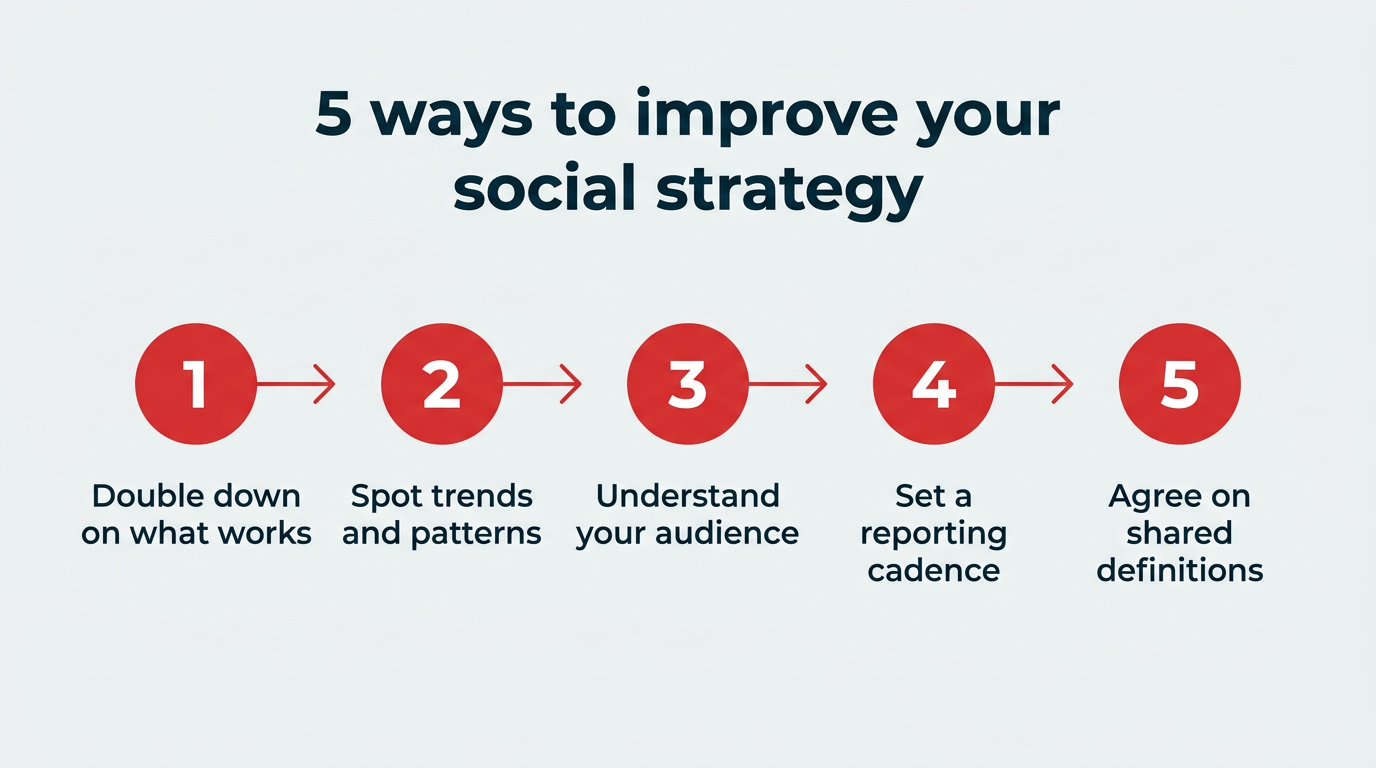
- Auditing: Reviewing past performance to identify the highest-performing content types.
- Experimenting: Testing new formats or messaging based on previous insights.
- Measuring: Using the 25 metrics outlined above to track the results of the experiment.
- Refining: Adjusting the strategy to double down on what works.
- Scaling: Investing budget into the proven winners.
Conclusion: Tools of the Trade
While native analytics platforms (like Meta Business Suite or YouTube Studio) are essential for deep-dive diagnostics, they often lack the cross-platform cohesion required for enterprise-level reporting. Utilizing centralized management platforms like Hootsuite allows for the integration of disparate data streams into a single, unified dashboard.
As you move through 2026, remember that metrics are not the goal—they are the compass. By focusing on the metrics that align with your specific business objectives, you can prove the tangible value of social media, secure the necessary budget, and build a resilient brand in an increasingly noisy digital marketplace.
