
The Infinite Expansion: Inside the 2025 Martech Landscape and the Rise of the "Hypertail"
The marketing technology (martech) ecosystem has defied the skeptics yet again. For over a decade, industry pundits have breathlessly predicted a “great consolidation” or a total market collapse, suggesting that the sheer volume of software solutions had reached an unsustainable tipping point. Instead, the 2025 Marketing Technology Landscape proves that the industry is not just surviving—it is fundamentally evolving.
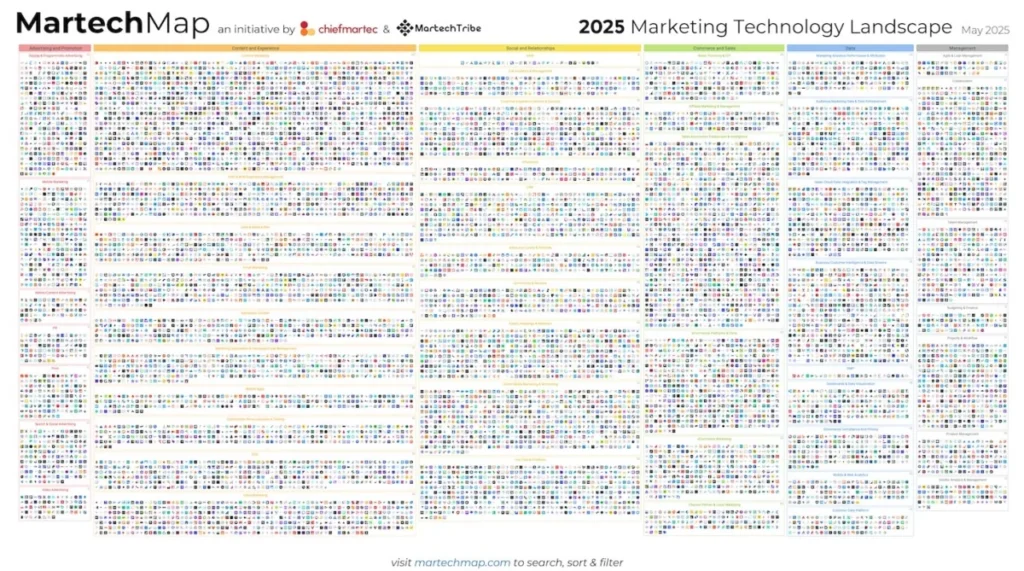
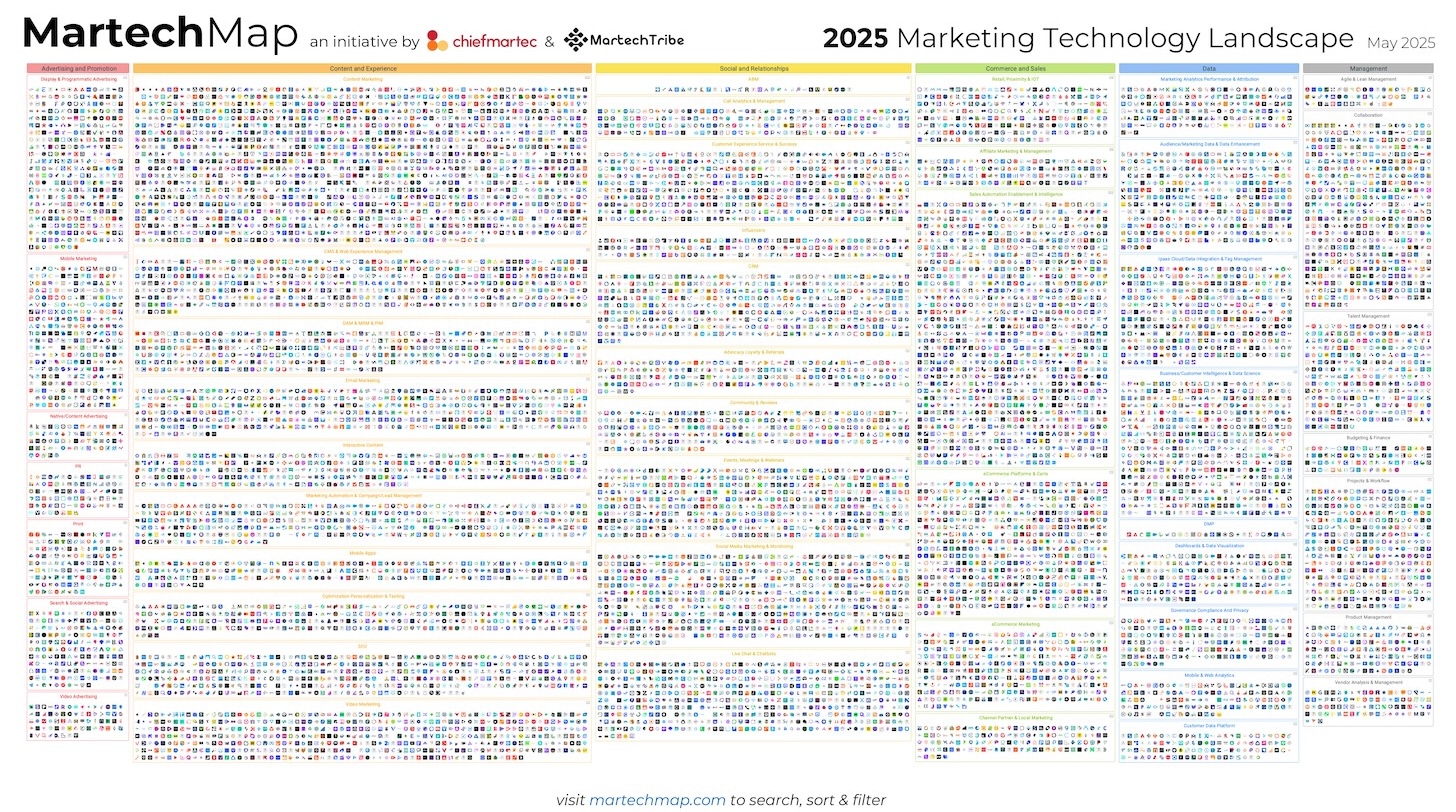
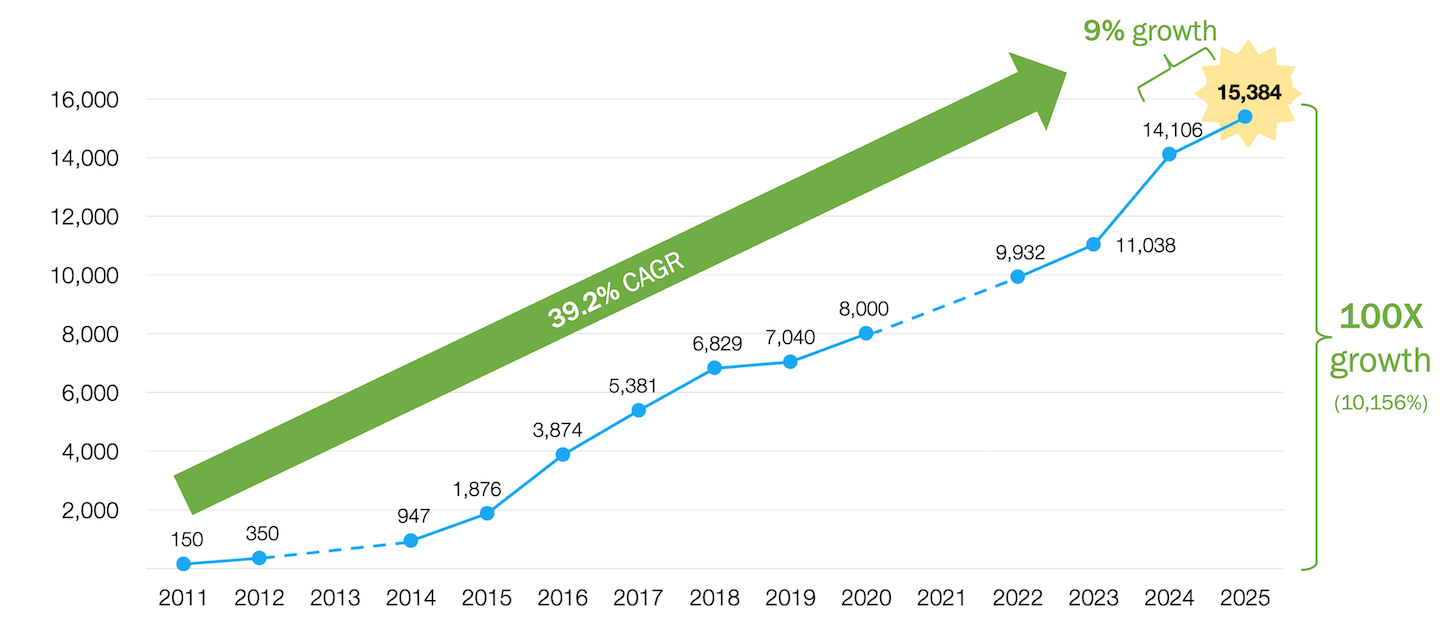
With the release of this year’s supergraphic, the industry has reached a staggering 15,384 solutions, marking a 9% year-over-year increase from 2024. What began as a modest attempt to map a nascent industry has transformed into a complex, high-velocity engine that now powers the global digital economy.
The Chronology of a Digital Revolution
To understand the current state of martech, one must look back at its humble origins. Fifteen years ago, Scott Brinker, editor of ChiefMartec, introduced the concept of the “Marketing Technologist”—a role that essentially treated marketing as a rigorous, technology-integrated discipline.
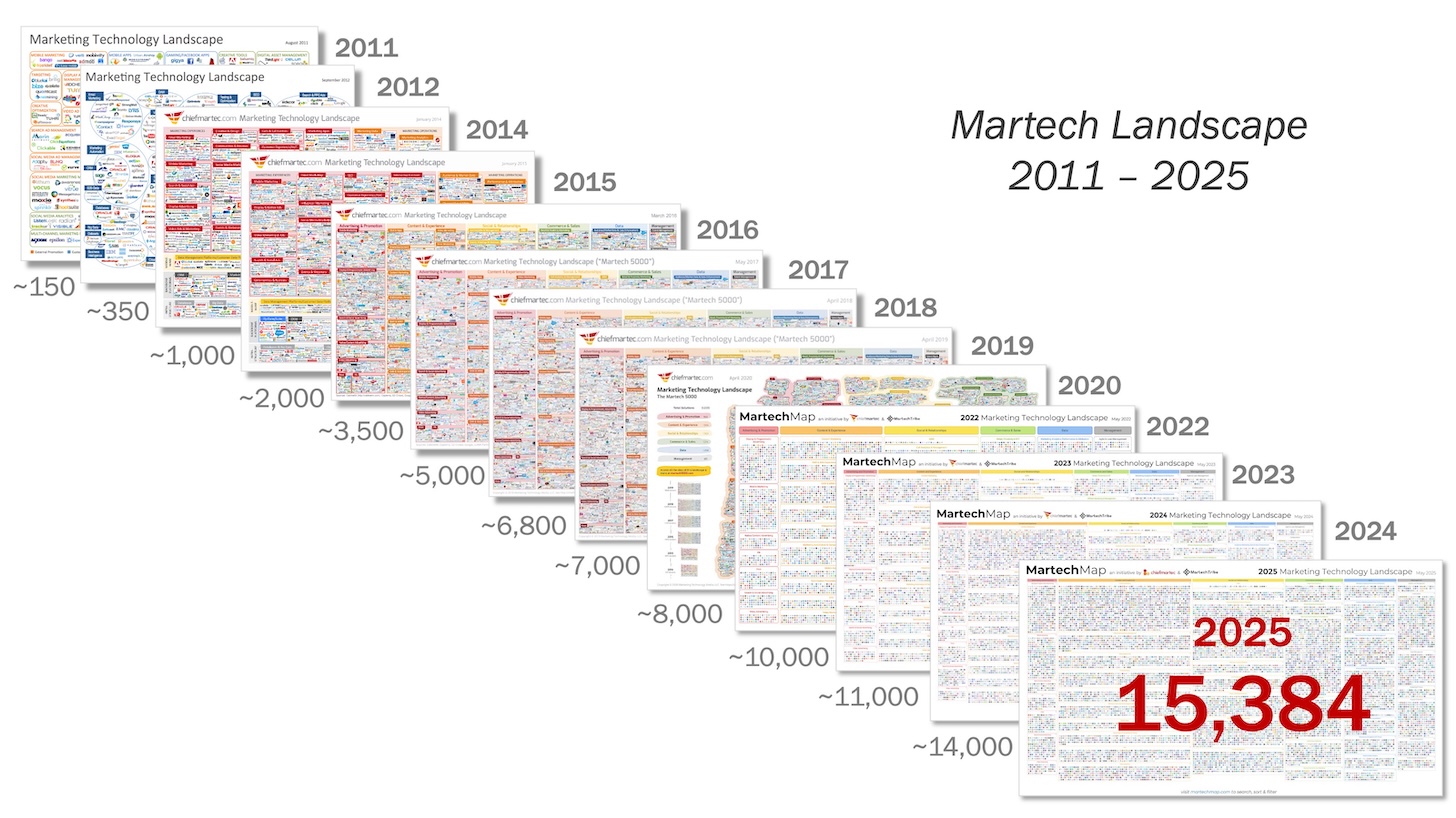
In 2011, the first official landscape featured a mere 150 solutions. At the time, that number seemed overwhelming to many CMOs. However, the subsequent years witnessed an exponential, almost surreal surge. By 2015, the landscape had expanded into the thousands; by 2020, it had ballooned further. Today, the sector has seen a 100X increase in the number of products compared to the 2011 baseline.
This growth has not been a straight line, but rather a series of waves. The early years focused on foundational infrastructure, followed by the explosion of cloud-based SaaS, and most recently, the "AI-native" revolution that began in earnest following the mainstream adoption of generative AI.
Quantitative Breakdown: Churn, Growth, and Reality
The 2025 landscape is built on rigorous analysis. This year, the research team evaluated 11,133 new candidates, but only 2,489 met the strict criteria to be included. Simultaneously, the industry saw the departure of 1,211 existing solutions, resulting in an 8.6% churn rate.
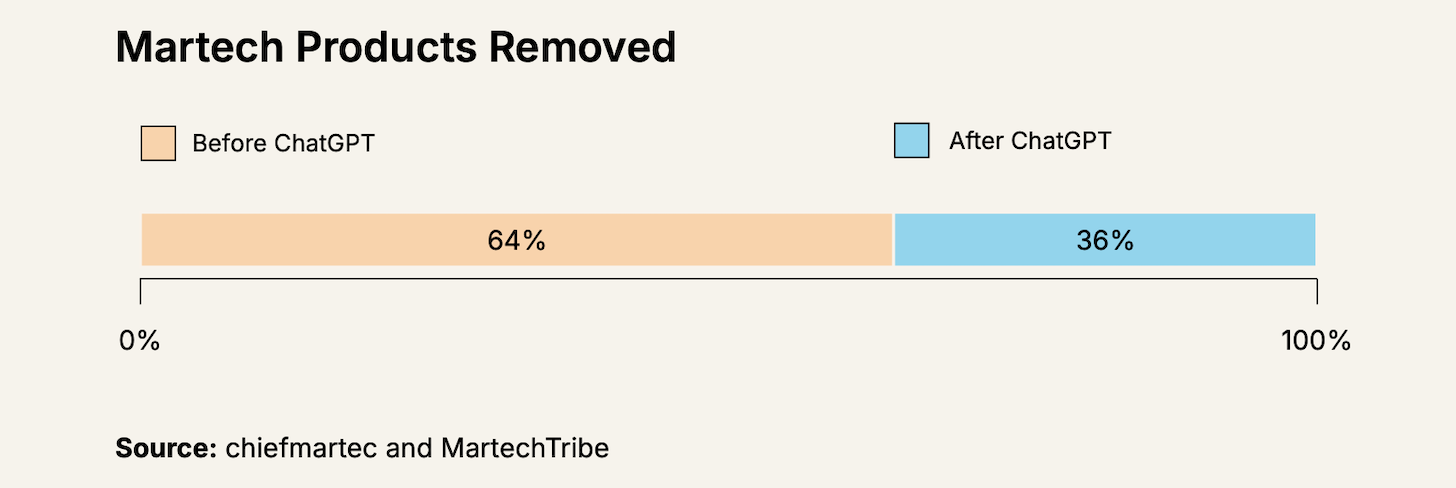
A striking discovery in this year’s data is the nature of that churn. While many assumed the disappearing companies would be the "flash-in-the-pan" startups created during the recent AI gold rush, the data tells a different story: two-thirds of the removed companies were from the 2010–2020 cohort.
This confirms that the "first wave" of martech is finally consolidating. As the laws of market gravity take hold, many of the industry’s former darlings—some of which raised significant venture capital—have been acquired or have simply ceased operations. This transition signifies a maturation of the market, where venture-backed vanity metrics are increasingly being replaced by the necessity of sustainable, profitable utility.
The "Hypertail": The Hidden Engine of Martech
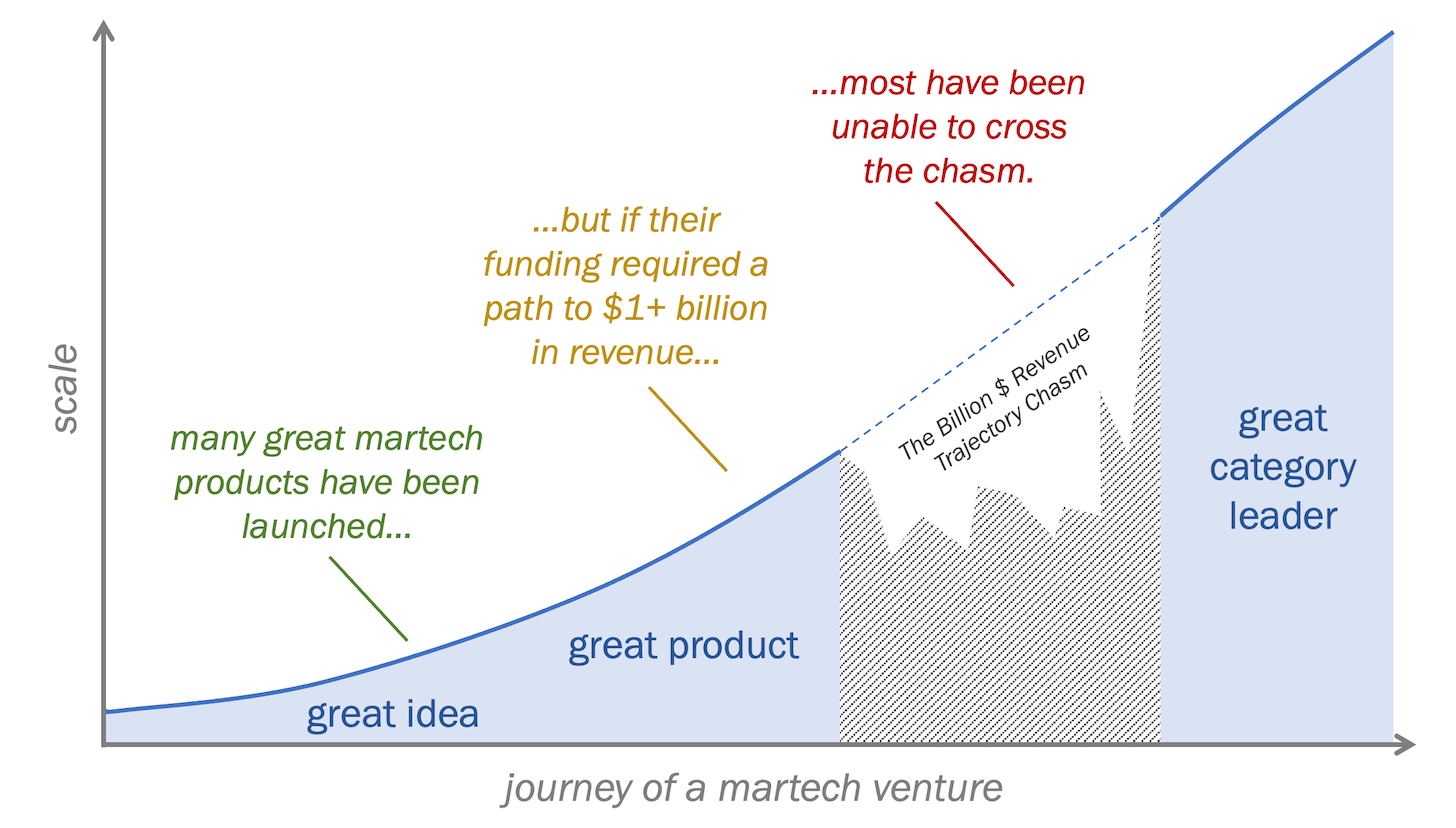
While the 15,384 solutions on the supergraphic capture the commercial market, they represent only the tip of the iceberg. The most profound development in the 2025 landscape is the emergence of what researchers are calling the "hypertail."
For years, the "long tail" referred to the thousands of niche commercial software products. The "hypertail," however, refers to the rapid, nearly invisible proliferation of custom-built applications and AI-driven agents within corporate environments.
From Citizen Developers to "Vibe Coding"
The barrier to entry for building software has been demolished. Over the past decade, low-code and no-code platforms empowered "citizen developers" to solve internal business problems without needing a deep background in engineering. Today, AI has acted as a massive force multiplier for this trend.
Professional developers are now utilizing "vibe coding"—a process where natural language prompts are used to generate complex, functional code in hours rather than weeks. For non-technical marketers, the ability to describe an automation or a workflow to an AI assistant like ChatGPT or Claude means that custom software is being generated on the fly to meet specific, localized needs.
The result is a digital environment where the number of active, custom-built software programs within organizations is likely in the trillions, many of which are ephemeral, blinking in and out of existence as they perform specific tasks.
The Shifting Center of the Tech Stack
With the proliferation of AI tools, how are organizations managing their infrastructure? The 2025 report highlights a shift in the “center” of the marketing stack.
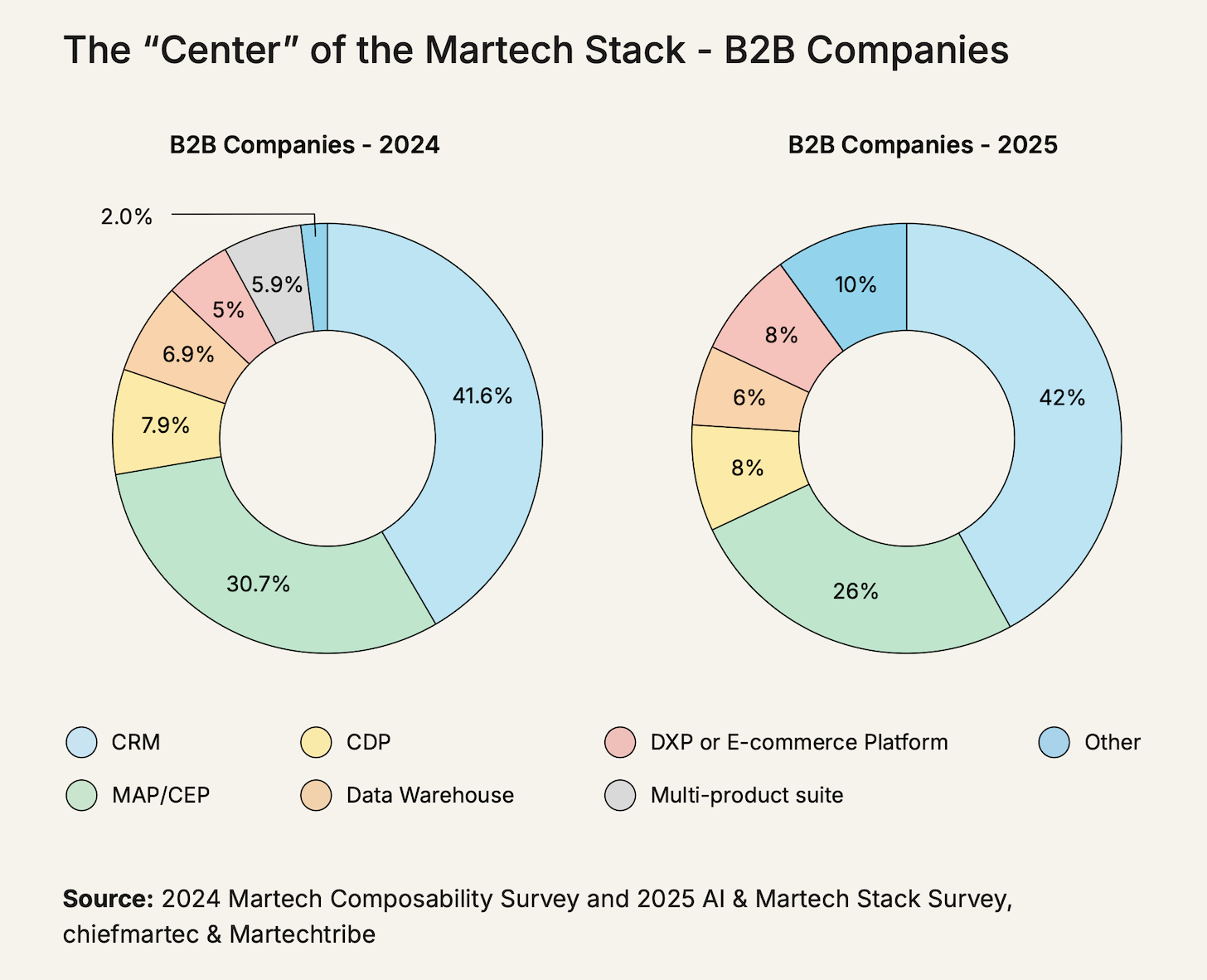
In the B2B sector, the landscape remains relatively stable, with most firms anchoring their operations around the CRM or Marketing Automation Platform (MAP). However, there has been a 5X increase in the usage of "other" platforms, including custom-built internal solutions, marking a surprising reversal of the long-standing trend of relying solely on commercial, off-the-shelf software.
In the B2C segment, the shift is more dramatic. Customer Data Platforms (CDPs) have seen a decrease in their perceived role as the “center” of the stack, dropping from 26.9% to 17.4%. Instead, functionality is bifurcating:
- The Data Layer: Cloud data warehouses are increasingly taking the lead as the central repository, rising to 23.9%.
- The Engagement Layer: Marketing Automation and Customer Engagement Platforms (CEP) have grown to 26.1%.
This suggests that the "CDP" as a standalone, monolithic category is being absorbed into broader cloud infrastructure and engagement platforms—a trend toward "composable CDPs" where data and execution are decoupled.
Implications for the Modern CMO
What does this massive, 15,000-plus solution landscape mean for the average marketing leader?
- Integration is the New Strategy: The goal is no longer to find the "one platform to rule them all." Instead, it is to build a flexible, modular stack where new AI-native tools can be integrated quickly into a stable core.
- The Rise of Customization: Marketing leaders should stop viewing "custom software" as a rare exception. With AI lowering development costs, the ability to build lightweight, bespoke tools for unique business requirements is now a competitive advantage.
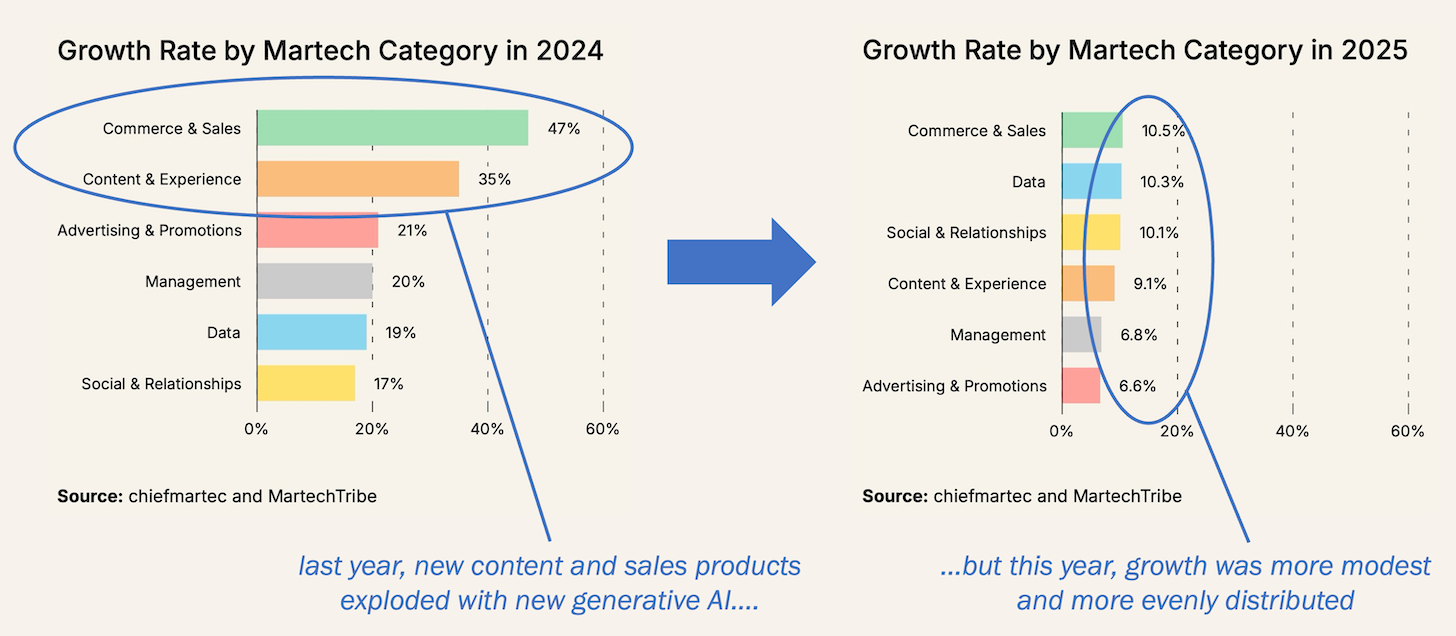
- SEO Isn’t Dead; It’s Evolving: The 24% growth in SEO-related products—the highest of any category—demonstrates that even in an AI-dominated world, the battle for discoverability remains paramount. The focus has simply shifted from traditional search engine optimization to "AI Optimization" (AIO).
Official Perspectives: The Sustainability of Growth
The researchers behind the State of Martech 2025 report emphasize that this growth is not merely a byproduct of venture capital exuberance, but a reflection of the digital transformation of the global economy. As every company becomes a software company, the demand for specialized, granular, and highly efficient marketing tools continues to outpace the rate of consolidation.
For the marketing technologist, the challenge of 2025 is not a lack of options, but the management of abundance. The "hypertail" presents a massive opportunity for innovation, provided that teams can maintain the governance necessary to keep these trillions of custom programs from spiraling into "shadow IT."
Conclusion: A New Era of Flexibility
The 2025 Martech Landscape is a testament to the resilience of the industry. By moving past the fear of "too many logos" and embracing the reality of a world where software is as fluid and accessible as a spreadsheet, organizations are entering an era of unprecedented marketing agility.
As the State of Martech 2025 report concludes, we are no longer just looking at a list of vendors; we are looking at the digital nervous system of modern business. For those willing to navigate the complexity, the tools to build, measure, and optimize are more powerful, and more numerous, than at any point in human history.
The full "State of Martech 2025" report is available for free and can be accessed via the official Martech Day website. The report features comprehensive data on category growth, regional trends, and expert insights from leaders across the software and marketing sectors.
