
The Rise of the “Vibe”: How AI is Redefining Software Development and Marketing Strategy
In the rapidly shifting landscape of artificial intelligence, a new, almost counter-intuitive term has emerged to define the current epoch of digital creation: “Vibe.” Far from being a mere placeholder for the nebulous, “vibe” has become the shorthand for a paradigm shift in how we interact with technology. It is a term that manages to be simultaneously informal and profoundly transformative, signaling a departure from the rigid, syntax-heavy requirements of traditional computing toward a more fluid, conversational, and intuitive approach to creation.
As we move deeper into 2025, the “vibe” era is not just changing how software is written; it is fundamentally altering the DNA of marketing, experimentation, and business agility.
Main Facts: The Genesis of “Vibe Coding”
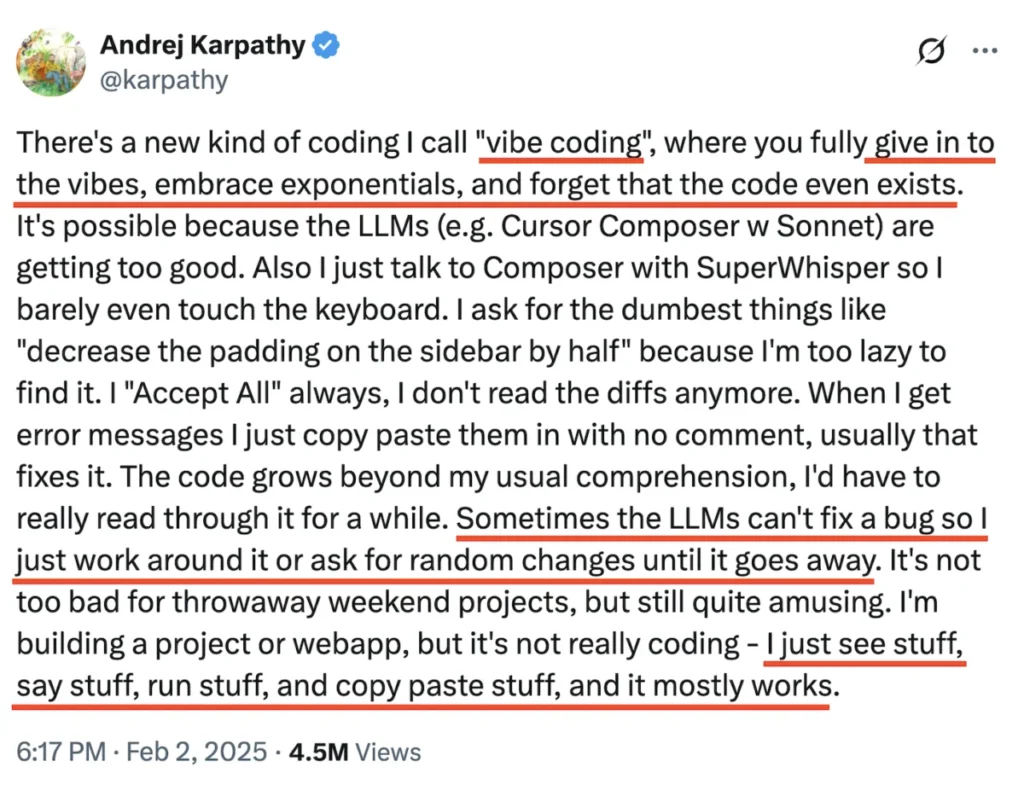
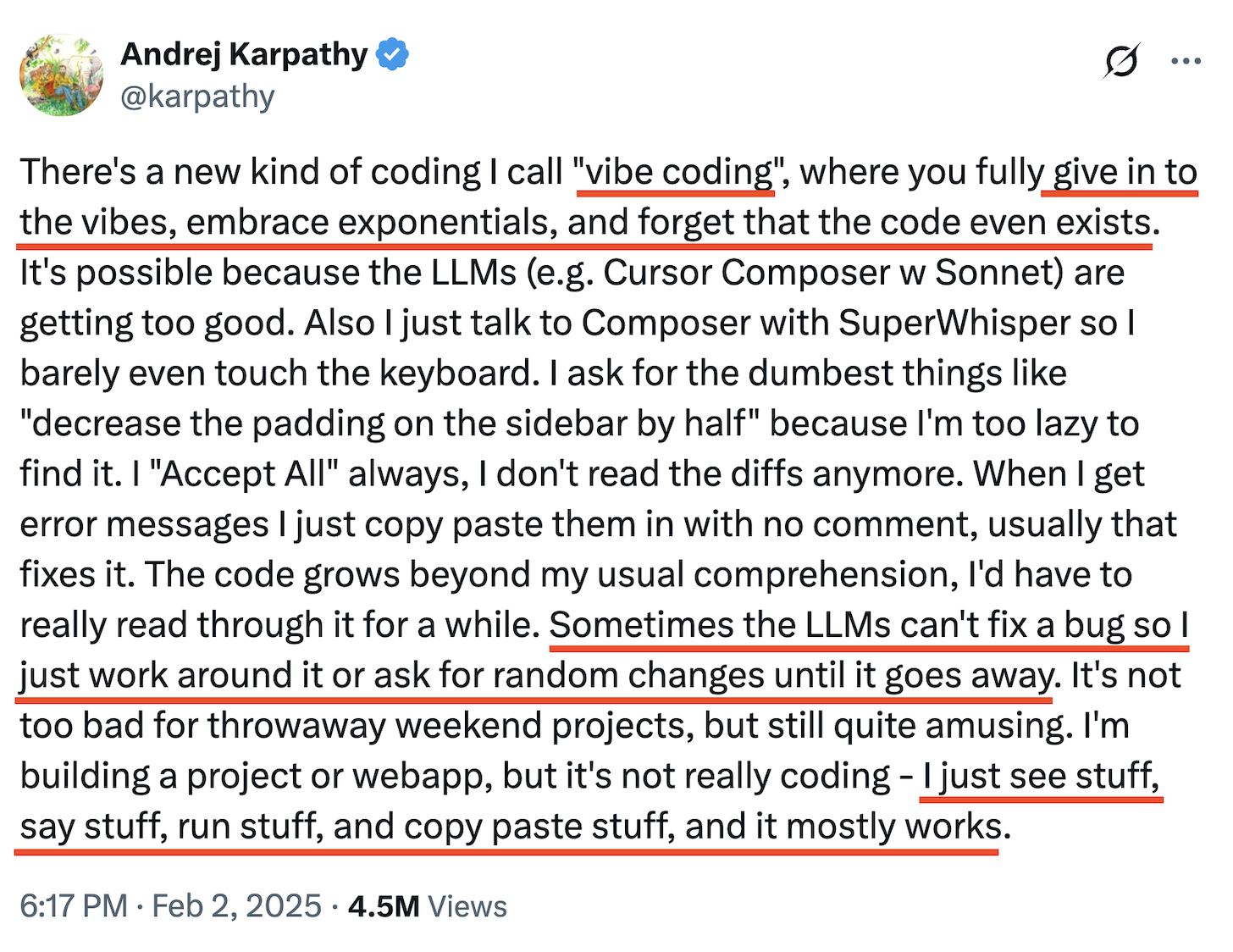
The term “vibe coding” gained mainstream traction following a viral social media post by Andrej Karpathy, one of the original co-founders of OpenAI. Karpathy described a process of software development that eschews the traditional "write, compile, debug" cycle. Instead, it relies on a continuous loop of conversational prompting with Large Language Models (LLMs).
The ethos is simple: See stuff, say stuff, run stuff, and copy-paste stuff.
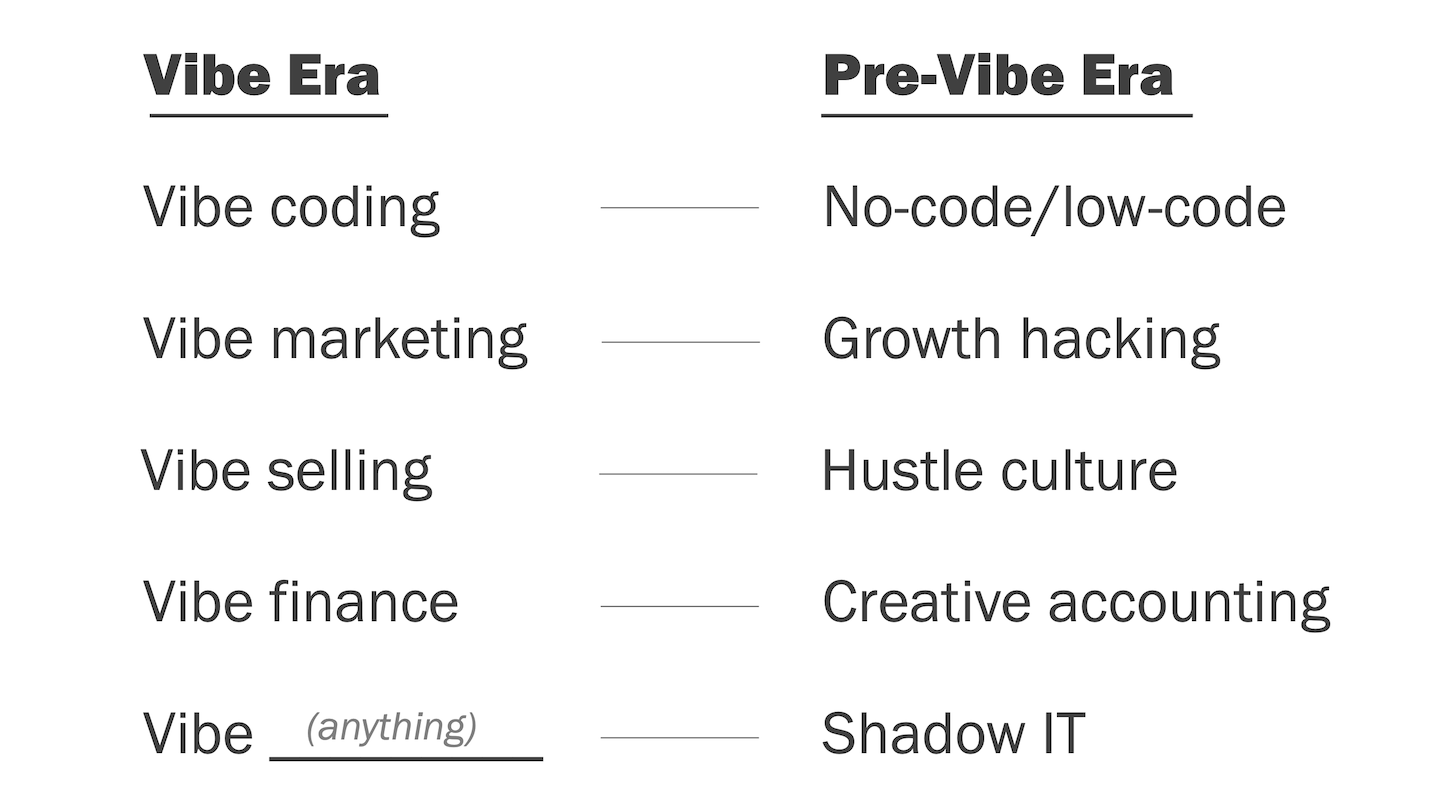
For traditionalists, this sounds like a recipe for technical debt and disaster. However, for a growing cohort of developers and non-technical entrepreneurs, it represents the ultimate democratization of software. It is the evolution of the "no-code" movement, but with a turbocharger attached. By offloading the syntax-heavy burden of coding to an AI agent, the creator is free to focus entirely on the conceptual architecture and the desired outcome—the "vibe" of the application—rather than the individual lines of code that facilitate it.
A Chronology of the Vibe Revolution
The timeline of the vibe era is remarkably compressed, reflecting the exponential speed of AI development.
- Late 2024: The groundwork is laid as LLMs become increasingly capable of generating complex, functional code snippets from natural language prompts. Platforms like Replit and early iterations of AI-coding assistants begin to gain traction.
- Early 2025: The term “vibe coding” is crystallized by industry leaders. The public discourse shifts from “How do I write code?” to “How do I guide the AI to build what I imagine?”
- Mid-2025 (The Summer of Vibes): The launch of specialized platforms like Lovable highlights the market’s hunger for this approach. Lovable reportedly achieved rapid growth to $100 million in Annual Recurring Revenue (ARR) in just eight months, proving that there is a massive commercial appetite for tools that allow users to “vibe” their way to production-ready software.
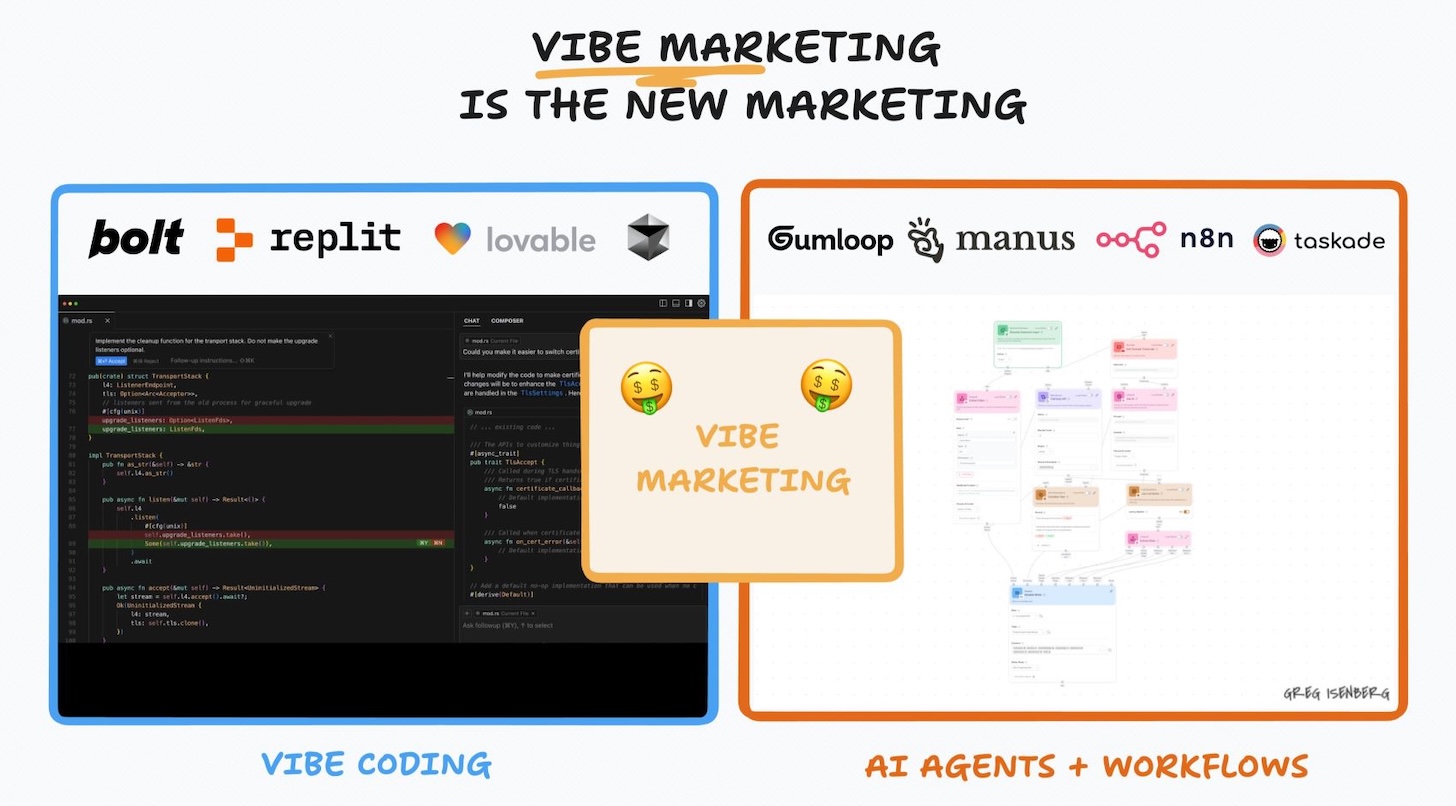
- Late 2025: The concept crosses the chasm from engineering to marketing. Strategists like Greg Isenberg begin applying the “vibe” framework to marketing operations, viewing the marketer as a “GTM engineer” capable of building systems and campaigns on the fly.
Supporting Data and The “Lemkin Scale”
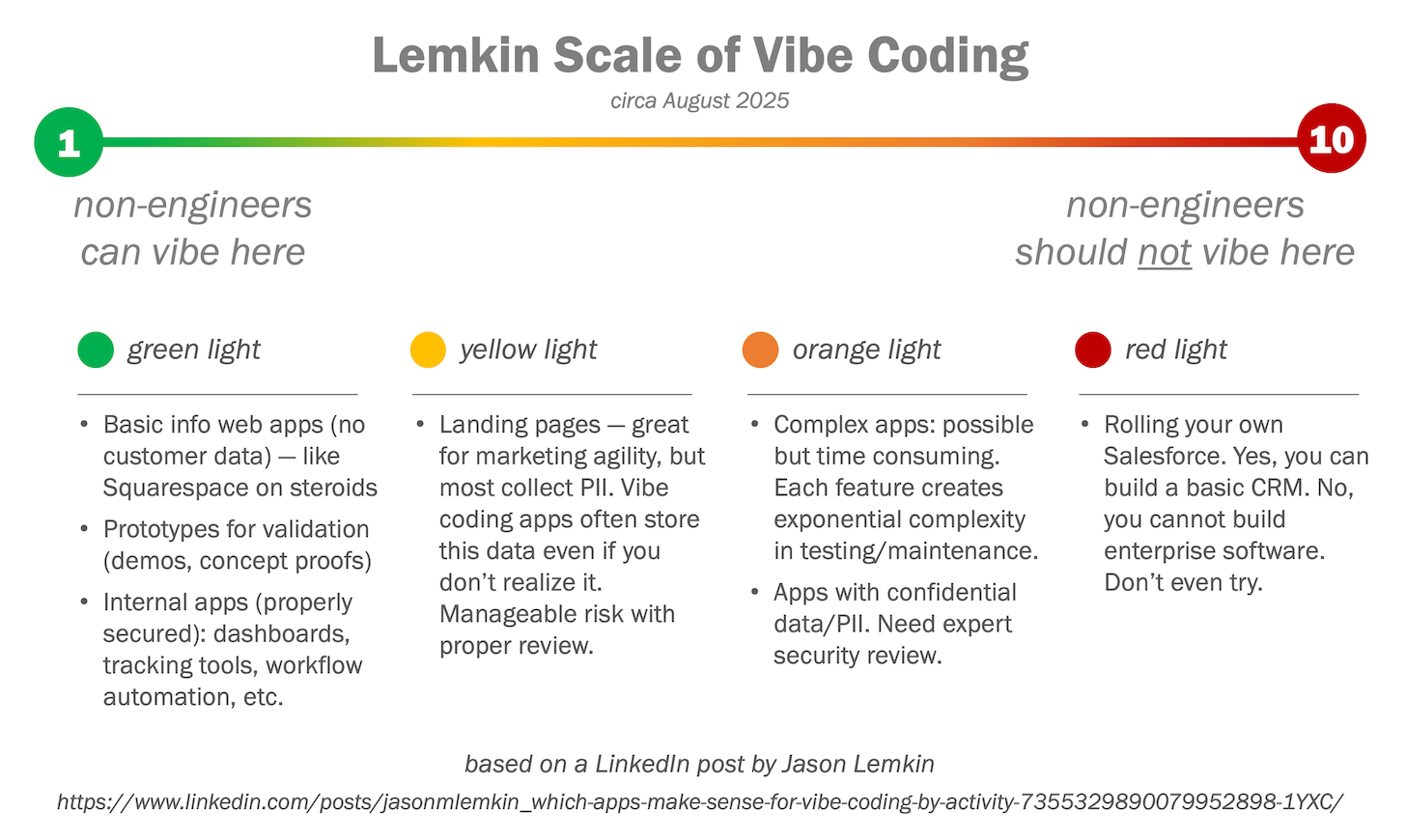
The viability of vibe coding is not uniform; it exists on a spectrum. Industry veteran Jason Lemkin of SaaStr famously documented his own journey of spending over 100 hours building an app via vibe coding. His experience was a mix of exhilarating progress and frustrating roadblocks, providing a realistic look at the limitations of the current technology.
To quantify this, observers have developed the Lemkin Scale of Vibe Coding, a 1-to-10 continuum of feasibility:
- 1–3 (The Green Light): These are low-risk, high-reward applications. Think internal dashboards, personal productivity workflows, or simple data visualization tools. In these instances, the AI’s ability to "mostly work" is perfectly acceptable.
- 4–7 (The Yellow Zone): These projects involve more complexity—perhaps integrating third-party APIs or managing user authentication. These are the current "sweet spots" where human oversight remains critical but the AI does the heavy lifting.
- 8–10 (Here Be Dragons): This is the red zone. Attempting to rebuild something as complex as Salesforce from the ground up using only conversational prompting is currently beyond the capabilities of even the most advanced AI. These projects require structural engineering, long-term maintenance, and deep architectural rigor.
The crucial takeaway is that the “Green Light” zone is expanding. What was a “7” in difficulty in early 2025 is rapidly becoming a “3” as LLMs grow more capable of handling multi-file architecture and long-term context.
Official Perspectives and Industry Responses
The response to the vibe movement has been polarized. On one side, the "traditionalists" argue that code is a rigorous discipline. They worry that a generation of developers who don’t understand the underlying logic of their tools will be unable to debug when the “vibe” inevitably breaks. This criticism echoes the historical skepticism surrounding the introduction of high-level programming languages (like C or Java) compared to assembly.
On the other side, proponents like Karpathy suggest that we are entering a post-syntax era. They argue that if the outcome is functional, secure, and useful, the process of how it arrived there is secondary.
Marketers, meanwhile, are viewing this through the lens of "Vibe Marketing." This is not just about using AI for content generation; it is about the ability to build and dismantle marketing systems in real-time. By leveraging AI agents, a single marketer can now perform tasks that previously required a dedicated team of developers, data scientists, and creative directors. This shift has led to the rise of the “GTM Engineer”—a professional who treats the marketing stack like a programmable, fluid environment.
Implications: The Era of Big Experimentation
If the age of "Big Data" was defined by our obsession with collecting, storing, and analyzing volume, velocity, and variety, the "Vibe" era is defined by Big Experimentation.
1. From Maintenance to Creation
When the barrier to entry for building a tool is removed, the limiting factor shifts from technical capability to imagination. Marketers are no longer restricted by what IT can build for them; they are restricted only by what they can conceive. This leads to a higher frequency of rapid-fire testing.
2. The Return of the “Why”
Because AI can handle the “how,” professionals are forced to return to the “why.” When you can whip up an experimental app or a micro-campaign in an afternoon, the question isn’t “Can we build this?” but “Should we build this?” Success in the vibe era will depend on a company’s ability to hypothesize, test, and pivot at scale.
3. The Need for Guardrails
While the “vibe” is about freedom, the corporate reality requires governance. The most successful organizations will be those that provide the “scaffolding”—a set of pre-approved, compliant, and secure AI environments—that allows their teams to experiment wildly without putting the brand or customer data at risk.
4. Customer-Centric Vibes
There is a danger that the “vibe” becomes an internal obsession with productivity while ignoring the external customer experience. If companies use these new powers solely to automate spam and impersonal content, the market will reject it. True “vibe marketing” must tune into the customer’s frequency. Are your automated systems creating “Good Vibrations,” or are they simply contributing to the noise of “Spam, Spam, Spam”?
Conclusion
The “vibe” label may be temporary—a linguistic artifact of our current digital zeitgeist that will likely feel dated within a year or two. However, the movement it represents is permanent. We have transitioned into an era where the divide between the idea and the execution is closing rapidly.
Whether you call it AI-augmented development, GTM engineering, or simply “vibing,” the implication for the modern workforce is clear: the ability to dream up a solution and guide an AI to build it will become the primary competitive advantage of the coming decade. As the tools become more sophisticated, the focus will continue to shift from the mechanics of production to the quality of the insight.
In the end, the most effective "vibe" isn’t about the code or the automation; it’s about the human imagination unleashed to solve problems in ways we previously thought impossible. Enjoy the summer of vibes—but prepare for a long, productive autumn of innovation.
