
Beyond the Court: What the Pickleball Phenomenon Can Teach Every Professional Blogger
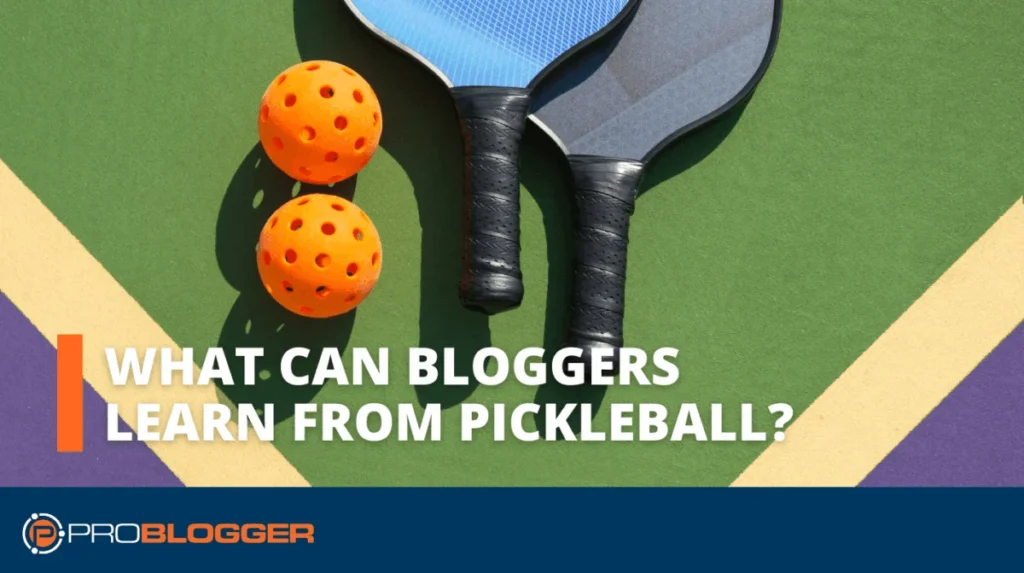
It is a sport with a quirky name, a unique sound, and a meteoric rise that has left traditional athletic associations scrambling to keep pace. Pickleball, often described as a hybrid of tennis, badminton, and ping-pong, has transformed from a backyard pastime into an international cultural juggernaut. While the sound of plastic balls hitting paddles is echoing through community centers and converted tennis courts across the globe, a different kind of observer is taking note: the professional content creator.
For the seasoned blogger, pickleball is more than just a way to burn calories. It is a masterclass in community building, strategic growth, and the power of accessibility. By examining the mechanics of the game, bloggers can uncover a blueprint for revitalizing their digital presence and fostering deeper engagement in an increasingly saturated internet landscape.
1. The Genesis: From Bainbridge Island to Global Phenomenon
To understand the lessons pickleball offers, one must first look at its unlikely origins. The sport was invented in 1965 on Bainbridge Island, Washington, by three fathers—Joel Pritchard, Bill Bell, and Barney McCallum—who were looking for a way to entertain their bored children. Using spare equipment and a lowered badminton net, they created a game that was inherently inclusive.
The Chronology of Growth
- 1965: Invention on Bainbridge Island.
- 1972: Incorporation to protect the creation.
- 1990s: The sport begins to spread across North America, largely fueled by retirement communities.
- 2020-Present: A post-pandemic explosion, with the Sports & Fitness Industry Association (SFIA) naming it the fastest-growing sport in America for three consecutive years.
This trajectory offers a vital lesson in scalability. Like the best blogs, pickleball did not start as a corporate enterprise with a massive budget; it started as a local experiment. It proved that a product—or a content strategy—only needs a low barrier to entry to achieve mass adoption.
2. Accessibility as a Content Strategy
One of the primary reasons for pickleball’s success is its inherent accessibility. Unlike tennis, which requires significant athletic conditioning and technical skill to enjoy, pickleball is "easy to learn, hard to master."
Translating Accessibility to Blogging
For bloggers, this is a call to audit their content. Are your posts jargon-heavy, overly academic, or locked behind walls of complex formatting?
- The "Dink" Philosophy: In pickleball, the "dink"—a soft, controlled shot—is often more effective than a powerful smash. Similarly, the most successful blog posts are often those that take complex, intimidating subjects and distill them into "digestible" content.
- Simplified Design: A clean, uncluttered layout acts as the "court" for your reader. If the user experience is difficult, they will leave. By prioritizing clarity, you ensure that your audience feels invited rather than overwhelmed.
3. The Power of the "Rally": Building Community
In pickleball, a rally is the heart of the game. It is the back-and-forth exchange that keeps players engaged and spectators invested. In the world of blogging, the "rally" is the comment section, the social media thread, and the email newsletter response.
Strategies for Active Engagement
- Consistent Serving: Just as a player must learn to serve effectively to start a point, a blogger must provide consistent, high-value content to initiate a conversation.
- The Feedback Loop: Do not treat your blog as a monologue. Actively solicit questions. Host Q&A sessions. When a reader comments, reply with the same enthusiasm you would show a teammate on the court.
- Community Retention: The goal is to turn a "casual visitor" into a "returning player." By fostering a sense of belonging, you move beyond mere traffic statistics and into the realm of brand loyalty.
4. Strategic Positioning and the "Kitchen"
Pickleball rules include the "non-volley zone," colloquially known as the "kitchen." Players cannot stand there to hit a volley, forcing them to balance aggression with patience.

Knowing Your Niche Boundaries
For a blogger, "strategic positioning" is the art of knowing your lane. You cannot be everything to everyone. The most successful blogs define their "kitchen"—the specific niche or area of expertise they own—and operate within those boundaries to maximize their impact. If you overstep your expertise, you lose credibility; if you stay too far back, you lose relevance. Finding that sweet spot where you provide value without over-promising is the key to authority.
5. Resilience: Learning from the "Whiff"
Every athlete, regardless of skill level, misses a shot. In pickleball, this is called a "whiff." It is a moment of frustration, but also a moment of data collection. Why did the ball go into the net? Was it my stance? My grip?
The Data-Driven Pivot
Bloggers should view "whiffs"—posts that underperform or engagement metrics that dip—as essential data.
- Refine, Don’t Quit: If an article fails to generate traffic, analyze the headline, the keyword targeting, and the distribution channel.
- Iterative Growth: Use analytics tools to understand what resonates. If your audience responds well to video tutorials but ignores long-form think pieces, adjust your "swing" accordingly. The most successful bloggers are those who treat their editorial calendar as a living, breathing strategy that adapts to the "opposing team"—the ever-changing algorithm.
6. Staying Agile in a Shifting Landscape
The digital landscape, much like a fast-paced game of pickleball, is constantly shifting. New SEO updates, the rise of AI, and changes in social media algorithms mean that a strategy that worked six months ago may be obsolete today.

Official Perspectives on Adaptability
Industry experts from platforms like ProBlogger suggest that the "stay relevant" mantra is no longer optional. "The bloggers who thrive," notes one industry analyst, "are those who view themselves as perpetual students."
- Continuous Learning: Just as pickleball players take clinics to improve their footwork, bloggers must attend webinars, read industry reports, and experiment with new tools.
- Flexibility: Don’t be afraid to pivot. If a specific topic has run its course, be prepared to introduce new themes that reflect current audience interests.
7. Keeping Your Eye on the Ball: The Importance of Focus
In pickleball, losing focus for a fraction of a second results in a lost point. In the blogging world, this translates to "scope creep" or "niche dilution." When a blogger loses sight of their primary purpose—to serve their specific audience—their content becomes unfocused and their authority wanes.
The Mission-First Approach
Periodically audit your blog against your original mission statement.
- Does this post serve my target reader?
- Is this content aligned with my long-term goals?
- Am I staying true to my brand voice?
Maintaining this focus is the difference between a blog that is a "hodge-podge of thoughts" and a blog that is a "destination for value."
8. Conclusion: The Joy of the Game
Perhaps the most important lesson pickleball teaches us is the importance of enjoyment. It is a sport played with laughter and camaraderie. If you are a blogger, you must eventually ask: Am I enjoying this?

Blogging is a marathon, not a sprint. If you are not passionate about your topic, that lack of enthusiasm will inevitably bleed into your writing, and your audience will feel it. When you inject genuine joy and personality into your craft, you do more than just share information—you build a brand that people want to be part of.
So, grab your paddle and your keyboard. The court is open, the net is set, and the game is waiting. Whether you are aiming for a professional audience or a personal hobbyist, the principles of pickleball—accessibility, strategy, community, and joy—are the exact ingredients you need to turn your blog into the next big hit.
