
The Great Rewiring: Why 2026 is the Year of the Agentic Marketing Revolution
The marketing landscape is undergoing a structural transformation that mirrors the shift from the desktop web to the mobile era. As we approach 2026, the industry is moving beyond the simple "generative AI" hype cycle—characterized by chatbots and content creation—and entering the age of Agentic Marketing.
According to the upcoming Martech for 2026 report, which will be unveiled on December 2, the integration of autonomous AI agents is no longer a fringe experiment. It has become a foundational element of modern marketing operations. But this shift is not merely about internal efficiency; it is about a fundamental change in how the buyer’s journey is constructed.
The State of Play: AI Agents in the Martech Stack
The data is clear: AI agents are pervasive. A recent AI & Data in Marketing study revealed that 90.3% of participants—comprising tech-savvy marketing leaders from the world’s most prominent B2B and B2C brands—are already incorporating AI agents into their martech stacks.
These are not "starry-eyed" experimenters. These are high-stakes operators who demand performance and ROI. While many organizations are currently in the phase of "limited production" or experimentation, the velocity of adoption suggests that 2026 will be the year these agents transition from "assistants" to "executors."
Defining the Agentic Ecosystem
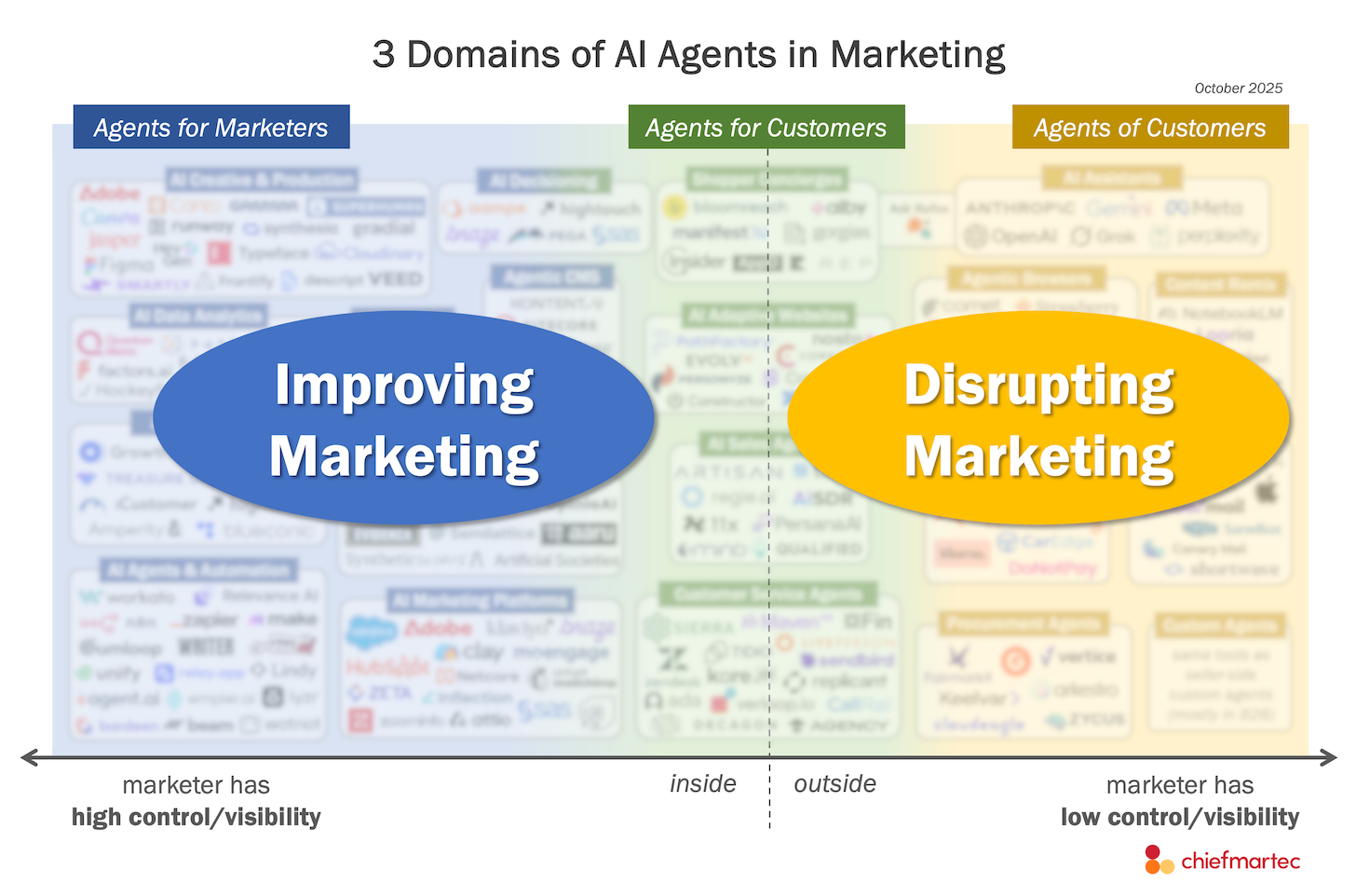
To understand the landscape, we must distinguish between two primary spheres of influence:
- Marketer-Side Agents: Tools designed to help teams brainstorm, produce, distribute, and analyze campaigns. Their primary goal is to enhance the efficiency and, in optimal cases, the effectiveness of the marketing machine.
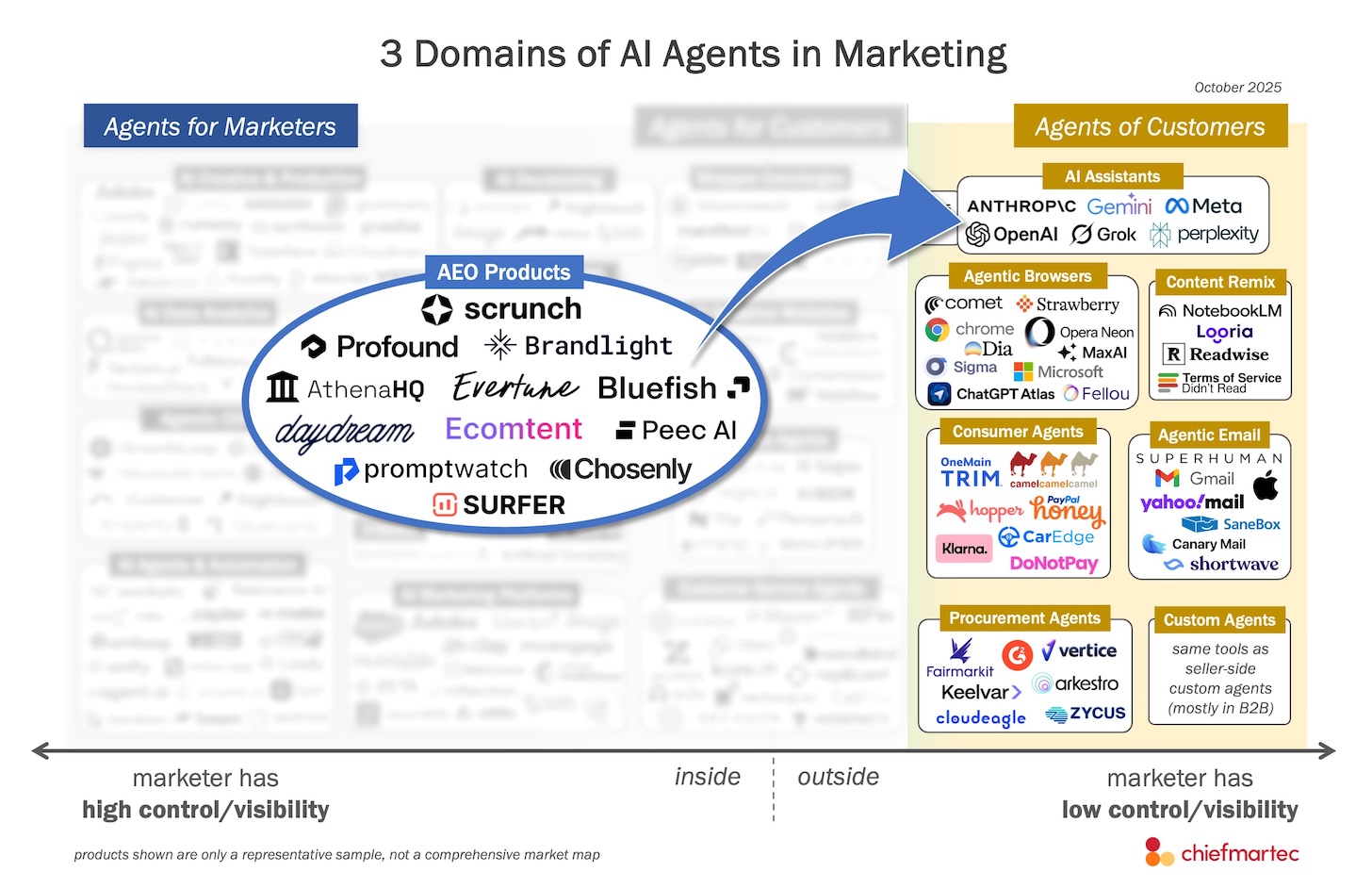
- Buyer-Side Agents: Autonomous interfaces (such as ChatGPT, Claude, Perplexity, and Gemini) that act on behalf of the consumer. These agents are the true disruptors, as they threaten to bypass the traditional brand-controlled touchpoints that marketers have spent decades perfecting.
A Chronology of the Agentic Shift
The transition toward agentic commerce has been rapid, marked by several key technological milestones that have fundamentally altered the power dynamic between buyers and sellers:
- 2023–2024: The Generative Surge: The industry focused on "content generation." Marketers used LLMs to draft emails, write blog posts, and generate ad copy. The focus was on volume and speed.
- Early 2025: The Rise of Outbound AI SDRs: Sellers deployed AI agents to automate lead generation, flooding the market with "personalized" outreach. This created a period of high-volume, low-quality noise that frustrated buyers and diminished human-to-human connection.
- Late 2025: The Transactional Pivot: Platforms like OpenAI and Google began integrating "Action Engines." OpenAI introduced Instant Checkout for Etsy and Shopify, while Google launched agentic checkout features that allow AI to monitor pricing and execute purchases automatically.
- The Current Moment (Q4 2025): We are witnessing the emergence of cross-platform "Agent-to-Agent" interaction, where AI assistants are now capable of making real-world phone calls to verify inventory or negotiate services on behalf of the buyer.
Supporting Data: The Disconnect Between Recognition and Action
While the awareness of this shift is high, there remains a significant gap in operational readiness. Research from the Martech for 2026 report highlights a critical tension:
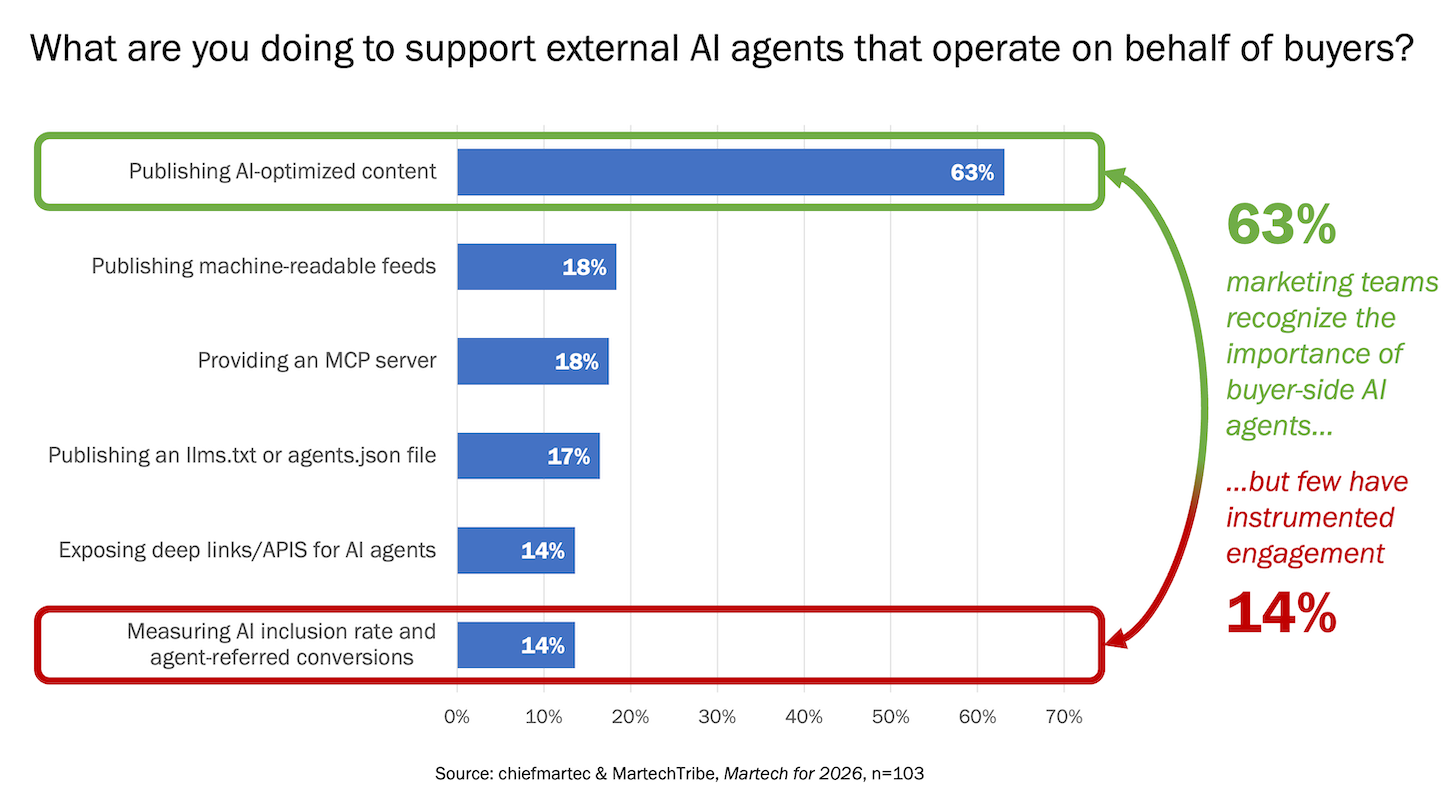
- 63% of marketing teams recognize that buyer-side AI agents have permanently altered search channels and buyer behavior.
- Only 14% of teams have fully instrumented their tech stacks to account for this change.
This discrepancy confirms that most organizations are still playing catch-up. They are trying to solve a new-world problem (AI-driven discovery) with old-world tools (traditional SEO and SEM). The report suggests that bridging this gap will be the primary priority for CMOs in 2026.

The Great Rewiring: Implications for Brands
The emergence of buyer-side agents represents the "Great Rewiring" of the consumer journey. For the past 25 years, marketers have optimized for Google Search, creating content designed to rank for specific keywords and drive traffic to proprietary websites.
The Decline of the Destination Website
As AI assistants like Perplexity or Gemini provide direct answers—and even direct transactional capabilities—the "destination website" loses its primary purpose. If a user can purchase a product, compare pricing, and verify inventory through an AI interface, the traditional landing page becomes a secondary or even tertiary consideration.
The Rise of Agentic SEO (AEO)
The industry is seeing the birth of "Agentic Engine Optimization" (AEO). Unlike traditional SEO, which focuses on satisfying search algorithms, AEO focuses on providing the structured data and context that AI agents require to recommend your brand to a human user. It is a shift from "ranking for keywords" to "being the preferred source of truth for an AI."
The "Irony of Efficiency"
There is a profound irony in the current market. Sellers spent the last year deploying AI to harass buyers with automated emails. Now, the table has turned. Buyers are using AI agents to call sales offices and handle inquiries. This creates a "bottleneck of agents." If companies continue to use "outbound" AI, they will eventually reach a state of total saturation where no human is listening.
The report suggests that this is merely an intermediate phase. The inevitable conclusion is Agent-to-Agent (A2A) commerce, where a buyer’s agent and a seller’s agent negotiate terms, check stock, and finalize deals without human intervention.
Official Perspectives: The Path Forward
Industry leaders are beginning to recognize that this shift is irreversible. The focus in 2026 will not be on "doing more with less"—a tired cliché that often masks a lack of real strategy—but on "doing things differently."
The Martech for 2026 report provides a roadmap for this transition. It argues that the most successful companies will be those that treat AI agents as a new "persona" in their marketing mix. Just as companies created content for mobile users in 2010, they must now create content and commerce pathways for agentic users.
Key Strategic Recommendations for 2026:
- Prioritize Structural Data: Ensure your product information, pricing, and availability are optimized for machine consumption, not just human readability.
- Audit the "Agent Experience": Test how your brand appears when queried by top AI agents. If your AI agent doesn’t "know" your brand, the human buyer won’t either.
- Invest in A2A Infrastructure: Explore tools that allow your systems to talk to other systems. If your commerce engine can’t connect to an AI-driven purchase request, you are effectively closing your digital doors to a growing segment of the market.
Conclusion: The Horizon
The disruption is not coming; it is already here. The move from informational search engines to action-oriented AI agents is the most significant shift in digital marketing since the inception of the web.
As we look toward 2026, the challenge for marketers is to shed the legacy frameworks that have served them for the last two decades. The "Great Rewiring" requires a new set of skills, a new set of metrics, and a fundamental shift in mindset. We are moving toward a future where the buyer is rarely alone, and the seller is rarely human.
To navigate this complexity, the Martech for 2026 report, supported by industry leaders like GrowthLoop, Hightouch, and SAS, provides the essential research to guide your organization through this transition. The future belongs to those who learn to speak the language of the agents.
Join the conversation on December 2. Sign up for the Martech for 2026 webinar to access the full research report and hear the live analysis of these findings.
