
Unlocking Digital Growth: The Strategic Imperative of Advanced Content Performance Measurement
Last Modified: March 19, 2025
In the dynamic landscape of digital marketing, the notion that measuring content performance is merely a superficial review of numerical reports is fundamentally outdated. The true efficacy of content, whether a meticulously crafted blog post, an engaging social media campaign, or a comprehensive marketing initiative, extends far beyond basic metrics. It demands a sophisticated, multi-layered approach, underpinned by clearly defined Key Performance Indicators (KPIs), a profound understanding of growth catalysts, and often, a degree of technical acumen.
![How to Measure Content Performance [+Reports] (2025)](https://measureschool.com/wp-content/uploads/2025/03/how-to-measure-content-performance.png)
This comprehensive guide delves into the strategic framework for evaluating content effectiveness, from the selection of pertinent metrics to the construction of insightful, actionable reports. We will dissect the process into critical journalistic components: the core facts, the evolution of measurement practices, supporting data and analytical tools, industry best practices, and the profound implications for business growth.
1. Main Facts: The Imperative of Strategic Content Measurement
At its core, content performance measurement is the systematic evaluation of how well digital content achieves its intended objectives. It’s a critical discipline that transforms raw data into strategic intelligence, enabling organizations to optimize their content investments, enhance user experiences, and ultimately, drive measurable business outcomes. The era of simply tracking "page views" or "likes" as sufficient indicators of success is long past. Modern content strategy necessitates a deeper dive into user behavior, conversion pathways, and return on investment (ROI).
![How to Measure Content Performance [+Reports] (2025)](https://measureschool.com/wp-content/uploads/2023/04/GA4-For-Beginners-Final.webp)
Effective measurement provides answers to crucial questions: Is our content resonating with the target audience? Is it driving desired actions, such as leads or sales? How does our content stack up against competitors? Without a structured approach, content creation risks becoming a shot in the dark, consuming valuable resources with uncertain returns. This guide champions a shift from reactive data observation to proactive, data-driven strategy formulation, empowering marketers to build powerful reports that yield genuine insights.
2. Chronology: Evolution of Measurement Practices and the Modern Framework
The journey of content measurement has mirrored the rapid evolution of the internet itself. In the early days of the web, rudimentary tools offered basic insights into website traffic, primarily focusing on page hits and unique visitors. As digital platforms diversified and user interactions became more complex, so did the demands on analytics. The advent of sophisticated web analytics platforms, social media insights, and dedicated campaign tracking tools marked a significant shift, moving from simple counting to understanding user journeys and engagement.
![How to Measure Content Performance [+Reports] (2025)](https://measureschool.com/wp-content/uploads/2025/03/Meta-ad-library-example-1-1024x489.webp)
Today, the modern framework for content measurement is characterized by its holistic, integrated, and continuous nature. It acknowledges that content exists across a multitude of channels and that its impact must be assessed comprehensively. This evolution has necessitated a structured process, beginning with a foundational element: The Measurement Plan.
A Measurement Plan serves as the blueprint for evaluating content performance. Typically managed in a collaborative tool like Google Sheets, it meticulously outlines:
![How to Measure Content Performance [+Reports] (2025)](https://measureschool.com/wp-content/uploads/2025/03/SpyFu-example-1024x518.webp)
- Defined Objectives: What specific business goals is the content designed to achieve (e.g., brand awareness, lead generation, customer retention)?
- Key Performance Indicators (KPIs): Which specific metrics will accurately reflect progress towards these objectives?
- Benchmarks: What are the internal and external standards against which performance will be evaluated?
This structured approach ensures alignment across teams and platforms, preventing marketers from being overwhelmed by the sheer volume of data available in modern analytics tools. It is the crucial first step in transitioning from merely tracking numbers to actively deriving actionable intelligence.
3. Supporting Data: Key Performance Indicators, Tools, and Reporting Mechanisms
To measure content performance effectively, it is essential to first categorize the content and then identify the most relevant KPIs for each category and platform. While some metrics are universally applicable, others are platform-specific or gain particular significance depending on the content type.
![How to Measure Content Performance [+Reports] (2025)](https://measureschool.com/wp-content/uploads/2025/03/Wix-traffic-overview-1024x524.webp)
Content Categorization for Precision
To simplify the measurement process, content can generally be categorized into three primary types, each with distinct measurement considerations:
- Website Content: Encompasses blog posts, landing pages, product descriptions, "about us" sections, and other static or dynamic pages hosted on a website.
- Social Media Content: Includes posts, stories, videos, and ads distributed across platforms like Facebook, Instagram, LinkedIn, X (formerly Twitter), and TikTok.
- Marketing Campaign Content: Refers to content specifically created for paid advertising campaigns (e.g., search ads, display ads, video ads) or email marketing efforts.
Organizing your measurement strategy around these categories, perhaps within your Measurement Plan, helps streamline KPI selection and analysis.
![How to Measure Content Performance [+Reports] (2025)](https://measureschool.com/wp-content/uploads/2025/03/GA4-landing-page-report-1024x492.webp)
Website Performance Metrics: A Deep Dive
For website content, a robust analytics tool (such as Google Analytics 4, often implemented via Google Tag Manager or direct CMS integration) is indispensable. Key metrics include:
- Active Users (or Total Users): The number of distinct individuals who engaged with your website during a specified period. This indicates the reach of your content.
- Page Views: The total number of times pages on your website were loaded. While a basic metric, it signifies content visibility.
- Sessions: The total number of user interactions with your website within a defined timeframe (e.g., 30 minutes). A session can include multiple page views and events, offering a broader view of user engagement.
- Average Engagement Time: The average duration users spend actively interacting with your content. Higher engagement time often correlates with higher content quality and relevance.
- Events: Specific, trackable actions users take on your site, such as clicks on buttons, video plays, form submissions, or downloads. Events provide granular insights into user behavior.
- Key Events (or Goals): The most critical actions you want users to take, directly tied to business objectives (e.g., completing a purchase, signing up for a newsletter, downloading a whitepaper). These are primary indicators of content conversion effectiveness.
- Revenue: For e-commerce sites, this directly measures the financial return generated by content, linking specific content pieces to sales figures.
To gather these insights, an analytics tool must be properly installed. Common methods include direct embedding of a tracking code (gtag.js), utilizing a Tag Management System (like Google Tag Manager for greater flexibility), or leveraging built-in integrations within a Content Management System (CMS).
![How to Measure Content Performance [+Reports] (2025)](https://measureschool.com/wp-content/uploads/2025/03/GA4-Pages-and-screens-report-1024x490.webp)
Social Media & Marketing Campaign Metrics: Detailed Indicators
For content disseminated through social media and marketing campaigns, the KPIs shift to reflect platform-specific interactions and campaign objectives:
- Visibility & Reach:
- Reach: The number of unique users who saw your content.
- Impressions: The total number of times your content was displayed (a single user can have multiple impressions).
- Engagement:
- Engagement Rate: The percentage of users who interacted with your content (likes, comments, shares, clicks) relative to its reach or impressions.
- Likes/Reactions: Basic indicators of approval or emotional response.
- Comments: Reflects deeper user interaction and potential for community building.
- Shares/Retweets: Indicates content resonance and virality, as users actively propagate it.
- Video Views: Total plays of video content.
- Play Rate: The percentage of impressions that result in a video play.
- Completion Rate: The percentage of viewers who watched a video to its conclusion, signifying strong engagement.
- Action & Conversion:
- Clicks: The number of times users clicked on your content or calls-to-action.
- Conversions: The number of times users completed a desired action after interacting with your content (e.g., signing up, purchasing).
- Cost Per Click (CPC): The cost incurred for each click in paid campaigns, vital for budget efficiency.
- Cost Per Lead (CPL): The cost associated with acquiring a new lead through content, crucial for lead generation campaigns.
- Return on Ad Spend (ROAS): The revenue generated for every dollar spent on advertising, a direct measure of campaign profitability.
- Customer Acquisition Cost (CAC): The total cost of acquiring a new customer, which content contributes to.
- Follower Growth: The increase in your audience size, indicating brand expansion and potential reach.
Benchmarking for Strategic Advantage
Once KPIs are established, effective measurement requires context through benchmarking. This involves comparing current performance against historical data, internal goals, and external industry standards.
![How to Measure Content Performance [+Reports] (2025)](https://measureschool.com/wp-content/uploads/2025/03/Search-console-report-1024x656.webp)
- Internal Benchmarking: Begin by establishing your own baselines. Tracking monthly and weekly KPI averages helps identify trends and set realistic, incremental goals. For example, if your content consistently attracts 500 users per week, this becomes your baseline. A target of 650 users (a 30% increase) is then a concrete, achievable objective derived from internal performance.
- External Benchmarking: Comparing your performance against external entities provides a competitive edge. This typically involves:
- Direct Competitors: Analyzing companies offering similar products or services.
- Industry Averages: Consulting industry reports for standard performance metrics.
- Businesses with Similar Audiences/Models: Learning from successful strategies in adjacent markets.
Several competitive analysis tools offer invaluable insights into competitor performance and strategies:
- Meta Ad Library: Provides transparency into active ad campaigns run by any advertiser on Facebook and Instagram, revealing creative strategies and targeting.
- Semrush & Ahrefs: Comprehensive SEO and content marketing platforms that analyze competitor keywords, backlinks, organic traffic, and top-performing content.
- SpyFu: Focuses on search marketing, showing competitor keywords, ad copy, and budget estimations.
- SimilarWeb: Offers broad insights into website traffic, audience demographics, and marketing channels for any website, including competitors.
Reporting for Actionable Insights
Collecting data is only half the battle; transforming it into actionable reports is where true value is generated. Automated reports simplify this process, addressing recurring questions efficiently.
![How to Measure Content Performance [+Reports] (2025)](https://measureschool.com/wp-content/uploads/2025/03/Explorations-in-GA4-1024x551.webp)
- Pre-made Reports: Many platforms offer built-in analytics.
- CMS Analytics: Platforms like Wix provide integrated analytics dashboards, offering immediate insights into website traffic and user behavior.
- Google Analytics (GA4): Offers a suite of powerful pre-made reports:
- Landing Page Report: Reveals which pages users first encounter, highlighting critical entry points and their initial impact. It answers questions like "Which pages are most effective at attracting new visitors?" and "What is the initial user experience?" The Path Exploration feature in GA4 further visualizes user journeys from specific landing pages, identifying navigation bottlenecks or "looping behavior" where users repeatedly return to a page without progressing.
- Pages and Screens Report: Provides a holistic view of all content performance, showing which pages (and mobile app screens) are most popular, regardless of whether they are entry points. This report answers "What are our most popular content pieces overall?"
- Performance Report (Search Results): Available through integration with Google Search Console, this report reveals how your content performs in organic search, identifying which queries trigger your website’s appearance and which content pieces drive the most search traffic, with breakdowns by device.
- Custom Reports: Beyond pre-made options, customization is key. In GA4, reports can be tailored by applying filters (e.g., focusing on specific audience segments), adding secondary dimensions (e.g., breaking down page views by traffic source), and modifying metrics. Explorations in GA4 offer a flexible canvas to combine dimensions and metrics in novel ways, enabling deep-dive analysis beyond standard reports.
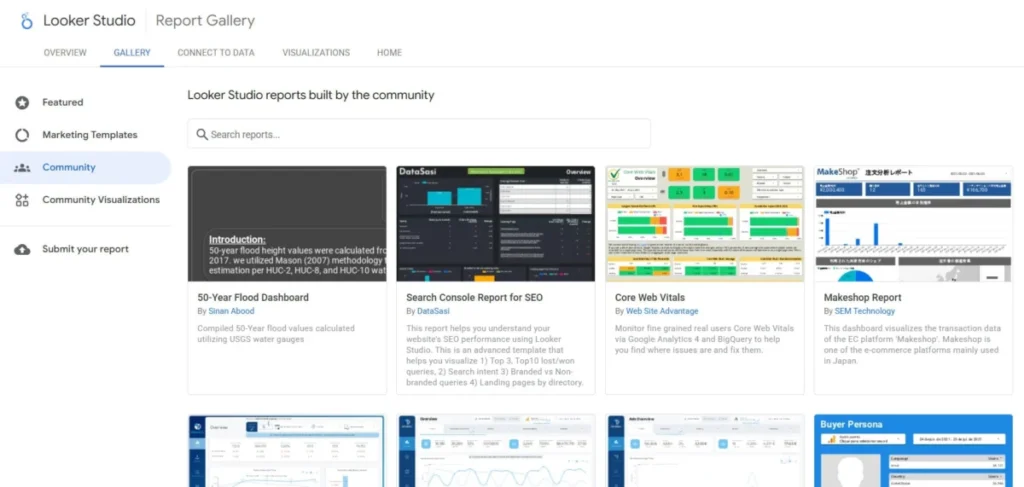
- Report Templates: To accelerate the reporting process, readily available templates from platforms like the Looker Studio gallery and Looker Studio Community offer pre-configured charts, tables, and filters. These templates simplify the setup, requiring only data connection to provide immediate, expert-designed insights.
- Multi-Channel Reports: The challenge of content spread across diverse platforms necessitates multi-channel reporting. For small-scale operations, manual data export to Google Sheets or Excel might suffice. However, as content efforts scale, automation is crucial. Tools like Supermetrics or Coupler.io automatically collect data from social media, web analytics, CRM systems, and more. This consolidated data is then fed via connectors into visualization tools such as Looker Studio, Tableau, or Power BI, creating real-time, interactive dashboards that provide a holistic view of content impact across all channels, significantly reducing manual effort and potential for error.
4. Official Responses: Industry Best Practices and Expert Consensus
The pursuit of effective content measurement is guided by widely accepted industry best practices and expert consensus, which serve as "official responses" to the complexities of digital analytics.
- Adopting a Goal-Oriented Framework: Experts advocate for frameworks like the "See-Think-Do-Care" model or the "Awareness, Acquisition, Activation, Retention, Revenue" funnel. These frameworks ensure that content measurement is always tied to specific stages of the customer journey and corresponding business objectives, moving beyond vanity metrics.
- Prioritizing Actionable Metrics: The consensus is to focus on metrics that directly inform decisions and drive improvements, rather than passively observing all available data. This means identifying leading indicators (e.g., engagement rate for future conversions) and lagging indicators (e.g., revenue generated).
- Embracing Continuous Optimization: Content measurement is not a static task but an iterative cycle. Industry leaders emphasize a culture of constant testing, learning, and adapting content strategies based on performance data. This agile approach allows for rapid adjustments to market changes and audience preferences.
- Ensuring Data Governance and Privacy: With increasing global regulations like GDPR and CCPA, a critical best practice is the ethical collection, storage, and use of user data. Companies must ensure transparency, obtain consent, and safeguard data privacy, which in turn builds trust and ensures the long-term viability of data-driven strategies.
- Translating Data into Narrative: A key "official response" from analytics professionals is the importance of storytelling with data. Raw numbers mean little to stakeholders without context and clear implications. The ability to translate complex data into concise, compelling narratives that highlight insights, recommendations, and business impact is paramount for driving organizational buy-in and action.
5. Implications: Driving Business Growth and Future Content Strategy
The rigorous application of advanced content performance measurement carries profound implications for an organization’s strategic direction and bottom line.
![How to Measure Content Performance [+Reports] (2025)](https://measureschool.com/wp-content/uploads/2025/03/Looker-studio-gallery-1024x491.webp)
- Strategic Resource Allocation: By pinpointing which content types, topics, and channels deliver the highest ROI, businesses can make informed decisions about where to invest their creative and financial resources. This eliminates wasteful spending on underperforming content and amplifies efforts in areas that yield maximum impact.
- Enhanced User Experience: Data-driven insights reveal how users interact with content, identifying points of friction, confusion, or disinterest. This allows for continuous refinement of content design, structure, and delivery, leading to a more intuitive, engaging, and satisfying user journey. A better user experience translates directly into higher engagement, longer dwell times, and increased conversion rates.
- Sustained Competitive Edge: Organizations that master content measurement gain a significant advantage over competitors. By understanding what resonates with their audience and adapting faster, they can capture greater market share, build stronger brand loyalty, and establish themselves as thought leaders. Competitive intelligence tools further sharpen this edge by revealing successful strategies of rivals.
- Future-Proofing Content Strategy: The digital landscape is in constant flux. Effective measurement allows businesses to detect emerging trends, anticipate shifts in audience preferences, and adapt their content strategy proactively. This agility ensures that content remains relevant, impactful, and aligned with evolving technological and behavioral patterns, safeguarding long-term digital presence.
- Measurable Business Outcomes: Ultimately, sophisticated content measurement directly correlates with tangible business success. It moves content from a perceived cost center to a verifiable revenue driver, proving its contribution to lead generation, customer acquisition, brand equity, and overall profitability. This data-backed accountability empowers marketers to demonstrate clear ROI and secure ongoing investment in their content initiatives.
In conclusion, measuring content performance is an intricate, yet indispensable, discipline. It transcends simple numerical checks, demanding a structured approach, precise KPIs, a commitment to benchmarking, and the strategic utilization of both pre-built and custom reports. For organizations aiming to thrive in the digital age, a robust content measurement framework is not just an analytical tool; it is a foundational pillar for sustainable growth, informed decision-making, and a lasting competitive advantage.
