
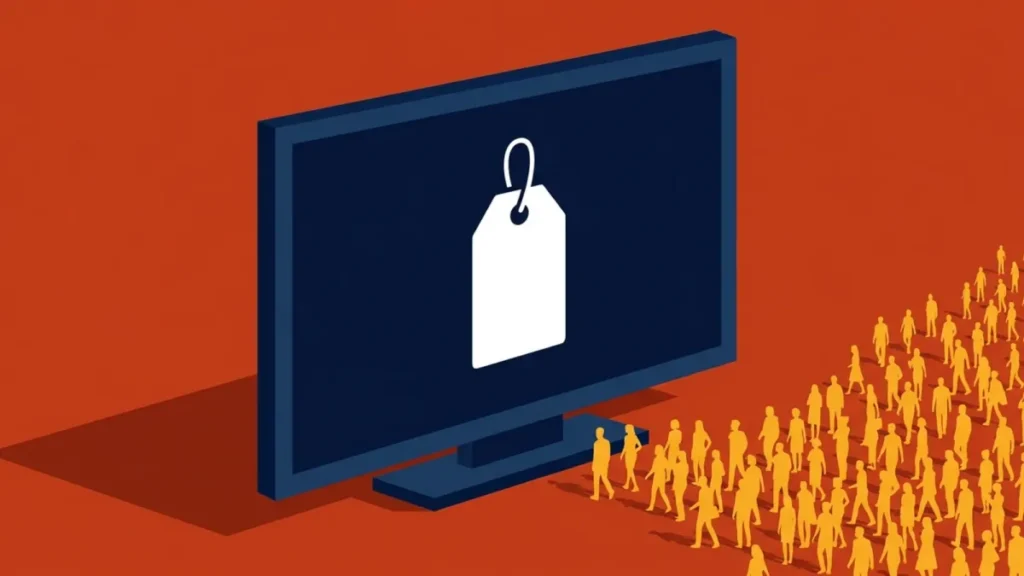
Walmart’s Strategic Pivot: Acquiring Vibe.co to Democratize Connected TV Advertising
In a move that signals a seismic shift in the retail media landscape, Walmart announced on June 23, 2026, that it has entered into a definitive agreement to acquire Vibe.co. The deal, which folds the self-serve connected TV (CTV) advertising platform into Walmart Connect, represents a decisive effort by the world’s largest retailer to lower the barriers to entry for streaming television advertising. By integrating Vibe.co’s purpose-built infrastructure with its own massive repository of first-party shopper data and VIZIO’s owned inventory, Walmart is effectively creating a "performance-first" CTV funnel designed for the masses.
The Core Transaction: Bringing CTV to the Long Tail
The acquisition of Vibe.co is not merely a technology tuck-in; it is a strategic expansion of Walmart’s commerce media ecosystem. While financial terms remain undisclosed, the transaction is expected to close by the end of fiscal year 2027, subject to customary regulatory approvals, including the Hart-Scott-Rodino Antitrust Improvements Act.
Vibe.co, a New York-based firm founded in 2021, has carved out a unique niche by providing a self-serve platform tailored for growth-stage businesses and small to mid-sized enterprises (SMBs). Unlike traditional programmatic CTV buying, which often requires significant minimum spends and specialized expertise, Vibe.co offers a streamlined, "paid-social style" interface that allows advertisers to launch campaigns in under five minutes. For Walmart, this provides the missing link in its advertising suite: a frictionless gateway for the thousands of third-party marketplace sellers and mid-market brands currently priced out of the high-end CTV market.
A Chronology of Rapid Growth and Integration
The trajectory of Vibe.co leading up to this acquisition has been marked by aggressive expansion and rapid technical iteration.
- August 2021: Vibe.co is founded, aiming to simplify CTV advertising for ecommerce brands.
- September 2023: The company achieves a significant milestone, surpassing 1,000 active clients.
- February 2024: A $22.5 million Series A funding round is secured, fueling a major scaling of engineering and operational teams.
- October 2025: A $50 million Series B round, led by institutional investors, enables the company to push into global markets and refine its AI-driven product suite.
- Fiscal Year 2026: Walmart completes its acquisition of VIZIO, laying the groundwork for its own CTV ecosystem.
- April 2026: Walmart Connect launches "Connect Select," a curated CTV marketplace.
- June 11, 2026: Walmart integrates first-party purchase data with Google DV360, signaling its move toward a comprehensive, closed-loop retail media architecture.
- June 23, 2026: Walmart officially announces its intent to acquire Vibe.co.
Supporting Data: Why CTV is the New Retail Frontier
The urgency behind this acquisition is supported by compelling industry data. In 2025, U.S. CTV spending hit approximately $33.35 billion, with streaming accounting for 28% of total media budgets. Yet, the "messy middle" of the market—SMBs and mid-market players—has remained largely sidelined due to the complexity of the programmatic stack.
Walmart Connect has already proven the efficacy of its own data-driven approach. During fiscal year 2026, CTV campaigns executed through Walmart’s platform delivered a median of 44% new-to-brand buyers. These figures are derived from confirmed, closed-loop purchase data—not the modeled, proxy signals that characterize much of the wider digital advertising industry. By bringing Vibe.co’s 10,000+ advertisers into this environment, Walmart is poised to scale this performance-driven model across a significantly broader client base.
Official Perspectives: Aligning Vision and Execution
Leadership from both organizations emphasized that the merger is about accessibility and performance.
Arthur Querou, co-founder and CEO of Vibe.co, noted that the platform was designed to bridge the gap between social media performance and television reach. "Vibe.co was built as the self-serve platform for performance and ecommerce marketers to run streaming TV the way they run paid social: measurable, fast to launch, and optimized for better outcomes," Querou said. "Joining Walmart gives us the opportunity to accelerate that mission and bring performance TV advertising to one of the most powerful commerce media ecosystems in the market."
Ryan Mayward, GM and Senior Vice President at Walmart Connect U.S., underscored the alignment with Walmart’s broader goals. "Walmart Connect is focused on making commerce media more accessible, more measurable, and easier to activate for advertisers of all sizes," Mayward stated. "Vibe.co has created a purpose-built platform that simplifies streaming TV advertising, and together, we can help more businesses connect with customers across streaming environments while measuring the impact of those campaigns through Walmart’s commerce capabilities."
Following the close of the deal, Querou and CTO Franck Tetzlaff are expected to join the Walmart Connect team, bringing with them a pedigree of technical success, including experience with Y Combinator-backed startups and high-growth digital platforms.
Implications for the Advertising Ecosystem
1. Breaking the Complexity Barrier for SMBs
Historically, CTV advertising has been the domain of major CPG brands with deep pockets and agency partners. By integrating Vibe.co, Walmart is effectively "democratizing" TV ads. SMBs will now have access to a dashboard that offers retargeting, frequency capping, and AI-driven creative optimization—tools that were previously locked behind high-barrier programmatic walls.
2. The Power of Closed-Loop Attribution
The most significant competitive advantage Walmart brings to the Vibe.co platform is its "closed-loop" measurement. Most self-serve platforms rely on pixel tracking, which is increasingly fragile due to privacy shifts. Walmart, however, can attribute an ad view on a VIZIO TV directly to an actual purchase at a Walmart register or on Walmart.com. This transition from "proxy metrics" to "real-world sales" will likely be the primary catalyst for SMBs to shift their budgets from search and social to streaming TV.
3. Maintaining Ecosystem Neutrality
A critical question following any major ad-tech acquisition is the impact on existing partnerships. Walmart has moved quickly to reassure the industry that this deal is additive, not restrictive. The company confirmed that its existing relationships with Magnite, Yahoo DSP, and Google DV360 will remain integral to its strategy. Walmart is framing the combined Vibe.co/Connect platform as a complement to, rather than a replacement for, programmatic buying. This approach aims to keep the "partner fabric" of the industry intact while providing a distinct, simplified lane for smaller advertisers.
4. Marketplace Growth
For Walmart’s own third-party marketplace sellers, the Vibe.co integration is a game-changer. These sellers, who rely on sponsored products for visibility, now have a clear path to brand-building on television. This move likely cements Walmart’s position as a one-stop-shop for digital growth, forcing competitors to rethink how they support their own long-tail seller bases.
Conclusion: A New Standard for Retail Media
The acquisition of Vibe.co is a bold move that acknowledges a fundamental reality: the future of advertising lies at the intersection of streaming entertainment and retail intent. By stripping away the operational complexity of CTV, Walmart is not just buying a technology platform—it is buying a shortcut to market share.
As the retail media sector matures, the ability to turn a television ad into a confirmed, physical purchase will become the gold standard for marketing efficiency. With this deal, Walmart has positioned itself as the architect of this new standard, turning the "small" advertiser into a force for the next era of retail dominance. As we look toward the close of fiscal year 2027, the industry will be watching closely to see if this marriage of commerce and content truly succeeds in turning the living room into the ultimate point-of-sale.
