
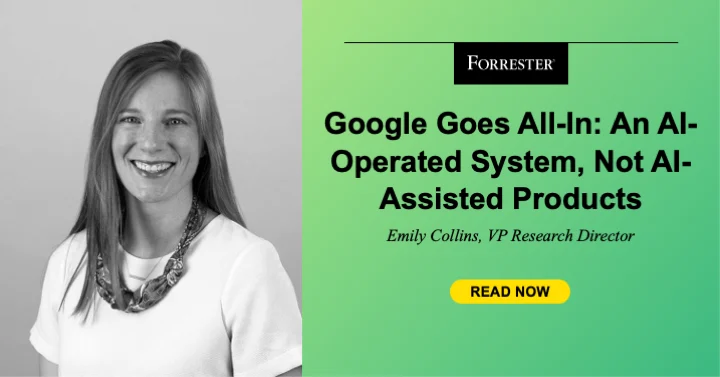
The AI Hegemony: Google’s Pivot from Assistant to Architect of the Digital Economy
Three years ago, the narrative surrounding Google was one of existential dread. As ChatGPT captured the public imagination and Microsoft aggressively leveraged its partnership with OpenAI to challenge the search status quo, industry observers openly speculated whether the "Google era" was nearing its sunset. Critics argued that the company’s "Innovator’s Dilemma"—the fear of cannibalizing its own high-margin search business—had left it vulnerable to leaner, more agile disruptors.
Today, that narrative has been decisively rewritten. Google has not only weathered the initial storm; it has reclaimed its pole position, effectively shifting the battleground from "AI-assisted products" to "AI-operated systems." With a massive $80 billion equity raise earmarked for AI infrastructure, Alphabet is signaling that the era of experimentation is over. The era of total system integration has begun.
Chronology of a Resurgence: From Defensive to Dominant
The trajectory of Google’s AI evolution since 2023 serves as a masterclass in corporate pivot strategy.
- 2023: The Existential Wake-Up Call: The meteoric rise of generative AI forced Google to reconcile its legacy search business with a new paradigm of conversational interaction. Internally, the company initiated a "Code Red," accelerating the development of its own large language models (LLMs).
- 2024: Foundational Stabilization: Google began rolling out Gemini across its ecosystem, moving away from fragmented AI features toward a unified, multimodal intelligence layer.
- 2025: The Infrastructure Build-Out: Recognizing that AI superiority is a function of compute power, Alphabet began the massive capital expenditure cycles necessary to own the underlying stack, culminating in the recent $80 billion funding drive.
- 2026: The Paradigm Shift: At the most recent Google Marketing Live, the company unveiled a roadmap where AI is no longer a "feature" but the core operating system of the internet, fundamentally altering how consumers find information and how marketers buy attention.
Google Search as the AI Gateway
The most visible manifestation of this shift is the redesign of the 25-year-old search bar. By expanding the interface to accommodate long-form, conversational, and multimodal queries, Google is conditioning billions of users to stop thinking of search as a list of links and start viewing it as a dialogue with an agent.
However, the transition is not without friction. Recent data from Forrester’s ConsumerVoices MROC, which surveyed 775 online adults across the US, UK, and Canada, paints a picture of a skeptical public. Despite the technical prowess of Google’s new interface, most respondents were unaware of the scale of these changes. More importantly, concerns regarding AI reliability and data privacy persist.
While 50% of surveyed users believe these updates will eventually improve search results, 60% expect their usage habits to remain unchanged in the near term. This "wait and see" approach suggests that for Google, technical innovation is only half the battle; building trust through consistent, high-quality, and reliable outcomes is the true hurdle.
Monetization in the Age of "Answers"
Perhaps the most significant development for the digital advertising ecosystem is the concept of "Ads that Answer." While competitors struggle to build nascent ad platforms from scratch, Google is leveraging its structural advantage: a mature, trillion-dollar monetization engine that is being seamlessly grafted onto conversational AI.
In the past, search advertising relied on the "ten blue links" model, where an ad was a distinct, often disruptive, block of content. In the new paradigm, commercial responses are embedded directly into the conversational flow. When a user asks a complex question about a purchase, the "answer" provided by the AI may inherently contain a commercial recommendation.
For the marketer, this blurs the line between Answer Engine Optimization (AEO) and paid search. As ads become less like discrete units and more like utility-driven suggestions, performance measurement becomes exponentially more complex. Visibility metrics are becoming increasingly opaque, forcing brands to move away from legacy KPIs toward a more holistic, integrated approach to search marketing.
From AI-Assisted Ads to AI-Operated Marketing
Google is actively positioning itself as the central orchestration layer for marketing. The shift is from a series of fragmented tools—where a marketer manages creative, bidding, and audience targeting separately—to an integrated, AI-driven workflow.
The Trade-Off: Efficiency vs. Agency
This transition brings a double-edged sword for the modern CMO. On one hand, Google offers unprecedented efficiency, speed, and cost-reduction through its algorithmic engines. On the other hand, these benefits come at the cost of "black-box" decision-making.
As Google’s systems (such as the Meridian modeling suite) demand more proprietary data and increased reliance on Google-controlled models, marketers are finding themselves with:
- Reduced Transparency: Decreased insight into how specific decisions are reached within the campaign lifecycle.
- Diminished Control: Less ability to manually adjust targeting or creative parameters as the algorithm takes the reins.
- Algorithmic Dependence: A heightened risk of "creative atrophy," where the pressure for high-volume content production leads to generic outputs that prioritize algorithmic engagement over brand identity.
Expanding Agentic Commerce: The Death of the Traditional Funnel
The introduction of the "Universal Cart" and advanced "Universal Commerce Protocol" capabilities marks the death of the traditional, linear purchase funnel. Google is moving commerce from a discrete, site-specific transaction to an ongoing, AI-assisted lifecycle.
By allowing users to buy items or book services directly within conversational search or via YouTube shopping ads, Google is effectively turning the search engine into the storefront. The Universal Cart, which persists across different web environments, acts as a shopping concierge that monitors price changes and manages the user’s intent over time.
Implications for Digital Strategy:
- The End of the Retail Website? As Google captures more of the transaction, the standalone brand website faces a secondary role. Brands must now prioritize "Answer-Engine Selling," ensuring their product data is structured not just for SEO, but for AI discovery.
- Measurement Challenges: Traditional funnel metrics (clicks, views, conversions) are becoming relics. Digital leaders must now account for "Agentic Discovery," where the success of a brand depends on whether Google’s AI agents choose to surface that brand in a conversational response.
- Strategic Visibility: The battleground has shifted to the "AI-mediated commerce journey." If a brand isn’t part of the conversation—or the cart—it effectively doesn’t exist in the new digital marketplace.
The Path Forward: Embracing the Machine
The "Answer Engine" race is no longer about who has the best chatbot; it is about who owns the plumbing of the internet. Google’s multi-billion dollar bet is that by integrating search, shopping, and marketing orchestration into a single, AI-operated layer, they can create an ecosystem so efficient that marketers and consumers will have no choice but to participate.
For digital leaders, the message is clear: the era of passive search participation is over. To survive in the Google-dominated AI future, organizations must pivot their strategies to focus on structured data, AI-readiness, and a willingness to trade legacy control for the efficiency of automated systems.
As the lines between discovery, evaluation, and purchase continue to dissolve, the brands that win will be those that can successfully navigate the black-box algorithms and provide the high-quality, trustworthy signals that Google’s AI agents require to function. The future of marketing is here, and it is entirely automated. The question remains: how much of your brand’s destiny are you willing to code into someone else’s engine?
This report was synthesized using insights from the 2026 Q2 CMO Pulse Survey and ongoing analysis of Google’s AI infrastructure. For organizations looking to navigate these shifts, deep-dive guidance sessions are available to help align your digital strategy with the new realities of AI-mediated commerce.
