
The Death of the Click: IAB Australia Unveils Roadmap for the Agentic AI Era
On June 18, 2026, the IAB Australia Future of Search Working Group fundamentally altered the conversation surrounding digital marketing. In a comprehensive 14-page report titled “Agentic AI: What Does It Mean for Search Marketers and How to Prepare?”, the industry body declared that agentic AI has graduated from a speculative technological trend to an operational necessity.
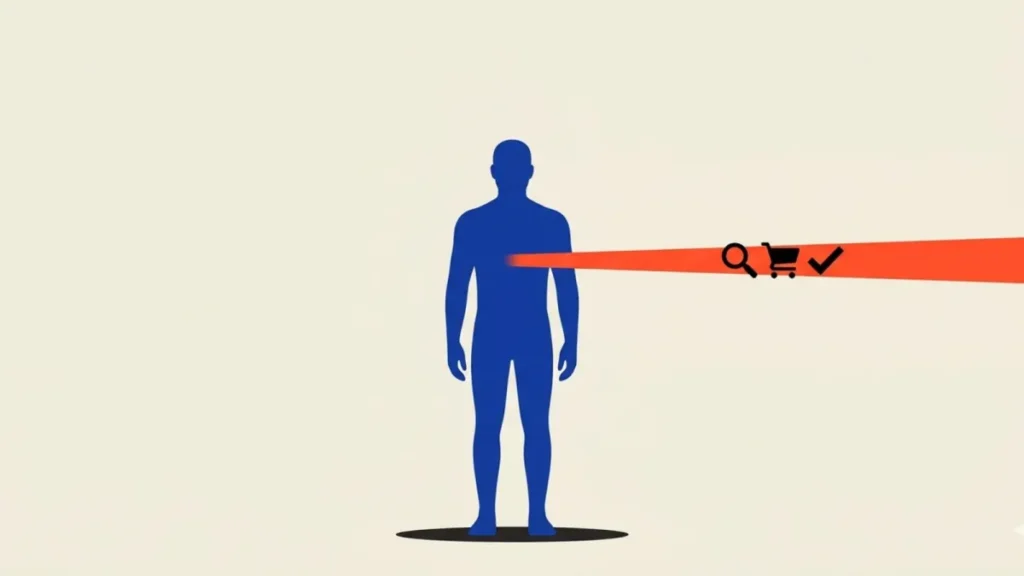
The report issues a stark warning to brands and agencies: the digital infrastructure that has sustained the search marketing industry for two decades—built on the foundational assumption of a human-initiated click—is now obsolete. As AI agents move from "response engines" that merely provide information to "execution engines" that perform complex tasks, the traditional marketing funnel is being compressed into a single, automated sequence of seconds.
Chronology of the Shift: From Zero-Click to Autonomous Execution
The transition toward agentic search did not happen overnight. It is the culmination of a multi-year evolution in how consumers interact with the web.
- December 2025: The IAB Australia Future of Search Working Group published its initial analysis on "instant answers." That paper marked the first industry-wide recognition that zero-click search experiences were rendering traffic-based metrics like click-through rates (CTR) increasingly irrelevant.
- January 2026: The IAB global forecast predicted a 9.5% growth in ad spend, driven largely by the integration of agentic systems into campaign execution and media buying.
- April 2026: HUMAN Security released its 2026 State of AI Report, noting that automated AI traffic was growing eight times faster than human traffic. Simultaneously, UK regulators warned that production systems were already operating beyond the scope of existing oversight frameworks.
- May 2026: The IAB Tech Lab Summit convened nearly 400 professionals to hash out the standards for machine-to-machine advertising infrastructure.
- June 16, 2026: Optable launched a self-assessment tool for publishers to gauge their “agentic readiness.”
- June 18, 2026: The IAB Australia report solidified the shift, providing the industry with the first cohesive framework for managing an environment where the consumer may never actually visit a website.
The Agentic Stack: Four Protocols Redefining Digital Architecture
The IAB report identifies four distinct protocol layers that constitute the "Agentic Stack." Understanding these is no longer optional for technical marketers, as they represent the plumbing through which future commerce will flow.
1. Agent-to-Agent Protocol (A2A)
Spearheaded by Google, A2A acts as the diplomatic layer of the internet. It allows agents from different platforms to establish trust, share credentials securely, and perform "delegation"—where a general-purpose agent offloads a specific task to a specialized agent. This is the mechanism that will allow a travel agent to "hire" a booking agent to complete a transaction without human intervention.
2. Model Context Protocol (MCP)
Developed by Anthropic and OpenAI, MCP solves the "silo problem." It provides a standardized way for agents to connect to external databases and APIs. By eliminating the need for custom integration code for every data provider, MCP allows agents to pull real-time data from disparate sources, creating a fluid bridge between an AI model and an enterprise’s internal tools.
3. NLWeb (Natural Language Web)
Microsoft’s contribution to the stack, NLWeb, changes how agents "read" a website. Rather than relying on AI to summarize a page (which risks hallucination), NLWeb allows an agent to query a website’s backend directly. This enables agents to perform specific actions—such as tracking a shipment or applying a loyalty discount—by communicating with the site’s database rather than trying to "click" on a button visually.
4. Universal Commerce Protocol (UCP)
Google’s UCP is the final piece of the transactional puzzle. It standardizes how payment, shipping, and loyalty information are exchanged between an agent and a retailer. According to the IAB, this turns a cumbersome 10-minute manual checkout process into a seamless 2-second confirmation.
Supporting Data: The Consumer Paradox
The report highlights a significant disparity between consumer readiness and consumer trust. While the technical infrastructure is rapidly maturing, the human element remains a point of friction.
Data cited in the report reveals that 60% of Australians expect to use agentic AI in their daily lives, with 58% of consumers actively looking for agents to replace manual website searching for shopping. Gartner predicts that by 2028, 70% of all customer service interactions will be resolved entirely within conversational AI interfaces.
However, trust is dangerously low. Only 14% of Australian respondents expressed trust in organizations to use AI responsibly. The top concerns cited were the lack of human connection (61%) and the potential for data misuse (56%). Crucially, 66% of users insist on having a "manual override" mechanism. The report argues that this is not a temporary hurdle, but a permanent design requirement: brands that fail to build transparency and intervention mechanisms into their AI infrastructure will suffer a "trust deficit" that no amount of marketing can fix.
Official Responses and Strategic Implications
The IAB Australia report is explicitly designed for the agency and brand-side marketers who have spent years optimizing for human behavior. It posits that "discoverability" has now replaced "awareness" as the top-of-funnel objective.
The Death of the Keyword-Rich Title
In the agentic era, emotional and "click-baity" product titles are a liability. An agent does not care about persuasive language; it cares about data. The report advises brands to move toward plain, factual, and complete product attributes. If a product title is keyword-stuffed, it risks confusing the agent, leading to the brand being excluded from the consideration set entirely.
Measuring Success: The Four Cs
The report introduces a new measurement framework to replace the increasingly irrelevant CTR:
- Consideration: Did the brand make the agent’s shortlist?
- Confidence: Did the interaction earn the user’s trust in the agent’s recommendation?
- Completion: Did the agent successfully fulfill the purchase?
- Continuation: Did the session deepen loyalty or trigger a logical next step?
Six Priority Actions for Brands
To avoid being sidelined, the IAB recommends six immediate steps for agencies and brands:
- Map the Journey: Identify exactly where agents will intervene in your current customer funnel—whether at discovery, comparison, or purchase.
- Align with Business Models: Retailers must focus on real-time API data for inventory and pricing; publishers must focus on machine-readability and structured content.
- Build Trust Infrastructure: Implement audit logs that track not just the output of an AI, but the "reasoning" behind it. Ensure users have a clear way to override decisions.
- Audit Discoverability: Validate that your schema.org, JSON-LD, and product feeds are perfectly formatted for machine consumption.
- Modernize Product Feeds: Move away from daily batch uploads. Agentic commerce requires real-time inventory updates via API.
- Monitor Global Markets: Keep a close watch on the US and UK, where AI-search features are typically deployed first, to prepare for their eventual arrival in the Australian market.
Conclusion: The New Operational Reality
The IAB Australia report serves as a wake-up call. The era of the "human-to-website" click is being replaced by the "agent-to-machine" execution. Brands that treat this as a simple trend to be monitored will find themselves invisible in the new digital economy. By shifting focus toward machine-readability, auditability, and real-time data architecture, marketers can ensure they remain relevant in a world where the consumer’s most important shopping assistant is an algorithm.
As the report concludes, the infrastructure shift is not merely a technical challenge; it is a fundamental transformation of the relationship between the brand and the consumer. Those who build for the agent now will own the market of tomorrow.
