
From Vanity Metrics to Revenue: The Evolution of Social Media into a Performance-Driven Powerhouse
For the better part of a decade, social media departments were viewed through the lens of "The Fun Department." It was a space for memes, quirky banter, and the occasional viral video that garnered millions of views but left executives wondering, "How does this actually impact our bottom line?"
That era is officially over. In a business landscape defined by tightening budgets and a relentless focus on efficiency, social media has shed its reputation as a mere branding playground. Today, it is a sophisticated, data-heavy channel that acts as a critical engine for business growth, customer acquisition, and measurable revenue.

The Paradigm Shift: What is Performance Marketing?
At its core, performance marketing is a results-oriented strategy where the advertiser pays only when a specific, predetermined action is completed. Whether it is a click, a lead submission, or a completed sale, the focus is squarely on outcomes rather than empty impressions.
For years, traditional marketing relied on "brand awareness"—a necessary but notoriously nebulous goal. While awareness is foundational, it has historically been difficult to quantify, often leading marketing departments to be categorized as "cost centers." When a company faces a downturn, these cost centers are the first to be pruned. In fact, data from The CMO Survey indicates that marketing expenses are slashed in 45% of cases when corporate profits fall short of expectations.

By shifting social media into a performance-driven model, marketers are flipping the script. Instead of being viewed as a drain on resources, social media is now being positioned as a high-ROI profit center. By utilizing modern tracking, attribution modeling, and deep-funnel analytics, social teams are finally able to prove that their efforts do not just generate "likes"—they generate customers.
The Chronology of Change: Why Now?
The transition toward performance-based social media did not happen overnight; it was forced by the dual pressures of economic contraction and technological advancement.
- 2021–2023 (The Reckoning): As the post-pandemic digital boom cooled, businesses began scrutinizing their "digital presence." Companies demanded to see a direct correlation between social media spend and customer acquisition costs (CAC).
- 2024 (The Tooling Phase): The proliferation of AI-driven analytics and improved attribution models made it possible for mid-level social teams to track user journeys across multiple touchpoints, finally connecting a tweet or a post to an actual sale.
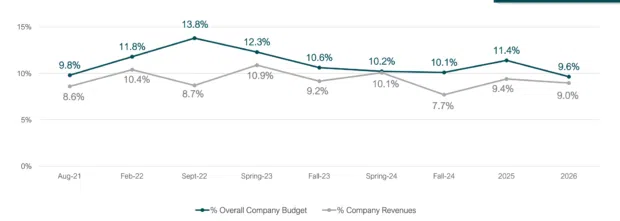
- 2026 (The Current State): With marketing budgets hitting a multi-year low—dropping to just 9.6% of overall company budgets—social marketers are no longer afforded the luxury of "playing around." Those who cannot prove ROI are increasingly finding themselves without a seat at the leadership table.
Supporting Data: The Case for Accountability
The data is clear: the industry is moving away from vanity metrics. According to recent reports, organizations that align their social media KPIs with broader business goals, such as profitability and customer retention, are seeing a 30% increase in budget stability compared to those that focus solely on engagement rates.
The "Vanity vs. Value" gap is the primary challenge for the modern marketer. While a "like" or "comment" provides social proof, it rarely provides a direct conversion. However, when those engagement metrics are used as a proxy for "intent," they become valuable. For instance, a user who shares a product video is significantly more likely to convert than a user who simply views it. By tracking these behavioral signals, businesses are lowering their cost-per-acquisition (CPA) by an average of 15–20%.

Strategic Implementation: Seven Pillars of Performance
To transform a social media account into a performance-driven asset, businesses must adopt a systematic, seven-step approach:
1. Alignment with Business Objectives
Your social goals must mirror the company’s P&L statement. If the CEO is focused on "profitable growth," your KPIs should not be "follower count," but "cost-per-lead" and "customer lifetime value." Before crafting a single post, conduct an audit of your organization’s OKRs (Objectives and Key Results) to ensure your social strategy provides a direct tailwind to those targets.

2. Smart Data Tracking
Data is useless without a system. You need a robust stack that tracks the entire customer journey. This includes:
- Conversion tracking: Linking social clicks to specific website actions.
- Social Listening: Monitoring brand sentiment to prevent PR crises that could affect stock price or market share.
- Attribution Modeling: Recognizing that social is often the first point of contact in a multi-channel funnel.
3. Rigorous Analysis and Benchmarking
Performance data is meaningless in a vacuum. You must establish internal benchmarks (comparing your current performance to your historical data) and external benchmarks (comparing your performance against your direct competitors). Use these findings to pivot strategy in real-time rather than waiting for an annual report.

4. Reporting on ROI
The language of the boardroom is currency. Your reporting should be formatted in dollars and cents. If you spent $5,000 on a campaign and generated $20,000 in attributed revenue, lead with that. Use ROI analysis to show not just what you spent, but what you saved by optimizing for higher conversion rates.
5. Proven Tactics: A/B Testing and CRO
Never guess when you can test. A/B testing allows you to isolate variables—such as headlines, imagery, or call-to-action buttons—to see what truly drives performance. Couple this with Conversion Rate Optimization (CRO), which ensures that once you get the traffic to your landing page, those visitors are actually buying.

6. Documenting Success Stories
Data alone is dry; stories are persuasive. When you see a spike in conversions, perform a "post-mortem" to identify the exact catalyst. Perhaps a specific piece of content was amplified by an influencer, leading to a surge in high-intent traffic. Documenting these wins builds institutional trust and proves the value of the social team.
7. Strategic Recommendations
As you gather data, you will become the most knowledgeable person in the room regarding customer behavior. Do not just report numbers—offer insights. Suggest product changes based on social listening, or recommend shifts in advertising spend based on which platforms are delivering the highest quality leads.
Implications for the Modern Enterprise
The shift to performance marketing has profound implications for how social teams are structured. It is no longer enough to hire "creatives." Modern social teams require a hybrid skillset: they need community managers who understand brand voice, but they also need analysts who understand Google Analytics, CRM integration, and attribution modeling.
Furthermore, this shift is erasing the silos between marketing, sales, and product development. When social media is a performance channel, it informs the product roadmap through social listening and feeds the sales funnel through high-quality lead generation.

Official Perspective: The Role of Tools
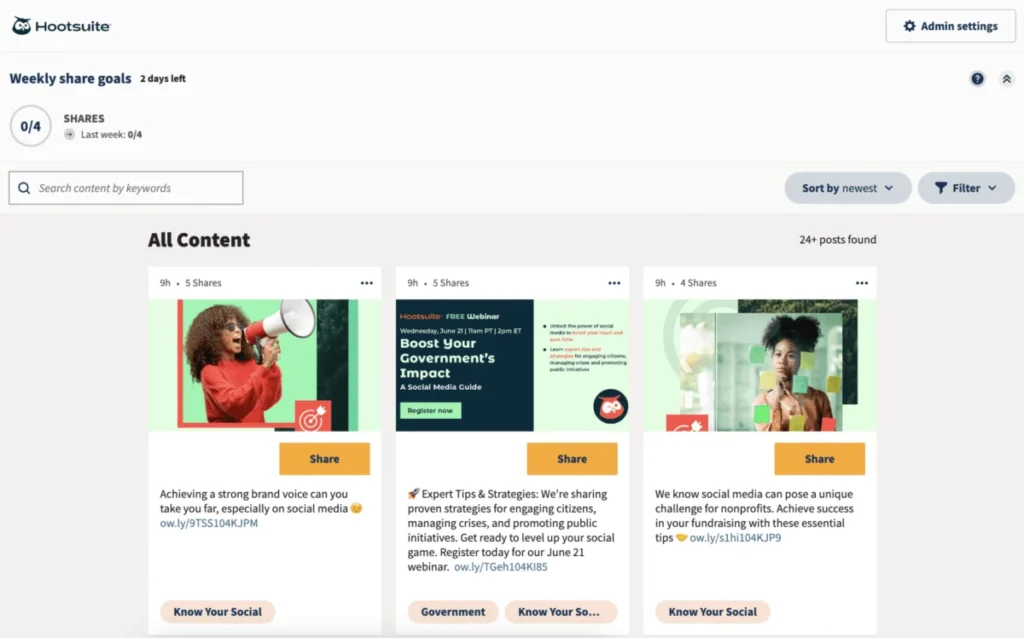
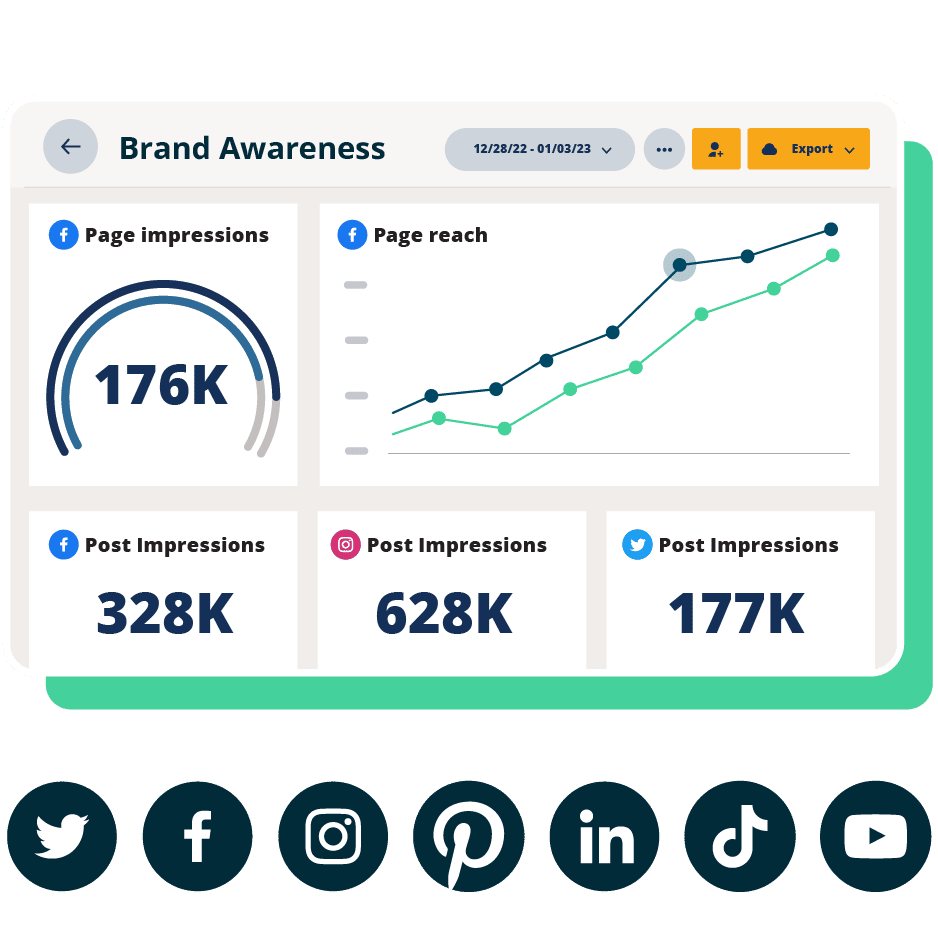
Industry leaders like Hootsuite have pivoted their platforms to accommodate this transition. By integrating advanced analytics with social listening, competitive benchmarking, and ROI-specific reporting, these tools provide the "single source of truth" that managers need to defend their budgets.
As one industry expert noted: "The tools we use today do more than schedule posts; they act as a bridge between the creative intent of a campaign and the financial outcome of a sale. If you aren’t using your analytics dashboard to influence your next budget proposal, you are leaving money on the table."

Conclusion: The Future is Accountable
The transition from a "fun" department to a performance-driven powerhouse is not just a trend—it is a survival mechanism. As social media platforms continue to mature, the barrier to entry for brands remains low, but the cost of inefficiency is rising.
The social media marketers of the future will be defined by their ability to marry the art of engagement with the science of revenue. They will be the ones who can walk into a boardroom, point to a dashboard, and explain exactly how a social campaign contributed to the company’s bottom line. In this new era, the value of a "like" is only as good as the revenue it eventually triggers. For those ready to embrace this data-first mindset, the opportunities for growth are, quite literally, viral.
