
The New Frontier of Amazon Profitability: Why CPC Inflation is a Structural Threat
For years, the playbook for Amazon success was relatively straightforward: refine your keywords, optimize your bidding strategies, and scale your advertising spend to capture market share. Growth often masked operational inefficiencies, and the rapid expansion of the Amazon marketplace provided a safety net for those with thinner margins. However, that era has come to an abrupt end.
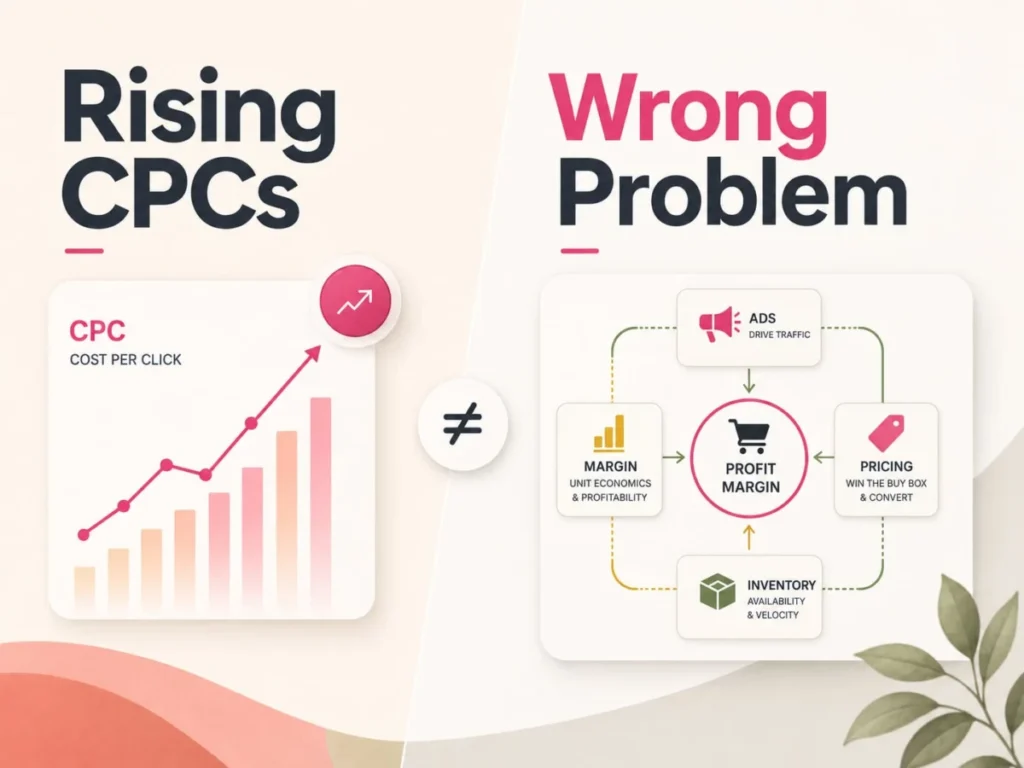
Amazon Cost-Per-Click (CPC) inflation has evolved from a manageable friction point into a structural threat to net profitability. According to recent data from the Trellis platform, average CPCs have climbed by approximately 10% year-over-year, while total ad spend has surged by 27%. This disconnect indicates that brands are spending significantly more just to maintain their existing visibility—a trend that is quickly becoming unsustainable.
The Shift: From Isolated Optimization to Integrated Operations
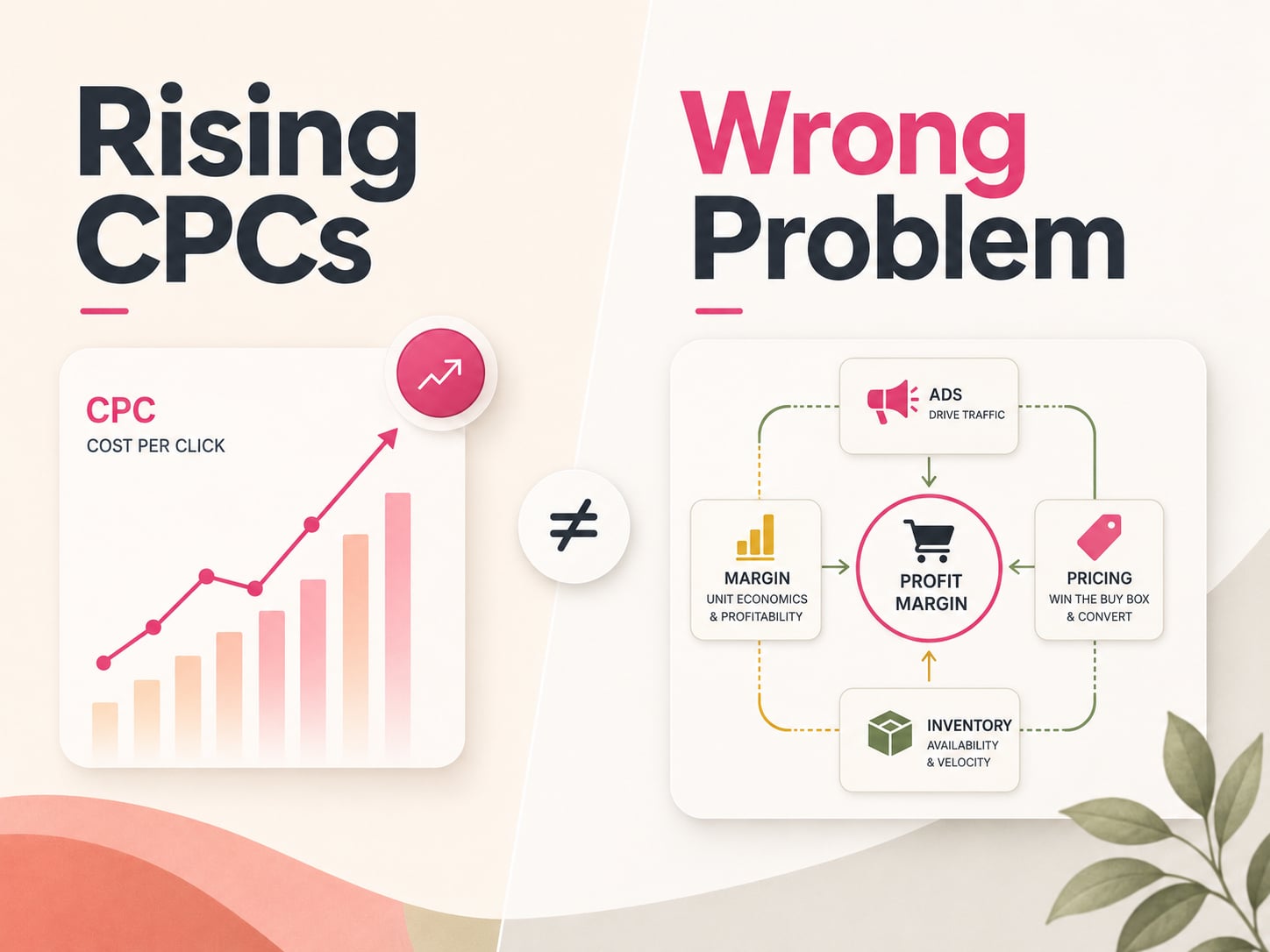
The core issue facing modern Amazon sellers is not merely the rising cost of traffic. It is the emergence of a multi-directional pressure cooker where advertising, pricing, and inventory management are colliding. Many brands continue to respond to these challenges with advertising-only adjustments, ignoring the reality that their ad spend is being undermined by disconnected operational systems.
In the past, sellers could absorb inefficient ad spend through organic growth and category expansion. Today, the marketplace has matured. The “easy wins” have been exhausted, and the competitive landscape has shifted toward financial resilience. Winning on Amazon no longer requires simply outbidding a competitor; it requires the ability to sustain a higher cost-of-acquisition while maintaining the unit economics necessary to fuel long-term visibility.
A Chronology of the Amazon Advertising Evolution
To understand the current crisis, one must look at the evolution of the platform:
- The Growth Phase (2015–2019): Amazon’s advertising ecosystem was characterized by low entry costs and high organic growth. Sellers focused on basic keyword harvesting and manual campaign management. The primary goal was reach.
- The Automation Phase (2020–2022): As competition intensified, “smarter” advertising became the differentiator. The rise of sophisticated bidding algorithms and automated campaign structures allowed early adopters to carve out massive market share. The chasm between professional operators and casual sellers widened significantly.
- The Structural Maturity Phase (2023–Present): Today, automation has become a commodity. Most established brands utilize similar, high-level tools. The focus has shifted from how to automate to what data informs that automation. We are now in an era where advertising is inextricably linked to pricing and supply chain health.
Supporting Data: The Margin Erosion Trap
The reliance on traditional metrics—specifically ACoS (Advertising Cost of Sales), TACoS (Total Advertising Cost of Sales), and ROAS (Return on Ad Spend)—has created a dangerous blind spot for many brands. While these metrics provide a snapshot of ad efficiency, they fail to account for the "margin leakage" that occurs when pricing and inventory are not synchronized with ad spend.
The Math of Margin Leakage
When a brand nudges its price upward to protect margins during a high-cost advertising period, the conversion rate often dips. If the advertising algorithm is not calibrated to recognize this price change, it will continue to bid as if the conversion rate is stable. This leads to:
- Inefficient Spend: The algorithm pays for clicks that are less likely to convert.
- Visibility Loss: As conversion rates drop, the Amazon algorithm lowers the product’s organic and paid ranking.
- The Discount Spiral: To recover lost rank, the seller is forced to lower prices and increase ad spend, further compressing the margins they were initially trying to protect.
Data indicates that even minor, frequent pricing adjustments—such as two changes per week—can yield 2–5% in margin recovery. This is not just a pricing win; it is an acquisition win, as it preserves the capital required to maintain competitive bidding pressure.
Official Industry Perspectives: The Need for Coordination
Industry experts, including analysts at the Trellis platform, argue that the "siloed" approach to Amazon management is the primary cause of modern profitability failure. The most successful brands are those that treat their pricing and margin as an integral part of their acquisition strategy.
"Sellers with clearer margin visibility can tolerate higher CPCs because they understand the true cost of each unit," note analysts. "Brands with responsive pricing can protect their conversion rates during volatile promotional windows, essentially using margin as a defensive moat against competitors who are reacting manually."
This perspective shifts the definition of a "strong brand." The strongest operators are no longer necessarily those with the highest advertising budgets, but those with the most responsive operations. By coordinating pricing, inventory, and advertising into a single, data-driven ecosystem, these brands can absorb marketplace volatility that would otherwise destabilize their competitors.
Implications for Future Market Share
The implication for brands is clear: the era of "set it and forget it" advertising is over. The competitive advantage is no longer found in the gears of campaign mechanics alone, but in the integrity of the data powering those gears.
The New Competitive Standard
- Operational Integration: Brands must break down the walls between their pricing tools and their ad platforms. If these systems are not "talking" to each other, the brand is effectively operating in the dark.
- Profitability as Defense: Because Amazon’s algorithm favors consistency in sales velocity and inventory stability, maintaining profitability is a prerequisite for long-term visibility. If a brand cannot sustain its margins, it cannot sustain its rank.
- Resilience over Velocity: The brands that will capture market share in the coming years are those that can maintain their presence during periods of high CPC inflation without sacrificing their bottom line.
Moving Beyond Isolated Optimization
Sellers must stop viewing the Amazon console as a standalone dashboard. Every price change is an advertising event; every inventory stock-out is a ranking event. When these variables are uncoordinated, the result is predictable margin leakage.
The future of Amazon commerce belongs to "connected operations." This means implementing automated systems that automatically adjust bids based on real-time pricing data, and vice versa. It involves monitoring not just the cost of a click, but the contribution margin of every unit sold after all fulfillment and promotional costs are realized.
Conclusion: The Path Forward
The structural threat posed by rising CPCs is real, but it is not insurmountable. It forces a necessary evolution in how brands operate. Those who continue to manage their business through isolated, manual interventions will find themselves increasingly squeezed by the compounded pressures of a mature marketplace.
Conversely, brands that prioritize operational agility—those that treat pricing, advertising, and inventory as a single, unified acquisition machine—will find themselves with a distinct, defensible advantage. By focusing on the interplay between these variables, brands can move beyond the "advertising-only" trap.
In the current landscape, the goal is not to win the race to the bottom on CPCs, but to build a business that is financially resilient enough to outlast the competition. Success on Amazon is no longer about who spends the most; it is about who can spend with the most clarity, the most speed, and the most coordination. As the platform continues to mature, those who master this integration will be the ones to claim the largest share of the digital shelf.
