
Decoding the Disruptors: How Uber, Airbnb, and Spotify Engineered Global Dominance
In the modern digital economy, the term "disruptor" is often used loosely, but for companies like Uber, Airbnb, and Spotify, it is a descriptor of their fundamental DNA. These three titans did not merely enter their respective markets; they fundamentally rewrote the rules of engagement. By transitioning from scrappy startups to global household names, they have provided a masterclass in scalable growth.
While their industries differ—transportation, hospitality, and music—the underlying mechanics of their success share a striking commonality. They moved away from rigid, traditional business models and embraced an agile, experimentation-first approach. This article deconstructs the five core growth pillars that propelled these giants to the top, offering a roadmap for modern businesses looking to replicate that scale.
1. The Culture of Perpetual Experimentation
For industry leaders, growth is not a destination; it is a continuous scientific inquiry. Uber, Spotify, and Airbnb have institutionalized a culture of "constant testing," where the status quo is viewed as a temporary state rather than a permanent solution.
From Black Cars to Global Logistics
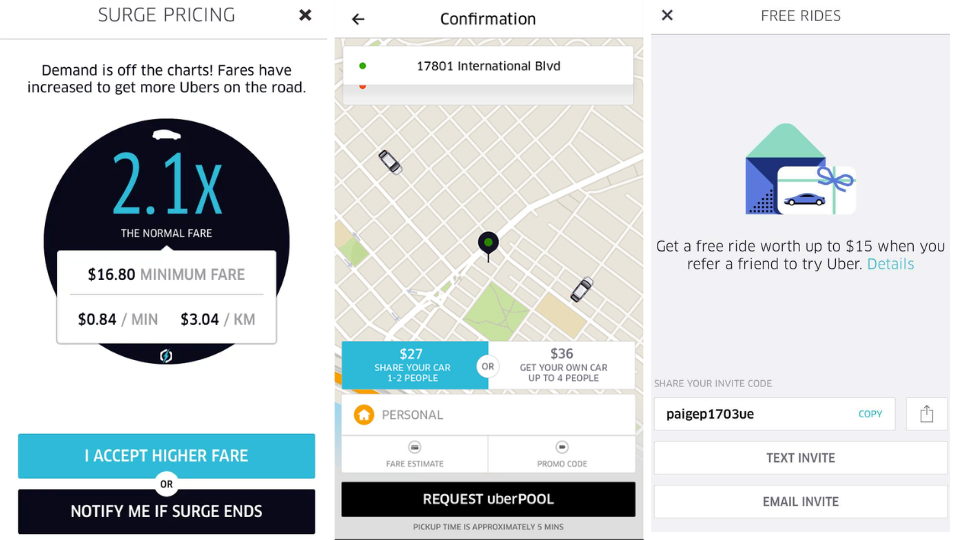
Uber’s ascent was not a linear path. It began as a niche, high-end "UberCab" service for the elite. However, the company’s ability to pivot based on real-world data allowed it to expand into mass-market offerings like UberX, UberPOOL, and eventually the logistical powerhouse of UberEATS. Each expansion was an experiment designed to test the elasticity of their platform. By introducing UberPOOL, the company tested the hypothesis that price-sensitive commuters would trade travel time for significant cost savings. The data confirmed the viability of shared mobility, turning a speculative test into a core revenue driver.

The Visual Power of Trust (Airbnb)
In its infancy, Airbnb faced a massive barrier to entry: the "stranger danger" factor. Users were hesitant to book stays in homes they had only seen through low-quality, amateur photos. Recognizing this as a psychological friction point, Airbnb launched an experiment to offer professional photography services to its hosts. This was not just a marketing tactic; it was a conversion-rate experiment. The data revealed a direct correlation between high-fidelity imagery and booking frequency. By removing this barrier, Airbnb effectively commoditized trust, transforming it into a standard platform requirement.
Spotify’s Algorithmic Feedback Loop
Spotify’s dominance in the music streaming sector is anchored in its obsession with user behavior. Their move into podcasts—specifically through the acquisition of exclusive content like The Joe Rogan Experience—was a calculated experiment to diversify their revenue streams and increase time-spent-on-platform. By treating content acquisition as a series of tests rather than a blanket strategy, Spotify successfully navigated the transition from a music library to an audio entertainment ecosystem.
2. Data-Driven Decision-Making: Beyond Intuition
In the era of Big Data, relying on gut instinct is a liability. The world’s fastest-growing companies operate on a feedback loop where user data informs every product iteration.
The Science of Dynamic Pricing
Uber’s "Surge Pricing" remains one of the most polarizing yet effective implementations of data-driven modeling. By analyzing traffic, weather, and real-time demand, the platform balances the marketplace dynamically. This ensures that when demand is high, supply is incentivized to join the network, maintaining service reliability.
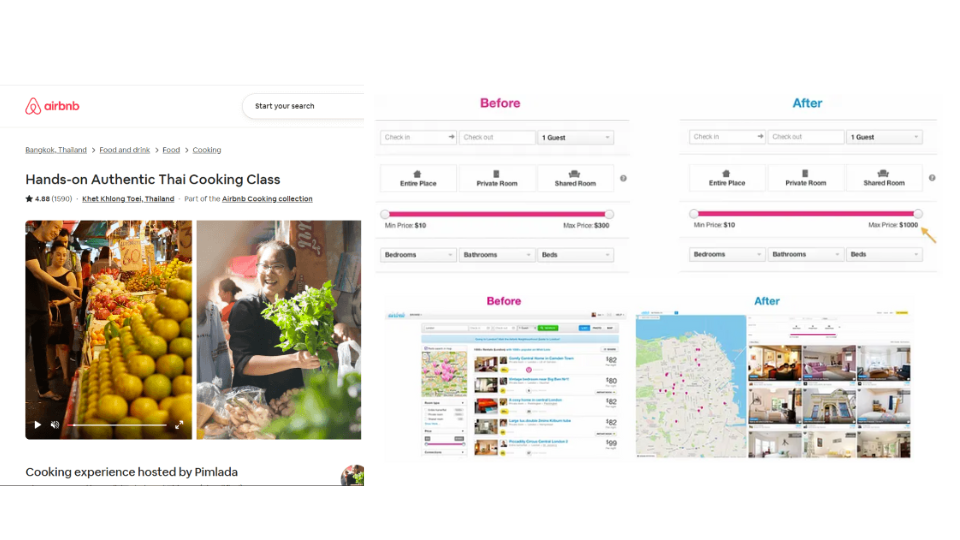
Similarly, Airbnb’s "Smart Pricing" algorithm processes millions of data points—seasonality, local events, and competitor pricing—to guide hosts toward the optimal price point. By automating this, Airbnb removes the anxiety of pricing for the host while maximizing the likelihood of a booking, creating a frictionless transaction for the guest.
A/B Testing as a Core Competency
Spotify treats its interface as a living product. Through continuous A/B testing, they evaluate everything from button placement to recommendation engine tweaks. By measuring engagement metrics against control groups, they ensure that every change contributes to user retention. This is not about guessing what users want; it is about observing what they actually do.
3. The "Fail Fast" Philosophy
Innovation is inherently risky, but the greatest risk is stagnation. Uber, Airbnb, and Spotify have built internal structures that de-stigmatize failure, viewing it as a necessary byproduct of rapid iteration.
Iteration as a Competitive Advantage
At Airbnb, the engineering team operates under the principle that not every experiment will succeed, but the speed at which one learns from failure determines the winner. This "fail fast" mindset allowed them to pivot away from underperforming features quickly, focusing resources on what moved the needle.
Uber’s history is littered with aborted experiments—services that didn’t catch on or geographic expansions that hit regulatory walls. Yet, because the company maintained a culture of quick pivoting, these "failures" were simply discarded, allowing the core business to remain lean and responsive to the markets that were thriving.
4. Cross-Functional Collaboration: Breaking the Silos
Growth is not the responsibility of a single department. It is a byproduct of seamless collaboration between engineering, marketing, data science, and product design.
The Spotify Model
Spotify is famous for its "Squad" model, where small, cross-functional teams operate like mini-startups. A squad might include developers, designers, and data analysts working on a single feature. This structure eliminates the bureaucratic friction often found in traditional corporations. When engineering and marketing sit at the same table, the product launch is not just technically sound—it is optimized for market adoption from day one.
The Airbnb Synergy
Airbnb leverages cross-functional collaboration to ensure that every new feature serves both sides of its marketplace: the host and the guest. When they launched the "Experiences" feature, they didn’t just have developers write code; they brought in local travel experts, customer support leads, and marketing strategists to ensure the launch was culturally relevant and operationally feasible.
5. The Obsession with Seamless User Experience (UX)
If the technology is complicated, the growth will be capped. The common denominator for these three giants is a relentless commitment to reducing user friction.
- Uber: By turning a complicated, multi-step process (hailing a taxi, explaining the route, paying with cash) into a "tap-to-ride" experience, they turned a chore into a convenience.
- Airbnb: By standardizing the booking process and ensuring that property listings are as reliable as hotel descriptions, they removed the "gamble" from vacation rentals.
- Spotify: By creating an interface that feels like a personal music concierge, they solved the "paradox of choice." Users don’t have to search for music; the app brings the music to them.
Chronology of Disruption: A Retrospective
- 2008-2010 (The Foundation): All three companies focused on solving a single, painful friction point. Uber (transportation costs), Airbnb (lack of affordable, unique travel options), and Spotify (music piracy and lack of accessibility).
- 2011-2015 (The Scale-Up): The focus shifted to network effects. Airbnb incentivized host reviews; Uber incentivized driver availability; Spotify incentivized playlist sharing.
- 2016-Present (The Ecosystem Era): These companies transitioned from singular services to broad platforms. Uber moved into delivery and freight; Airbnb moved into experiences and boutique stays; Spotify moved into podcasts and audiobooks.
Implications for Today’s Businesses
The lessons from these disruptors are clear: growth is a science, not an art. To compete in today’s market, businesses must:
- Democratize Experimentation: Allow teams at every level to test hypotheses.
- Anchor Strategy in Data: Move beyond "best practices" and listen to what your specific user data is telling you.
- Prioritize UX Above All: In a world of infinite options, the simplest experience wins.
As these companies continue to evolve, they serve as a reminder that the most successful businesses are those that never stop starting. They remain, at their core, companies that are constantly testing, learning, and failing forward to meet the ever-changing needs of the global consumer.
