
Beyond the Algorithm: Uncovering the Hidden Social Video Trends Shaping 2025
The creator economy is no longer a monolith. As social platforms evolve from simple content hubs into complex entertainment ecosystems, the "one-size-fits-all" strategy for video production has officially become obsolete. At this year’s VidCon, Jill Nicholson, Chief Marketing Officer at Tubular Labs, took the stage to dissect the subtle, high-impact shifts that are currently driving the next wave of the creator economy.
Nicholson’s presentation, now synthesized into an extensive industry report, highlights patterns that many brands and creators are currently overlooking. From the specific psychological triggers of device-based consumption to the ROI of unconventional brand partnerships, these insights provide a roadmap for navigating the volatile landscape of 2025.
The Device-First Mandate: Why Context Dictates Content
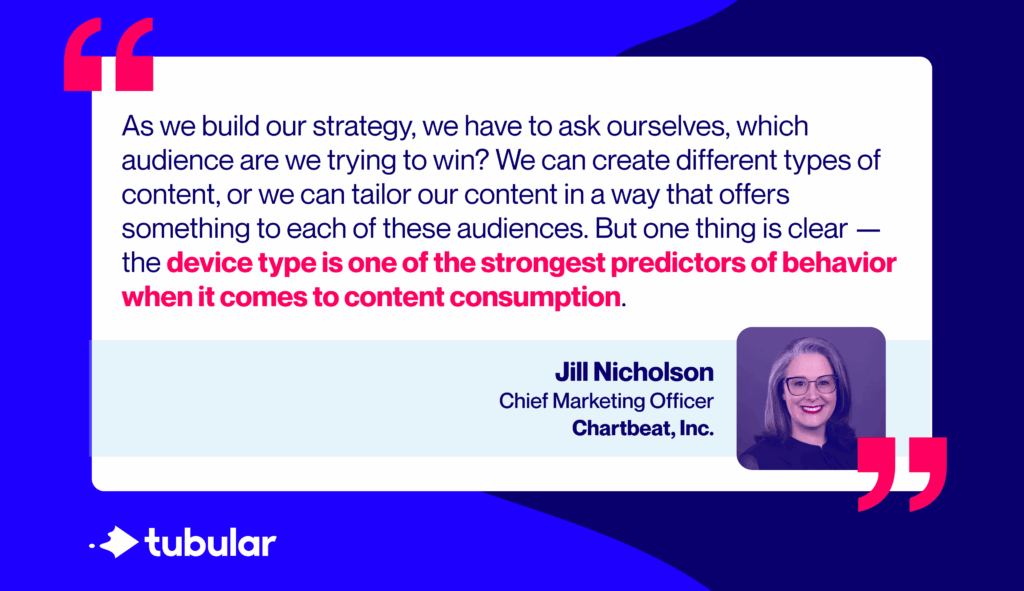
For years, the industry focused on the "how" of content creation—lighting, editing, and pacing. However, the data presented by Nicholson suggests that the "where"—specifically, the device being used—is the single most significant predictor of viewer retention.
The Connected TV (CTV) Shift
The data reveals a stark divide in consumption behavior. On mobile devices, the mandate is speed and brevity. Users are often consuming content in "micro-moments"—waiting for a bus, standing in a coffee line, or multitasking. Consequently, short-form, high-energy content dominates these screens.
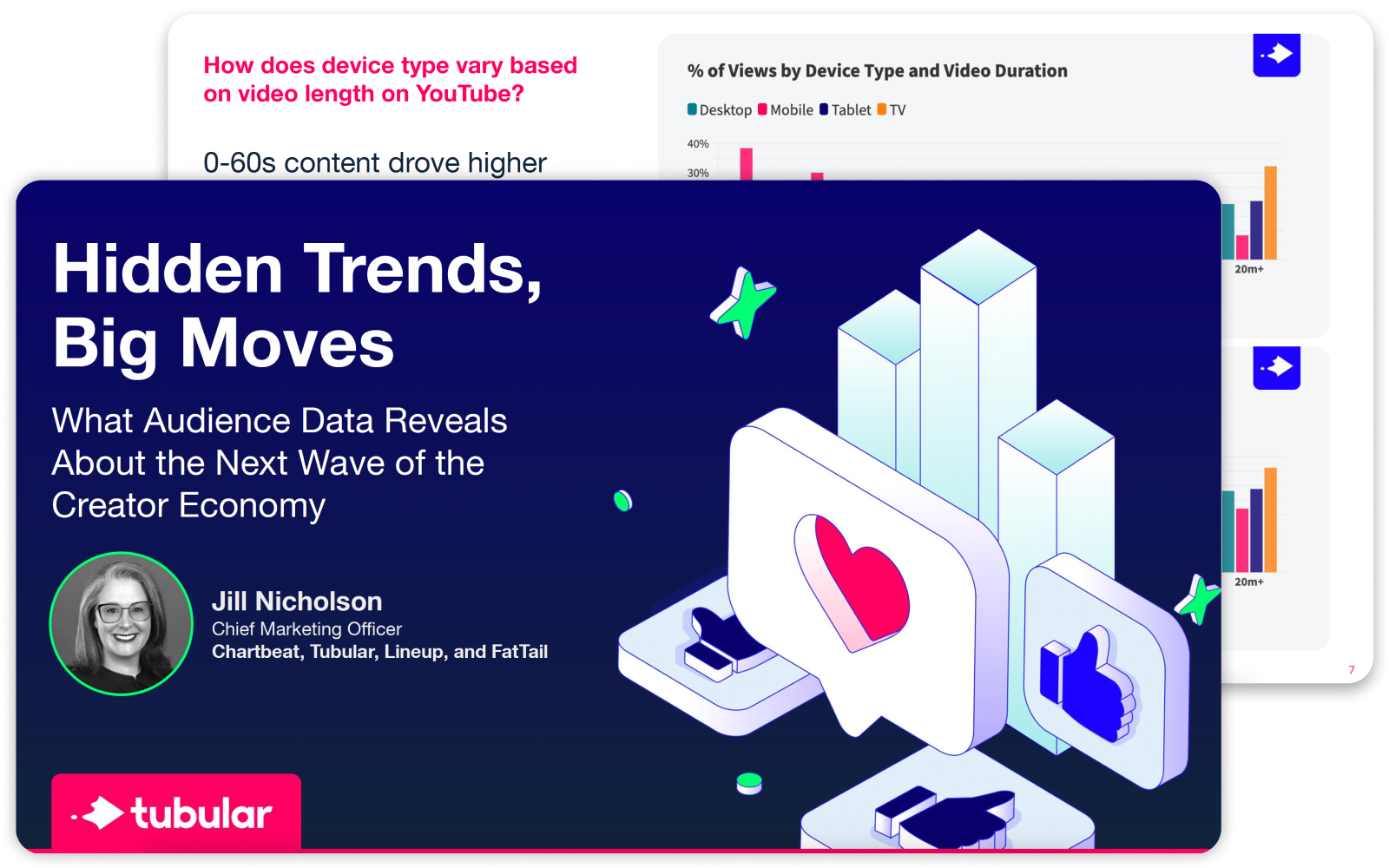
However, the rise of Connected TVs (CTV) has fundamentally altered the long-form landscape. When viewers shift from their smartphones to the living room television, their psychological state changes. They are no longer in "snack mode"; they are in "lean-back mode." The findings demonstrate that on CTVs, audiences are significantly more likely to engage with content that exceeds the 20-minute mark.
For creators, this means that a single video asset should no longer be treated as a static file. Instead, successful creators are now architecting "content cascades": cutting a long-form, deep-dive video for the living room audience while creating punchy, high-retention clips for mobile scrolling. The device-first approach is no longer optional; it is the cornerstone of modern audience retention.
The Power of the Unexpected: Breaking Silos Through Collaboration
Perhaps the most intriguing revelation from the report is the changing nature of brand collaborations. Traditionally, brands have sought to partner with influencers within their own vertical—beauty brands worked with beauty influencers; gaming brands worked with gamers.
The data indicates that this "safe" strategy is hitting a point of diminishing returns. Audiences are increasingly fatigued by predictable, transactional influencer marketing. In contrast, "unexpected" collaborations—where brands cross-pollinate with creators from entirely different categories—are yielding significantly higher engagement metrics.

The Nivea Case Study
The report highlights a masterclass in this approach: the partnership between skincare giant Nivea and food-and-drink creator @Onezwambola. By stepping outside the beauty bubble, Nivea was able to tap into a fresh, highly engaged demographic that was not already saturated with skincare advertisements. The result was a staggering 3x increase in engagement within the first seven days of the campaign.
This trend suggests that brands should stop looking for "industry experts" and start looking for "cultural bridges." When a brand partners with an influencer whose audience is adjacent but distinct, the content feels less like an ad and more like a collaboration, thereby bypassing the consumer’s subconscious "ad-blindness."
The AI-Upload Paradox: Quantity vs. Quality in Gaming
The gaming sector on YouTube remains the most competitive arena in the creator economy. With the advent of accessible generative AI tools, the threshold for creating gaming content has plummeted. This has led to a fascinating, albeit contentious, debate regarding upload frequency.
The Efficiency Trap
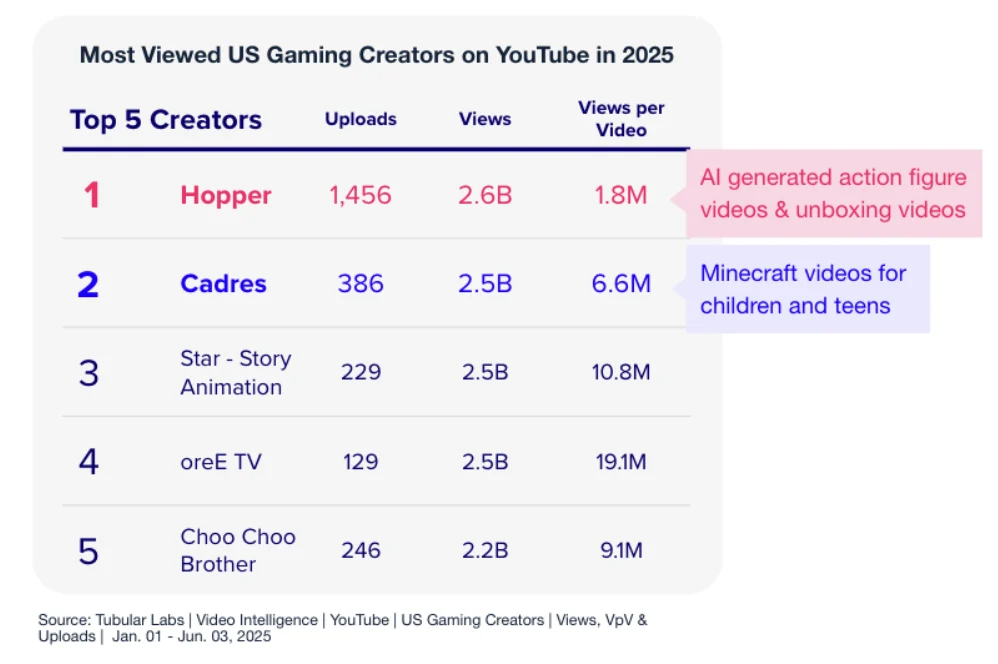
The report provides a granular look at the top U.S. gaming creators, contrasting their total view counts against their views-per-video averages. The findings present a cautionary tale for those looking to "automate" their success:
- The AI-Volume Strategy: Some creators are utilizing AI to churn out high volumes of content daily. While this does lead to impressive total view counts, the "views per video" metric is significantly lower compared to human-centric creators.
- The Human-Centric Strategy: Creators who prioritize human-led storytelling, high-level editing, and authentic personality are posting fewer videos, yet their individual videos are garnering significantly higher engagement and watch-time.
The math is sobering: If a high-volume AI creator were to match the per-video engagement of a human-centric creator, their total views would increase from 2.6 billion to 9.6 billion. The conclusion is clear: AI can help you scale your output, but it cannot currently replicate the deep, emotional resonance that human creators build with their communities.
For the top gaming creators of 2025, the "golden mean" appears to be roughly four uploads per day—a pace that is sustainable only when the creator strikes a perfect balance between high-quality human production and AI-assisted workflow support.
Implications for the Future: Strategy as a Dynamic Asset
The overarching theme of the findings is that the "hidden" trends of 2025 are, in fact, responses to audience maturation. Audiences are no longer passive recipients of content; they are sophisticated consumers who intuitively understand the difference between a bot-generated video and an authentic human experience.
Turning Insights into Action:
For brands and creators looking to capitalize on these shifts, the strategy moving forward should follow a three-pronged approach:

- Contextual Optimization: Audit your content calendar. Ensure that your long-form assets are being specifically optimized for the CTV experience, while your short-form content is being engineered for the mobile environment’s rapid-fire engagement patterns.
- Creative Cross-Pollination: Stop looking for creators who look like your brand. Start looking for creators who occupy the interest zones of your potential customers. A beauty brand does not need another beauty influencer; it needs a lifestyle, tech, or even food creator who can tell a story that integrates the product naturally.
- The Human-AI Equilibrium: Do not let AI dictate your content strategy. Use AI for administrative tasks, trend research, and rapid-fire production of minor clips, but reserve the "hero" content for human creators. The data confirms that while volume might get you views, connection gets you loyalty.
The Road Ahead
As the creator economy continues to expand, the divide between those who succeed and those who stagnate will be defined by their ability to decode these emerging patterns. The days of "posting and praying" are over. The future belongs to those who view their social video strategy as a dynamic, data-backed asset that shifts in real-time according to how, where, and why their audience is watching.
For those eager to dig deeper into the granular data, the full report—Hidden Trends & Big Moves—is available via the Tubular Labs website. In an industry defined by its constant flux, these insights provide the necessary stability to pivot with confidence and intention. The next wave of the creator economy isn’t just coming—it’s already here, and those who ignore the data do so at their own peril.
