
The Dawn of the Agentic Brand: Why the PRISM Model is the New Blueprint for AI-Driven Marketing
Technology was once a tool we operated; today, it is an environment we inhabit. The rise of Artificial Intelligence has fundamentally shifted the nature of our digital existence from transactional to conversational. As AI agents move from simple information retrieval to the generation of complex, context-aware content, the bridge between consumer and corporation is being rebuilt. In this new "Agentic Economy," the traditional paradigms of branding—once sufficient to capture human hearts—are facing an existential crisis.
The Evolution of the Connection: From Archetypes to Agents
For over two decades, the "12-Brand Archetype" model, popularized by Margaret Mark and Carol Pearson in The Hero and the Outlaw, has served as the gold standard for brand building. These archetypes provided a rational framework to guide the irrational human behavior that defines emotional loyalty. By assigning a personality—The Sage, The Rebel, The Lover—brands could ensure consistency across billboards, television spots, and packaging.
However, Arjan Kapteijns, former CEO of Saatchi & Saatchi Netherlands, argues that this model is no longer enough. In his exploration of "Agentic Lovemarks," Kapteijns posits that we are entering an era where consumers form deep emotional bonds not just with companies, but with the digital agents that represent them. The traditional, static archetype is too broad; it leaves too much room for AI interpretation, risking a fragmented brand experience that changes with every interaction.
Chronology of the Shift: The Path to the PRISM Model
The transition to the agentic era can be tracked through three distinct stages of marketing evolution:
- The Era of Emotional Persuasion (Early 20th Century – 2000s): Marketing was defined by the psychology of emotion. The objective was to create a visceral link between the consumer and the brand to drive repeat purchasing.
- The Archetypal Era (2000s – 2024): The codification of brand personalities using the 12-archetype framework. This allowed for visual and narrative consistency across human-led marketing channels.
- The Agentic Era (2025 – Present): The emergence of the "Legible-Lovable" standard. As defined by Thomas Marzano, brands must now be "legible" to AI systems—meaning they must be structured as machine-readable data—while remaining "lovable" to human users.
The Legible-Lovable Law: Bridging Machines and Humans
The core challenge for modern marketers is the "Legible-Lovable Law." In a world where AI agents negotiate, recommend, and act on our behalf, a brand must be optimized for the machine’s logic while retaining its human charm. If a brand is not "legible" to an AI, it simply does not exist in the search results or the curated recommendations of the future.
Conversely, if a brand is only legible—functional and robotic—it fails to earn the "Lovemark" status that ensures long-term loyalty. The PRISM model emerges here as the bridge, providing the granular instruction sets that AI needs to deliver a brand-consistent, human-like experience in real-time.

The PRISM Model: A Deep Dive into Personality
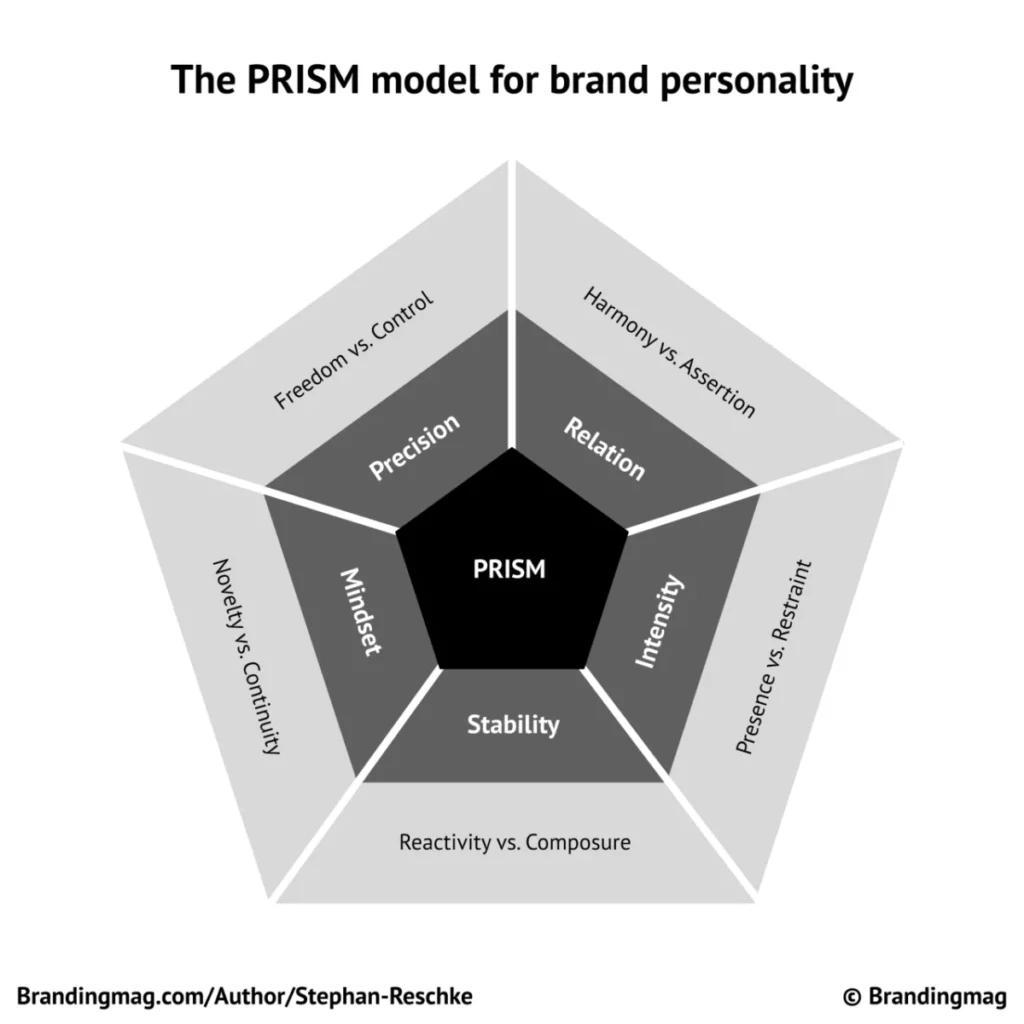
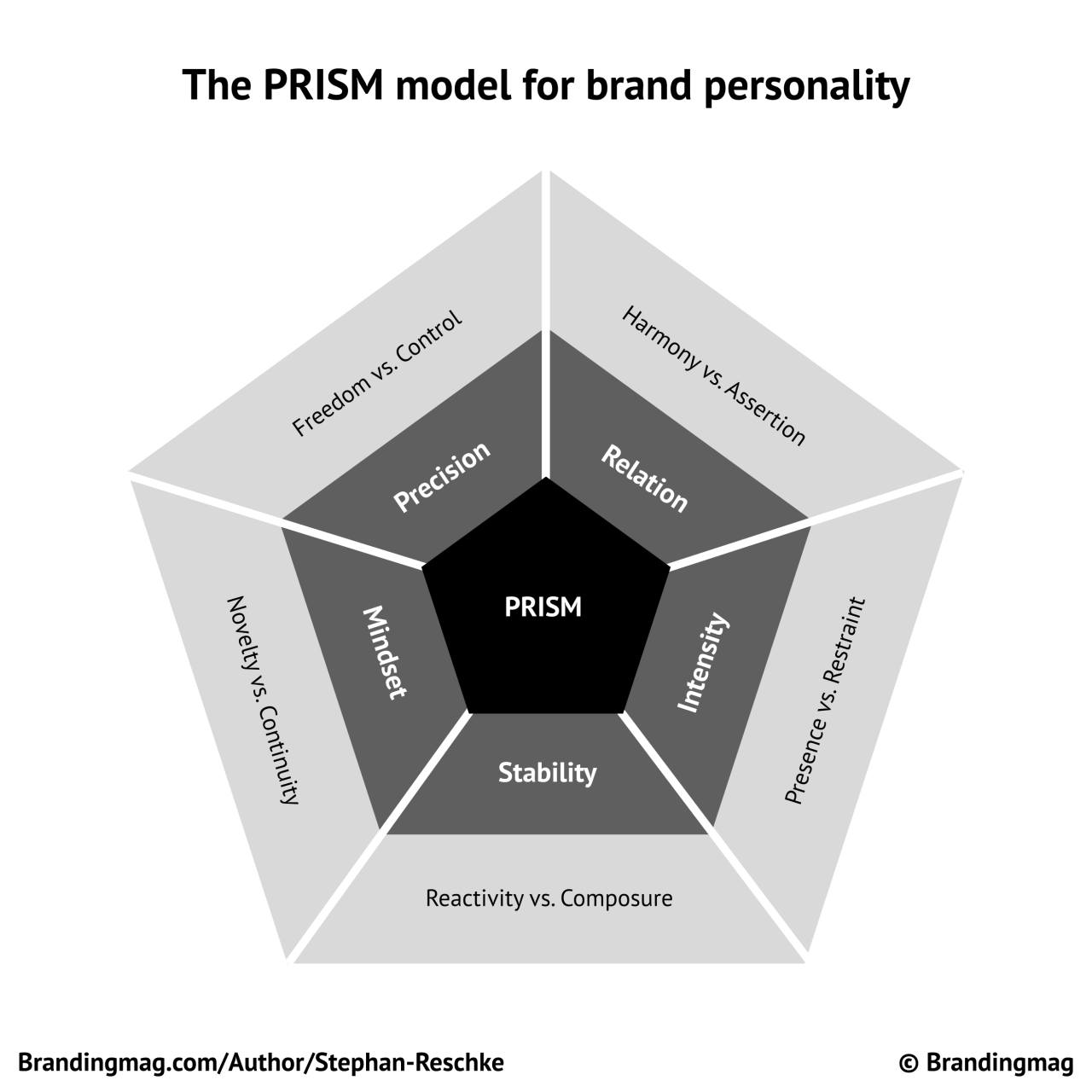
The PRISM model adapts the "Big Five" personality traits (OCEAN)—Openness, Conscientiousness, Extraversion, Agreeableness, and Neuroticism—for the corporate world. Unlike the rigid, 12-category archetype system, PRISM is a scalable, multidimensional framework that captures the nuance of human personality.
The Five Core Domains of PRISM
- Perception (Openness): How does the brand process new ideas and innovation? This determines whether the brand acts as a pioneer or a guardian of tradition.
- Responsibility (Conscientiousness): This domain defines the brand’s level of reliability, structure, and order. It dictates how an AI should balance "spontaneity" with "consistency."
- Interaction (Extraversion): Does the brand initiate or respond? This dictates the tone, volume, and engagement style of the AI’s conversational output.
- Social Connection (Agreeableness): How empathetic, cooperative, and helpful is the brand? This is the primary driver of the "human-like" feeling in AI conversations.
- Mindset (Stability/Neuroticism): How does the brand react under pressure? This defines the "emotional resilience" of the brand in crisis scenarios or complex customer support interactions.
By mapping these domains across a spectrum of six defining characteristics per domain, marketers can create a highly precise "personality file." This file is then fed into Large Language Models (LLMs) as a system prompt, ensuring the AI behaves exactly as the brand would, regardless of the conversation’s direction.
Implications for the Marketing Department
The adoption of the PRISM model signals a massive shift in the responsibilities of the modern marketing department. The focus is shifting from "Campaign Management" to "Brand Language Engineering."
The Death of the Static Campaign
LLMs do not consume traditional "campaigns." They consume data, context, and intent. In an agentic economy, a TV commercial or a static social media post is merely a source of data. The real interaction happens in the "Experience Engine"—a real-time, on-demand conversation between the consumer and the brand’s digital proxy.
System Prompts as the New Brand Guidelines
Brand manuals will soon move from PDF documents to technical system prompts. A brand’s "Digital Soul" is now a set of parameters, vocabulary constraints, and tonal guidelines that the AI executes in milliseconds.
- Tone of Voice: The PRISM model dictates the specific vocabulary and grammar that the AI must employ to remain on-brand.
- Behavioral Constraints: By defining the "stability" and "agreeableness" of the brand, companies can prevent their AI agents from becoming unpredictable or off-brand in sensitive situations.
The Technical Reinforcement of Emotional Connection
Some critics argue that quantifying human personality into a model like PRISM strips away the "soul" of branding. However, proponents suggest that this is actually a technical reinforcement of that soul. By providing the AI with a structured, legible personality, we are not automating the emotion away; we are giving the machine the tools to replicate the empathy and nuance that were previously only possible through human-to-human contact.
This is the ultimate goal of the "Agentic Lovemark": a brand that is technically sound enough to be processed by an AI, but emotionally resonant enough to be chosen by a human.
Looking Ahead: The Future of Agentic Branding
The transition to an agentic economy is marked by a blend of excitement and uncertainty. Anxiety, as the saying goes, stems from the unknown. For brands, the best way to mitigate this is through active experimentation.
As we move toward a future where our daily lives are mediated by intelligent agents, the companies that thrive will be those that have successfully "coded" their humanity. The PRISM model is not just a classification system; it is a foundational layer for the next decade of digital interaction.
The conversation has already begun. For CMOs and brand architects, the question is no longer whether your brand is visible, but whether your brand’s personality is readable, interpretable, and—most importantly—lovable by the machines that represent the future of commerce. It is time to dive in, experiment with the PRISM framework, and build the digital souls that will define the next generation of global brands.
